
| Home |
| News |
| Blog |
| Films |
| Poetry |
| Drama |
| Music |
| Articles |
| Books |
| Video Clips |
| Links |
| Newsletter |
| Contact |
Religious Themes in Drama - Blog Entries
11/4/25
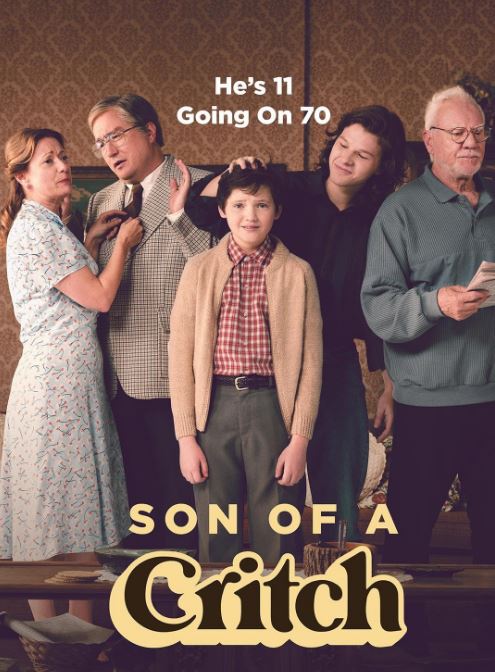 Cultural Catholicism was an issue on Son of a Critch (RTE One, last Friday). This is a nostalgic comedy show about growing up in Newfoundland, Canada, in the 1980’s, but, as I’ve observed before (see below, entry for 31/10/24) it’s not as warm or as appealing as the similar Wonder Years. Young Mark Critch attends Catholic school and has a history of faking illness to stay at home. But when he volunteers to do a reading at the papal visit of Pope John Paul II, he gets a genuine illness and can’t do it. He was interested mainly if not entirely in the TV exposure he’d get – he’s an aspiring showman. Archive footage of that papal visit is cleverly woven into the story, though eventually an actor plays the Pope but we see him only from behind.
There’s very little real faith in evidence. The cynical grandfather sells tacky papal souvenirs like Pope-on-a-rope soap and holy water - ‘so holy you can practically walk on it!’. This earns a rebuke from Mark’s mother as she calls for respect. The Pope is referred to as ‘the Catholic Elvis’, our old friend Catholic Guilt gets a mention, and the local radio stations vie for the most prominent coverage – ‘Tell your biggest sin to win’ says one DJ launching a competition. Yet, no direct disrespect is shown to the Pope – we see him blessing the fishing boats and meeting Polish fishermen. His blessing is valued. There are touching family moments as the children learn to appreciate their parents more. There is a sourish note, reminiscent of a scene in Young Sheldon, when Mark, newly impressed by his mother’s determination to get him a papal blessing, says ‘Who needs faith in God, I have faith in Mom’ – a false dichotomy, as if they were mutually exclusive.
4/4/25
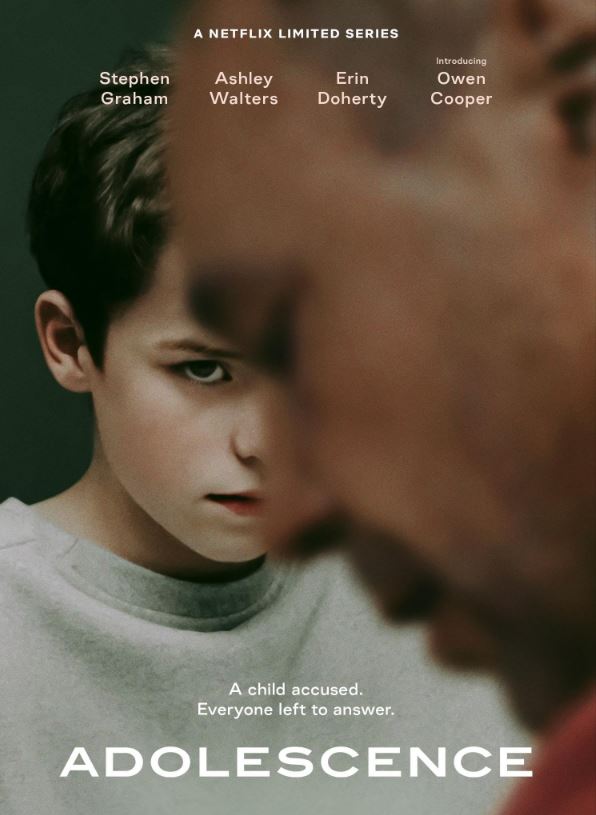 In today’s diverse and scattered media landscape it’s rare to find a programme that everybody is talking about. Adolescence (Netflix) has bucked that trend, with its grim tale of a 13-year-old boy accused of murdering a female classmate. It’s dark stuff for sure, but relevant considering news stories of children murdering children. We surely have a societal problem, but the nature of it and the possible solutions are complex, which is one of the lessons we can take from this programme. On an artistic level it is totally gripping entertainment and so well made. Each of the four episodes is done as one shot or take, with the camera following various characters around – for example bringing one person to a room and then leaving with another to follow their trajectory for a while. I felt the first two episodes were the most gripping, though the last two are emotionally intense.
The first starts with a dramatic arrest scene, a rather heavy-handed break-the door-down assault which hardly seemed credible , seeing as how they were arresting a young who was still in bed (though recent reports of heavy handed arrests in the UK make me wonder). By contrast the police were all courtesy and kindness when they got the boy to the police station.
The second episode was hugely unnerving (especially for teachers) as interrogations were carried on in the boy’s school, which seemed rife with bullying, and teachers varied from concerned but ineffective to downright lazy and careless. The following two episodes were gripping in their own way, with a focus more on the psychological aspects of the boy and the dynamics in his family. The acting is exceptionally good throughout, with Owen Cooper, as the boy Jamie, able to convincingly play everything from vulnerable to near psychotic. Stephen Graham is intense and very human as the father, though I admit I had to turn on subtitles at times to understand what he was saying (Liverpool accent!). Amelie Pease is particularly good as Jamie’s sister caught up in the mess and showing the better and more mature side of teenagers.
It’s definitely an adult show, with plenty of sexual frankness, especially in the third episode conversation between the boy and a psychologist, and foul language throughout - naturalistic I suppose but unnecessary. I have a particular problem with young child actors being made to use such language. As such I think it is highly unsuitabble for school use.
Most of the public discussion however has focused on the social issues raised and these are disturbingly timely. And so, the horrible effects of social media on young people are highlighted. There is the malign influence of misogynistic influencers, the internet’s dark rabbit holes, reference to ‘incels’ (moody male loners – the ‘involuntary celibates’ with hostility towards women). It’s something of a hotchpotch, but then so is the toxic environment that our young teens have to navigate. Family dynamics is an issue, but it’s an average, intact, reasonably happy family – no violence (apart from the father pulling down a shed in a temper!), no absent father. The main issue there seems to be allowing the teen to have internet access in the bedroom and making the big mistake of assuming he was safe because he wasn’t on the street. Yes, the show is a bit preachy, but pertinent and urgent issues are raised, and they have been discussed widely in the last week or two.
I can't remember any trace of religion in the show. You could easily argue that, if Christian principles were properly taught and followed, teens would not engage in violent behaviour, and boys would show the utmost respect for girls. It could be part of the solution, but it would be a brave show that would suggest that!
21/3/25

Patrick - A Slave to Ireland (RTE One and BBC One NI, St Patrick’s Day) was a new documentary on the saint directed by Ruán Magan. It was beautifully filmed, comprehensive and very much historically based, relying on St Patrick’s own writings, especially the ‘Confessio’, which, we were told, is the oldest known writing in Ireland. Snakes got only a brief mention! Much of the story was familiar, but it was good to have it so well presented in one film. It was celebratory more than iconoclastic, which was welcome and the contributions from various academics enhanced the presentation. Where there were uncertainties, these were acknowledged, but the familiar narrative seemed entirely credible. The contribution of another missionary, Palladius, was acknowledged, with the suggestion that later generations may have ‘airbrushed’ him out and given all the credit to Patrick.
Apart from the remarkable spiritual achievements of Patrick in spreading the Gospel to ‘the ends of the earth’, and Ireland was then regarded literally as those ends, there was a focus on the significant changes in society, including in literacy, described as Patrick’s ‘superpower’. The latter part of the programme veered away somewhat from the saint and concentrated on the legacy – with Irish missionaries spreading the Gospel back to Europe and re-Christianising it with the creation of monasteries and great seats of learning on the continent. I’m not a fan of docudrama-type re-enactments and there was quite a bit of that here, but though unnecessary I didn’t find it too obtrusive – it was low-key and well-acted, not at all as cheesy as these can sometimes be. The aerial photography, especially of various monastic settlements was most impressive.
13/3/25
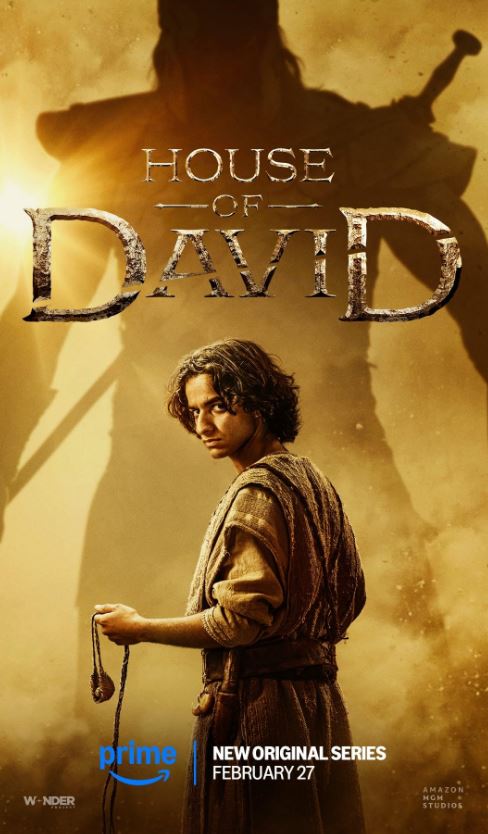
I enjoyed the first episode of the new biblical series House of David, launched on Amazon Prime last Thursday. I’m not a great fan of biblical epics – they often opt for spectacle rather than spirit, so the Bible, I’d suggest, is better read than seen! Much is made of the clash with Goliath – it starts the first episode but then we get flashbacks to David’s earlier life and a retelling of the history of King Saul and his prophet Samuel. It can be confusing at times, but that keeps the brain working. The production values are high and the cinematography impressive, but there is a little slackness in the pace, while the dialogue can be a little stiff, but it is considerably more engaging, so far, than Amazon’s Rings of Power.
While the battles scenes are relatively restrained there’s still quite a bit of bloodletting and slaying, much of it in the name of God. I’m not so sure if the series will inspire young people today towards faith, though they might enjoy the adventure, especially in a time where epics like Lord of the Rings are so popular. What is it about swords and sandals? On the plus side there is a lot on search for meaning as David tries to discern his purpose in life. There are people eager to do the will of God and to make sacrifices in the process. Samuel gets tough with King Saul who has let power go to his head and effectively turned his back on the Lord. He accuses him of twisting the throne to his own glory and withdraws the blessing of God from him. The theme has obvious resonance for current day politics. In the scene where Samuels lambastes him in public, King Saul says ‘speak with me alone’, and when they are alone says ‘You scold me like a boy’. I was reminded of last Friday’s bust-up in the Oval Office, one of the most dramatic and depressing scenes of the week.
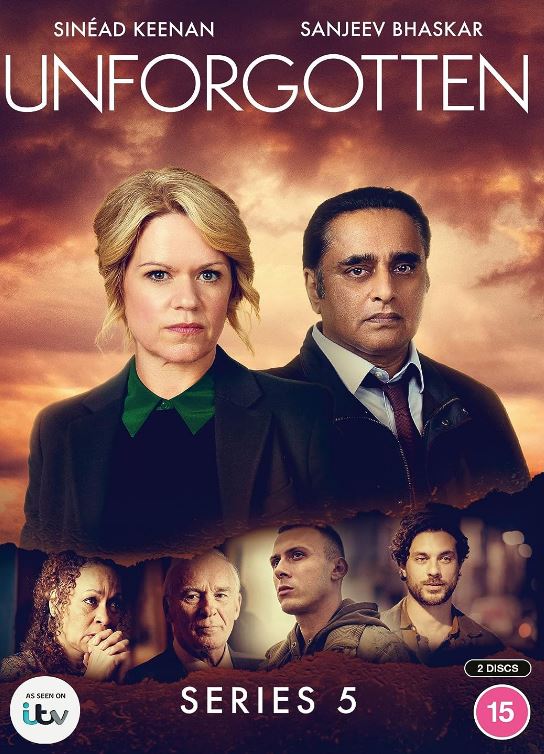 Last week saw the end of the 6th season of Chris Lang’s drama series Unforgotten (ITV), though it will probably turn up soon on an Irish channel, so I’ll avoid significant spoilers. The usual pattern is for a past crime to be unearthed and an investigation to follow, leading to a range of possible culprits who thought they had got away with it. One of the key moments in every series is when the detectives catch up with the suspects – imagine seeing your past walking up the driveway to hold you to account! Apart from being well plotted the show is full of genuine humanity. For example, in this series there’s a touching reconciliation scene between two sisters. The villains are rarely if ever malevolent nasties, rather three-dimensional characters who took very wrong paths and may have rebuilt their lives, but on sand. I felt there was a jaundiced edge towards religion in this latest series. One of the characters lives in Cork, she goes to church and prays, but is having a casual affair with the local priest – he’s quite an unpleasant character. She’s a part vulnerable, part brash anti-abortion right-winger with a mouthy slot on a channel resembling GB News - not subtle! It’s rather preachy with its political points, heavy with its LGBT support, and while, surprisingly, it seems to be critical of cancel culture, it is ultimately rather ambiguous about it. On the plus side Irish actress Sinéad Keenan does really well, again replacing Nicola Walker from earlier series, while Sanjeev Bhaskar is consistently engaging as DI ‘Sunny’ Khan.
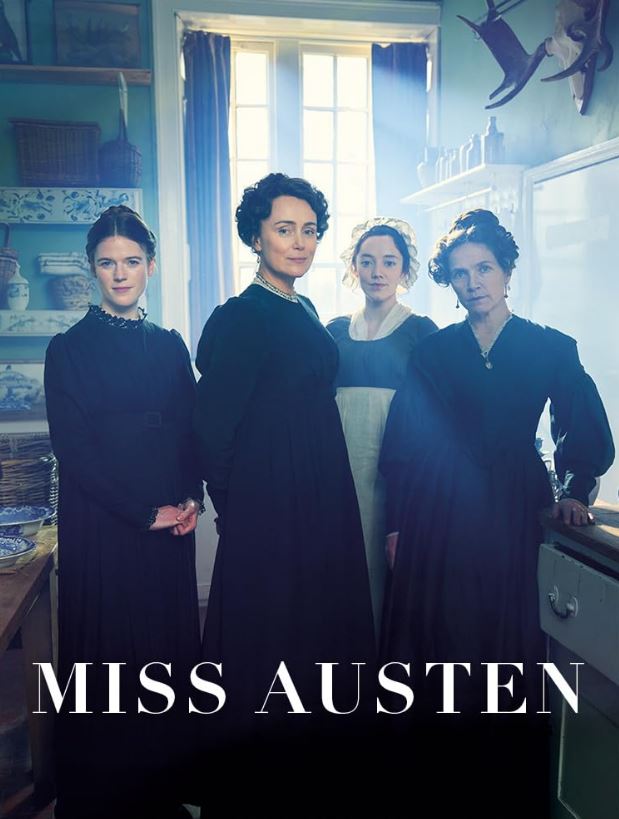
Finally, another drama series Miss Austen (BBC One) also ended last week. This was a wonderful tale of Jane Austen’s sister Cassandra trying to retrieve letters from Jane to a friend when the latter has died. The letters form the basis of several flashbacks to Jane and Cassandra’s younger days. In many ways it’s an old-fashioned costume drama with all the minor intrigues and shaky relationships of any Jane Austen novel. It is slow moving but very emotionally intense. Keeley Hawes holds the screen as the older Cassandra – another marvellous performance from her. Like many Austen novels, it features a silly young clergyman (remember Mr Collins!) but there are some good, though older clergy as well. Keep a lookout for this as it will probably turn up on an Irish channel before long.
13/12/24
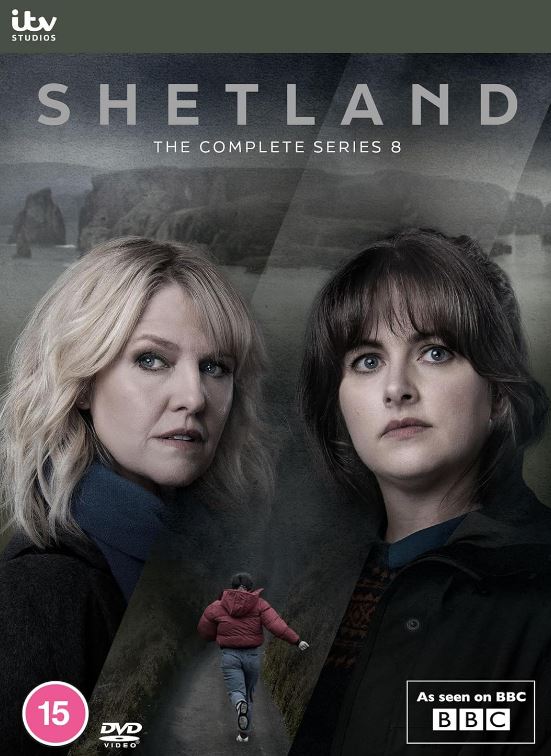 I’ve been watching two excellent British series. Shetland (BBC One, Wednesday) is a quirky crime drama driven by plot and more importantly character. The scenery is marvellous but the depth in the minor and major characters gives it a richness that is missing in so many crime dramas. As with the previous series, the local vicar is presented positively. He is young, modest, socially committed and is the brother of the cynical detective returned from London. There is some fun sparring between the two. Several key moments take place in the local church.
Featuring another rural UK community, Cornwall, Doc Martin (ITV 3, Friday) is on repeat, and I’ve started watching since a recent visit to Port Isaac where it was filmed. Again, it has depth of character across major and minor roles and a good balance between serious and comic moments. It reminds me of Ballykissangel. Unlikely for such a rural community, religious life barely figures.
31/10/24
Son of a Critch (RTE One, Friday) is a new Canadian series, a coming of age comedy drama on the lines of The Wonder Years, but without the charm and wit of that series (currently on repeat every evening on TG4). The Critches are a Catholic family in the 1980s and Mark is the narrator, reminiscing on his early teenage days. In last week’s episode he got a notion to become a priest, though more because he liked the idea of giving sermons and spotlight. He was impressed by Fr Moore, an old-style priest, who is mysteriously transferred overseas. The story is set against the background of clerical abuse scandals in Church-run orphanages – when Mark hears about this, his faith, in people at least, is shaken, but he still goes ahead with Confirmation, choosing his irascible grandad (Malcolm McDowell) as sponsor. That was a touching moment, but overall, the tone of the show is very uneven – sometimes respectful, sometimes crude and very irreverent, fitfully funny. There are too many stereotypes – the guitar-picking nun, the trendy new priest, all singing and dancing, whose approach is cringy though well-meaning and whose style of Confession leaves a lot to be desired. It’s a scattershot approach. I’d say it’s a mixture of interesting and uncomfortable for Catholic viewers.
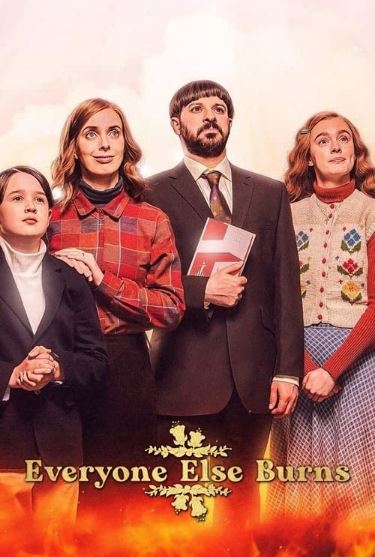
Even worse is Everyone Else Burns (Channel 4, Thursday) recently returned for a second series and as far as religion goes it’s pretty offensive. A comedy, it features an extreme Christian group that practices arranged marriage and cult-like behaviour. The drama focuses on a particular family where the underlying human desires bubble up to conflict with the oppressive rules. It is funny in spots and humane in others, but mostly it is mean-spirited – mockery without any sense that there can be a religion that is genuine, compassionate, clear-thinking, life-enhancing and committed to the service of others. Though it takes on the extremes, I suspect this may be just a sneaky way of attacking religion in general, or at least religion that doesn’t conform compliantly and conveniently to the spirit of the age as defined by media folk. There’s a lot of pressure on programme makers these days to commit to visibility for minorities, pressure to tick the diversity boxes, but people of genuine religious faith rarely get a look-in.
10/10/24
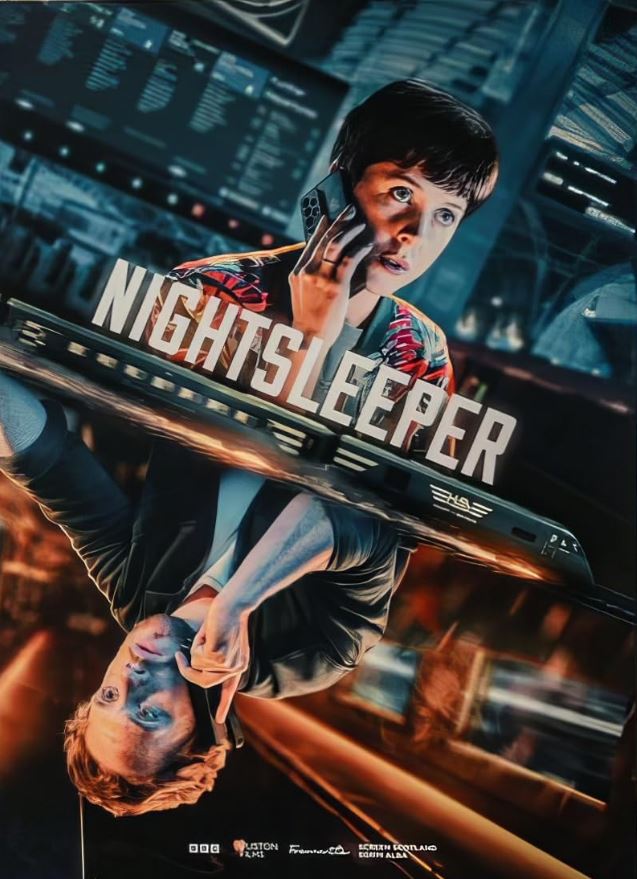 Sometimes it seems like a good idea to seek refuge in fiction. BBC’S high-profile drama series, Nightsleeper (BBC One, Sunday, Monday) was about a train hijack or “hackjack” as they called it. Such a situation has a built-in tension, especially as it seems to be happening pretty much in real time, but they made a mess of it – the leading actors and their characters were weak, the secondary characters were annoying, and it was hard to care what happened to them – their stories were like ‘soap on a train’. Plot developments were implausible, tension drained (or trained?) away, there were wads of turgid digital dialogue as a virus infected the anti-virus (yes, that’s the plot). The budget seemed to have been spent on special effects, with pennies left over for script and acting. And yet I kept watching – wanting to see what would happen at the end of the line. It finished on Monday of last week and the last episode, while it was exciting enough, didn’t serve to make my overall assessment less negative. It was noteworthy however that in the height of the crisis on the hijacked train that people started to pray – a natural reaction in a life-threatening crisis, but one that rarely features in TV drama or in the movies. The prayers were led by the gay porter!
The struggle between good and evil is particularly prominent on the Lord of the Rings universe. The second season of the spin-off Rings of Power (Amazon Prime, Thursday) came to an end last week. I stuck it out to the end though much of it was talky and turgid, with interweaving plotlines that didn’t integrate very well. They did pick up the pace in the last two episodes, with some dramatic battle scenes, though I thought the violence was unnecessarily gruesome. There were religious resonances, with themes of temptation, greed, pride and corruption particularly prominent towards the end. We were left in no doubt as to the corrosive and destructive nature of such negative traits. One scene was reminiscent of the gruesome martyrdom of St Sebastian (death by many arrows), while another was a rather obvious variation of the crucifixion moment when the side of Jesus was pierced by a lance. There were a few false finishes before they finally let go, with a tying up of loose ends, but leaving enough of those to have options open for a third series. (see below also)
5/9/24
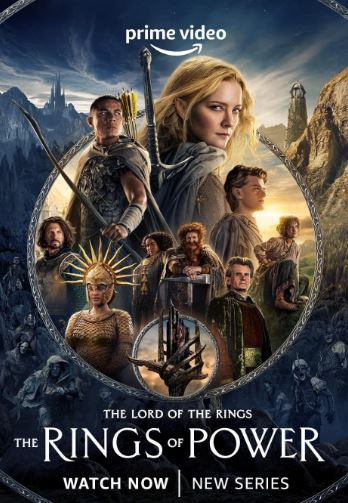
Rings of Power (Amazon Prime, Wednesday), a Lord of the Rings prequel of sorts, is back for a second series, with the first three episodes ‘dropped’ already. I nodded off during the first two episodes, once when I was tired and once when I wasn’t. It’s all a bit turgid and ponderous with great big wads of awkward but occasionally poetic dialogue. It lacks a lighter touch, a bit of whimsy, though you get just a little of that with the Dwarves and the Harfoots (Hobbit-like individuals with an inexplicable Irish accent). The names of the characters are confusing if you’re not thoroughly immersed in the Tolkien mythologies, while the interweaving plots do meander somewhat. On the plus side, the special effects are impressive and it improves matters to watch it on a big screen with big sound.
You might find some religious undertones – e.g. there’s a rather bloody crowning of thorns type scene, followed by a resurrection of sorts with someone disappearing from within their outfit. Some characters look like Jesus, or at least like the image of Jesus we are conditioned to expect from classical art and other films and TV dramas. In one scene an alleged messenger of God makes a rather dramatic appearance that certainly evokes iconic religious imagery.
Theme-wise, there’s the familiar struggle between good and evil, most interesting when it’s within some of the characters. Sometimes characters do the wrong thing while trying in good faith to do what’s right. There’s an interesting discussion about making choices for good over evil, a choice we’re told we must make every day. A character is encouraged to leave behind his evil ways and follow the path of good. There’s a topical discussion on what attitude one should have towards good art if the artist was immoral. I’ll keep watching as the show is tolerable – maybe there are some stand-out episodes to come.
5/9/24
Rings of Power (Amazon Prime, Wednesday), a Lord of the Rings prequel of sorts, is back for a second series, with the first three episodes ‘dropped’ already. I nodded off during the first two episodes, once when I was tired and once when I wasn’t. It’s all a bit turgid and ponderous with great big wads of awkward but occasionally poetic dialogue. It lacks a lighter touch, a bit of whimsy, though you get just a little of that with the Dwarves and the Harfoots (Hobbit-like individuals with an inexplicable Irish accent). The names of the characters are confusing if you’re not thoroughly immersed in the Tolkien mythologies, while the interweaving plots do meander somewhat. On the plus side, the special effects are impressive and it improves matters to watch it on a big screen with big sound.
You might find some religious undertones – e.g. there’s a rather bloody crowning of thorns type scene, followed by a resurrection of sorts with someone disappearing from within their outfit. Some characters look like Jesus, or at least like the image of Jesus we are conditioned to expect from classical art and other films and TV dramas. In one scene an alleged messenger of God makes a rather dramatic appearance that certainly evokes iconic religious imagery.
Theme-wise, there’s the familiar struggle between good and evil, most interesting when it’s within some of the characters. Sometimes characters do the wrong thing while trying in good faith to do what’s right. There’s an interesting discussion about making choices for good over evil, a choice we’re told we must make every day. A character is encouraged to leave behind his evil ways and follow the path of good. There’s a topical discussion on what attitude one should have towards good art if the artist was immoral. I’ll keep watching as the show is tolerable – maybe there are some stand-out episodes to come.
I wasn’t expecting to find some religiously themed drama in Reeling in the Years (RTÉ One, Thursday), which highlighted 1980, but there was a bit – Dermot Morgan being Father Trendy (on The Live Mike) before the Father Ted days. Fr Trendy was a gentler, more innocent, character and his metaphor laden sermons were always funny. In this clip he weaponised comedians for the cause – urged us to be a little less Morecombe and a lot more Wise, to have a little less Brendan (ha!) and a lot more Grace, not to sit on our Laurels but to be more Hardy in our religion, and to have a little less Bob and a lot more Hope!
29/8/24
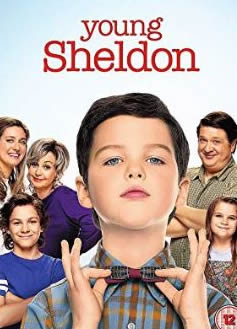 Comedy or not, Young Sheldon of late it has been tackling some serious matters, like the mother, Mary (Zoe Perry), being alienated from her Church, pregnancy out of wedlock, gambling and more. There’s always been a jaundiced attitude to religion, with young Sheldon (Iain Armitage) still being the child-scientist who is dismissive of religion (perpetuating the alleged conflict between science and religion), though he insists he believes in his mother, who is quite a devout Baptist, suspicious of the Catholic family her other son Georgie (Montana Jordan) marries into – there are some sneak Baptisms! However, things have taken a very serious turn in the last three episodes with a shocking family trauma that I didn’t see coming. My first reaction was ‘Oh why did they do that’? The key apparently is in Sheldon’s back story from the original series Big Bang Theory – Young Sheldon is a prequel.
I won’t give away the details (I’m paranoid about spoilers), but these episodes have been among the best I’ve seen in any drama this year. There’s a huge emotional punch, the characters’ reactions are totally credible and above all the acting by young and old is outstanding. Last Friday’s episode was one of the best series finales I’ve ever seen and religion figures strongly, though again not too constructively. The mother is accused of spending too much time with Jesus and not enough with her children. The grandmother, Connie (Annie Potts), says Mary is hitting the Bible rather than hitting the bottle! She wants her teenagers baptised to save their souls, but they resist. The resulting family conflict is believable but unsettling. The writers are really good at understanding human nature, and loving it, but not so hot at understanding religion.
A bonus in this episode was the guest appearance by Jim Parsons, who played adult Sheldon in Big Bang Theory and, fittingly, did the narration in Young Sheldon where we get the adult reflecting on the childhood experiences – an approach used to great effect in the Wonder Years currently being re-shown every weekday on TG4.
6/6/24
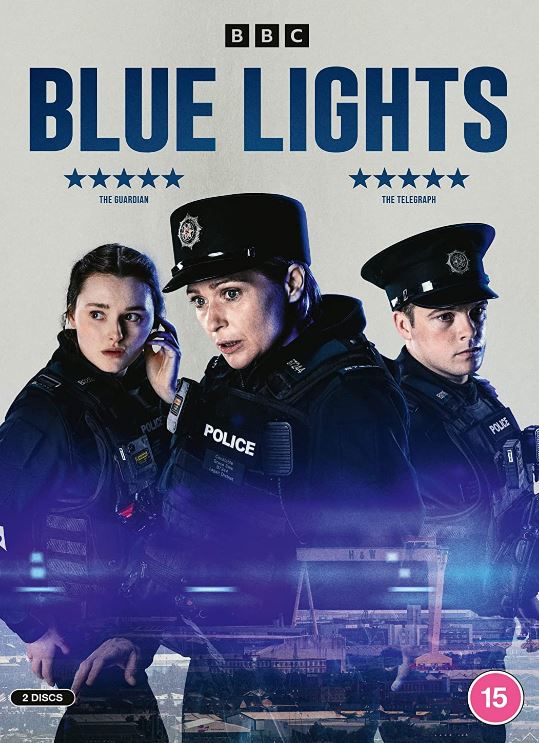
Finally, Blue Lights (BBC One, Monday), the police drama set in Belfast, finished recently with a very gripping and emotional episode. The programme makers are blessed with an outstanding cast and a real empathy with human beings and their very believable problems. The opening scene of a child with a gun being confronted by the police was tense beyond measure, and a reconciliation scene related to legacy crimes from The Troubles, was very moving. I’d still hold on to my previous negative comments about the gratuitous bad language and the lack of any character motivated by a genuine religious faith, but this must be one of the best drama series of the year so far.
29/3/24
 Kim’s Convenience (Netflix) is a comedy about a Korean family running a convenience store in Toronto. The characters are believable and likeable, even the minor characters are very funny, particular the random customers, even if they only put in the briefest of appearances. The script is razor-sharp and there are laugh-out-loud as well as emotional moments, but it never gets overly sentimental, never takes itself too seriously. The pace is sprightly – no scene gets prolonged. It helps that the same duo, Ins Choi and Kevin White, write every show - it has a marvellous consistency across its five seasons, though as Season 5 progresses it gets more serious and less funny.
Mr and Mrs Kim attend the local Presbyterian church, and in the show religion is respected – seen as a natural part of the characters’ lives though they sometimes fall short of the Christian ideals (like us all!). Pastor Nina is a hilarious character, impossible to dislike though she transgresses – prompting a panic-stricken confession to God when, trapped in a lift, she fears a fatality. Predictably, the adult children aren’t so enthusiastic about their parents’ religious faith. They engage in the loose sexual behaviour typical of our age, and this is often treated rather lightly. In its scattershot way the show both sends up the excesses of wokery, with a kindness towards individuals. It is rarely if ever preachy, though there is some preachiness about the value of medicinal cannabis in one Season 5 episode.
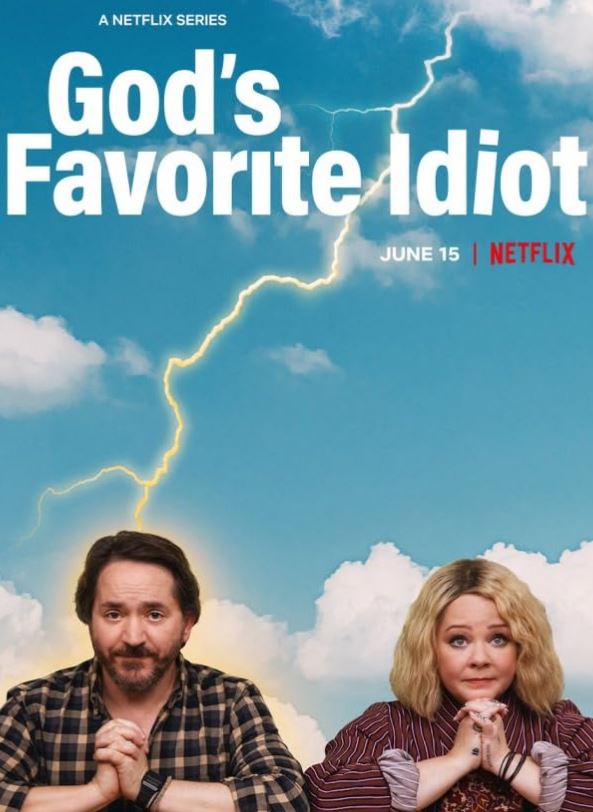
It's hard to know what to make of God’s Favourite Idiot (Netflix). It’s a poor man’s version of Bruce Almighty or God The Devil and Bob (both far better) where God chooses an unlikely character to spread his message (what that is exactly actually is left unclear apart from vague platitudes). The lead character Clark, played by the writer of the show Ben Falcone, is interesting enough – a generous soul, but his sidekick Amely, played by Melissa McCarthy doing her usual bubbly schtick, is irritating. The minor characters are pretty bland, chosen, it looks like, more for racial and gender diversity rather than any inherent interest. It could have been a genial if unremarkable show if it hadn’t been for the gratuitous foul language. The theology, such as it is, is all over the place. The main characters, tasked with spreading the Good News, are ‘sleeping together’ though unmarried. You might have thought God would have an issue with that. God appears in the show, as a kindly middle-aged woman, a bit like a divine Mrs Doubtfire, though God makes the point that God can appear in many forms. Satan also appears a woman – young, nasty and quite violent. The Four Horsemen of the Apocalypse put in an appearance (sorry, ‘horsepersons’, as one is a woman) but seem confused about their role. I’d suspect the show won’t appeal to believers because of the factors mentioned and won’t appeal to non-believers because there’s so much belief in God in it.
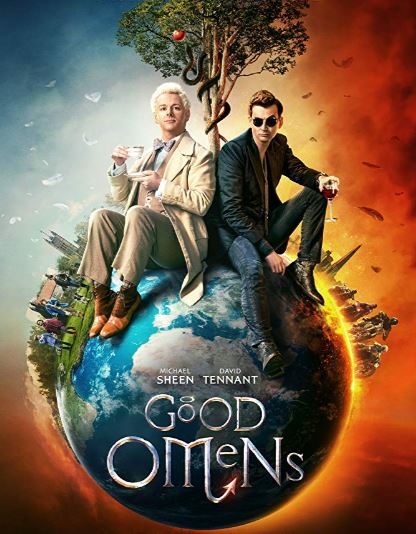
Good Omens (Amazon Prime) visits similar territory. Based on the novel by Terry Pratchett and Neil Gaiman, Season 1 featured a struggle between an angel and a demon on earth until they both got fed of the battle between good and evil and opted for a quiet life in earthbound obscurity. That first season had some novelty value and featured two fine actors Michael Sheen and David Tennant, but the whole premise was silly and it ran out of steam. I wasn’t too enthusiastic about seeing Season 2 but I endured two episodes in the line of duty! The theologically incoherent plot this time features the Angel Gabriel turning up on earth with memory loss – John Hamm really hams it up in that role. Fearing some cataclysmic events the angel and the demon get together to protect him. Beelzebub, breathing flies, is out to get him, while in Heaven (an antiseptic whiter-than-white office building), the angel hierarchy is disturbed. The archangel Michael (a woman) looks suspicious. Sheen’s angel tries to organise a lesbian relationship without batting a wing. Even in the line of duty life is too short to endure 4 more hours of this.
11/1/24
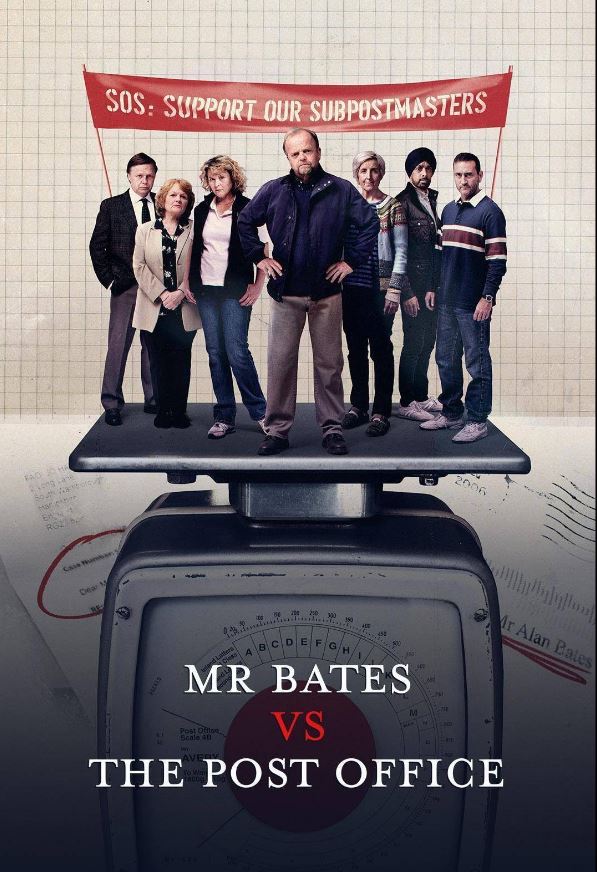 When organisations are caught out doing something wrong it often happens that they get defensive and opt for cover up and obfuscation. Whistle-blowers can be treated as pariahs rather than being welcomed as liberating the organisation from corruption or malpractice.
This certainly seemed to be the case in Mr Bates v. the Post Office (UTV/ITV and Virgin Media One, Mon-Thurs) a drama series that ran for four nights last week. It told the story of what has become known as the Great Post Office Scandal – when the Post Office in England accused a large number of sub-postmasters and post-mistresses (over 700) of stealing funds, when in fact it was a fault in the new Horizon computer system, though the Post Office wouldn’t admit that. Instead, they pursued these vulnerable people through the courts, even to the point of some being jailed. The Post Office insisted on restitution and so people lost life savings, jobs, houses, and even lives – at least one of those portrayed in this drama committed suicide under the pressure and disgrace they felt – in reality there were at least three more. It was one the gravest cases of injustice I’ve come across and this drama conveyed the human stress and suffering so well, with the help of a brilliant ensemble cast – faces that will be familiar to those who watch British TV drama on a regular basis. Particularly outstanding were Toby Jones (Mr Bates) and Julie Hesmondhalgh (Susanne).
It was moving, sad, scary and absorbing – more than most fictional thrillers. It was marked by a warm humanity – the characters cared for and supported each other, as, I felt, did the programme makers. It will certainly be on my list for top dramas of 2024 – and it’s only early in January!
It is also a testament to the power of story – though the controversy has rumbled on for years, this drama has propelled it into prominence and it has dominated the UK news and current affairs since broadcast – e.g. one of the sub-postmasters was interviewed on Laura Kuenssberg (BBC One, Sunday) and it was covered extensively on Times Radio Breakfast last Monday morning, when political Editor Kate McCann gave a particularly good summary of the complexity of the legal processes involved, describing how the drama had built up a ‘head of steam’. It shouldn’t have taken a drama to inject such urgency.
The drama was followed by a documentary on the issue Mr Bates v The Post Office – The Real Story (UTV/ITV, Thursday). ITV does this kind of thing really well – e.g. showing how well they matched the actors to the real people they portrayed, and how re-enactments matched the news reports of the time. One victim said that God had got her through the crisis, another was shown in a little oratory, with the scriptures opened. Religion had come into the original drama in a rather unexpected way – one of those in the Post Office hierarchy, not presented very sympathetically, was a part-time vicar! Her homily scene seemed designed for irony. Of course, the key theme in all these programmes was justice and the hunger for it - what happened was described widely as the worst miscarriage of justice in British legal history.
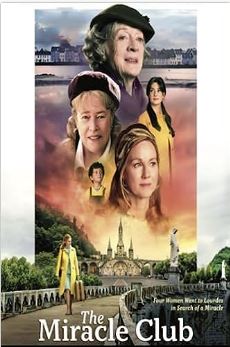 Miracle Club is what might be called a ‘small film’ – no need to crank up the home cinema and it’s short by modern standards. It tells the modest story of four women who head off on a pilgrimage to Lourdes with various expectations. It’s set, believably, in 1960’s Dublin, but there are events from the 1920’s that cast a shadow, and the trip to Lourdes brings old secrets, enmities, broken relationships and more to the surface – problems in search of resolution and closure. At times it’s funny, at other times quite moving.
Each of the women has a different reason to be there – some for cures, some for clarity. They range from devout to doubtful and sometimes it seems they are not sure themselves where they come on that spectrum. Maggie Smith, Kathy Bates, Agnes O’Casey and Laura Linney do well in the lead roles. I presume the high-profile duo were chosen for commercial as well as artistic reasons – I’m sure there are several Irish actresses who could have portrayed these feisty Dublin mothers. Laura Linney plans a returning American so that suits well! She plays the role with depth and dignity, even just in facial expressions.
The male characters are largely feckless husbands, products of their time who have to learn a few things while the women are away. Stephen Rea delivers a typically mannered performance as one of them. If the women struggle with their faith the men are downright cynical.
Religion is treated fairly well, though sometimes it’s seen, by some characters at least, as superstition. The priest, Fr Dermot (Mark O’Halloran), is a gentle soul, doing his best for the parishioners, but doesn’t seem convinced by the factual basis of Lourdes. Yest there is a sense of awe at Lourdes, especially on first arrival. One plot strand concerns an unwanted pregnancy and there’s a problematic and soft attitude to abortion, while suicide is a background theme as well. There’s crude language occasionally (do they add this to bump up the age rating?), so all in all it’s not suitable for children, while school use I’d suggest, would be limited to carefully chosen clips – e.g. the first arrival in Lourdes, some reconciliation scenes (personal, not sacramental) and discussions of what the women want to get from the pilgrimage.
9/11/23
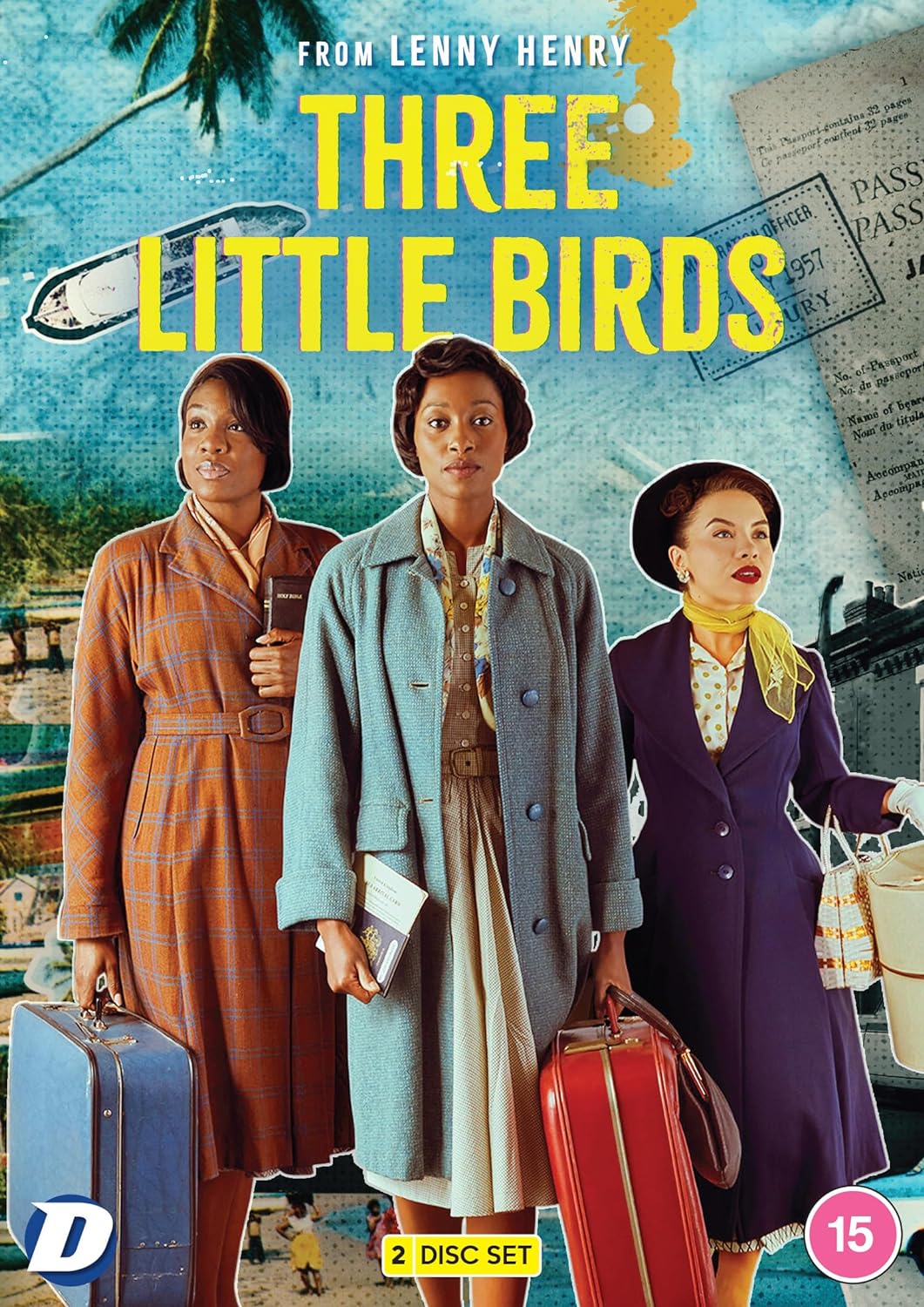
Three Little Birds (ITV, Sunday) is the best of the current crop of TV drama series. Written by comedian Lenny Henry it tells the story of three feisty Jamaican women who come to England to seek out a new future. It’s warm, humane, vey funny at times, but has its darker moments when the women experience ugly racism and predatory behaviour. One of the women, Hosanna (Yazmin Belo), is very religious and finds the local Anglican service uninspiring. Her enthusiastic singing, Jamaica style, doesn’t go down well, and the minister encourages them to worship elsewhere – with people more like themselves! Hosanna’s father was a minister back home but it seems he left his church when he felt he wasn’t doing a very good job. Flashbacks reveal that things weren’t wonderful back in Jamaica, though it looks a lot better than the way the grim English streets of the Midlands are portrayed. Romances are handled subtly and deftly, alternating between optimism and realism – both angles were very much in evidence in last Sunday’s episode, as was consideration of moral behaviour during courtship.
Time (BBC One, Sunday) is the second series of the prison drama by Jimmy McGovern, this time joined by Helen Black on writing credits. This series sees a change to a women’s prison, the only character reappearing being the Catholic Chaplain Sr. Marie-Louise, played sympathetically by Siobhán Finneran. As might be expected, it is very much adult drama, grim stuff, heartbreaking at times, but suffused with an understanding of and empathy for people that have fallen on difficult times and struggle to cope with life getting beyond any control of their own. One of the women is Kelsey, a young pregnant girl (superb performance by Bella Ramsey) who considers an abortion until she realises the judge might be more lenient if she stays pregnant. Her ultrasound moment is moving and transformative. Chats with the chaplain are also touching but quite challenging as well. Last Sunday night’s episode was particularly intense as Kelsey gives birth in prison. We also learn that the chaplain has secrets of her own, though this revelation felt somewhat contrived and tokenistic.
I was never into the crime series Shetland (BBC One, Wednesday) but, now in its 8th series, there’s a change of characters so I thought I’d have a look. DI Ruth Calder (Ashley Jensen) returns to Shetland reluctantly – her father was a minister and they didn’t get along. Her brother has now taken over the ministry – it’s not often we see a young clergyman portrayed sympathetically. The plot lines could be more riveting but the characters and locations are interesting so I think I’ll stick with it for now.
7/9/23
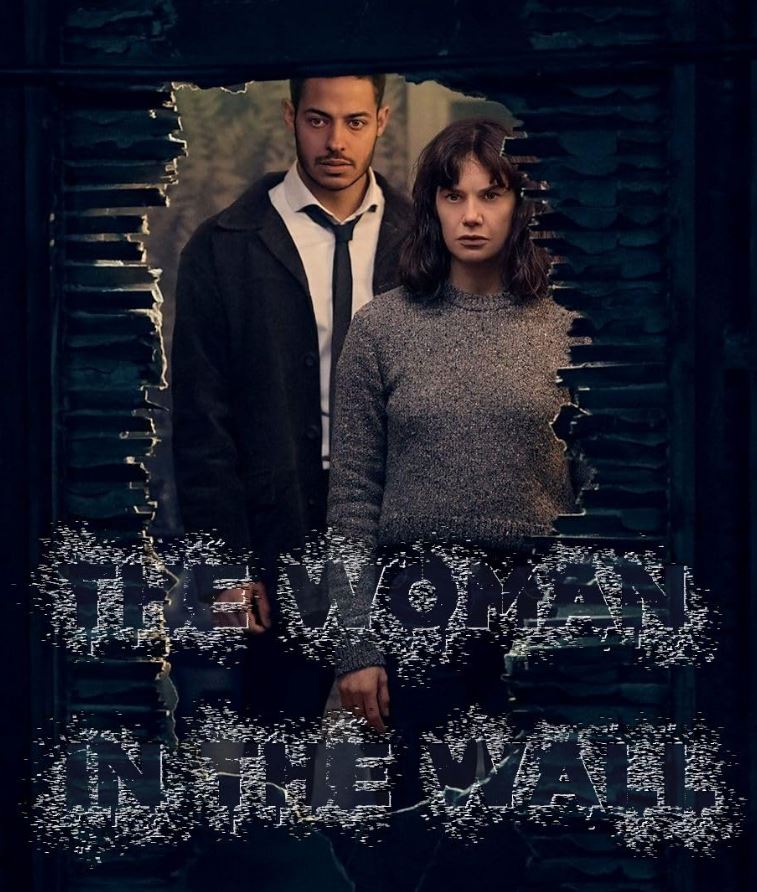 The new TV drama series The Woman in the Wall (BBC One, Sundays), three episodes in, is full of unsubtle messages and is certainly preachy. The story of the Magdalen laundries is mined yet again for didactic fiction, but sadly, more for insult than insight. I wrote last week about cardboard characters in Fair City, but in this one the cardboard factory was working overtime. Right from the credits, religious imagery was overlaid with creepy music, so we knew where this was going, and it scattered a rake of clichés in its path. There was more than a scattering of foul language, much of it directed against religious targets. It would be easy to make a case for this show being incitement to hatred. It felt like the demonising of a whole group of people for the awful offences of some. In one scene a woman heads off with an axe, bent on destruction – I felt the programme makers had an even bigger axe to grind. If it wasn’t so busy trotting out turgid wads of campaign lines, it might have been an affecting drama, because there is a sad and dismal story here, but I don’t think this show does the victims and survivors any favours. They are largely reduced to ciphers and tokens, weaponised, I felt, for an agenda.
I found Ruth Wilson’s acting, as the troubled Lorna, to be riveting if a tad overwrought at times. I’ve been a big fan of hers since the film Saving Mr Banks and the TV drama series Mrs Wilson. Ardal O’Hanlon plays effectively against type as a rough character somehow involved in the murder of a priest – he’s the only priest in the show so far, and he’s a sinister, manipulative type. There was a passing acknowledgment that families were complicit in sending unmarried pregnant girls to the institutions, and that some of the thrust of the survivors’ concerns were towards the state. An elderly nun offered a boilerplate defence of what happened in the past, but she was crabby and evasive.
The clichés aren’t just in relation to religious matters – when a character says something like ‘I’ll tell you everything tomorrow’, you know they’re done for. The guards are portrayed as dopey culchies, Simon Delaney’s Sergeant Massey being just a small step above the pantomime of Killinaskully. Well done BBC!
3/8/23
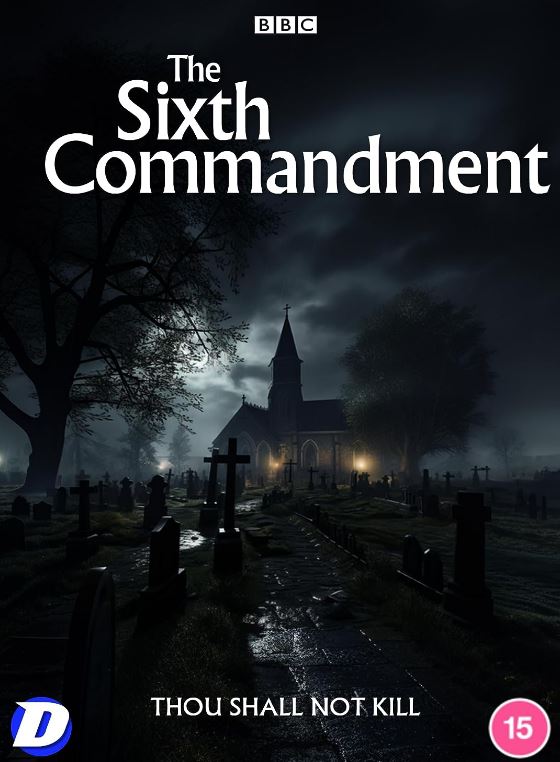
The Sixth Commandment (BBC One, Tuesday) came to an end last week and it was one of the most engaging drama series I’ve seen this year. It tells the story of a charismatic young man, training to be a vicar, who inveigles his way into the lives of vulnerable elderly people, and was eventually convicted for murdering one of them – retired teacher Peter Farquhar (Timothy Spall). Éanna Hardwicke is enthralling as the young man, and it’s never quite clear if his religiosity is delusional or just cynical and manipulative. It’s an uneasy experience watching him give a sermon on the sixth commandment (in this case it’s ‘Thou Shalt Not Kill’) and even dressing as a Catholic priest and giving ‘communion’ to an elderly person who is ill. I’ve complained before about TV drama and films being too inclined to show religion as deranged, but this is different, as the genuine faith of the victims and their families is portrayed and respected.
Farquhar is a retired teacher, a lay preacher in his local Anglican church and genuinely struggles to integrate his celibate homosexuality with Christian teaching, though he is not well served by wishy washy advice from his spiritual advisor, who is more affirming than challenging, muddled between orientation, intention and action. Another victim Anne Moore-Martin is also a retired teacher, a devout Catholic who falls for a while for the young man’s romantic advances. The series is a fine reflection on faith, loneliness, guilt, family dynamics, delusion and arrogance, A convincing human drama, it works well also as a crime thriller, especially for those who love a police procedural.
4/5/23
Recently, 25 years of relative peace were celebrated in Northern Ireland, but recent events also show that it's fragile, and there are legacies that linger and threaten to disturb it. A minority won't let go of a Troubles frame of mind, but I'd suspect most want to move on to a time when sectarianism fades away, and political divisions become what you'd expect in a normal functioning democracy.
These thoughts were prompted by drama series Blue Lights (BBC One, Mondays). It was a police drama set in Belfast and was of a high standard, though it avoided for the most part any treatment or exploration of sectarianism or even of political differences. The series ended last Monday night, and throughout it was a tense and emotional treatment of PSNI officers responding to various crises on the streets. There were gang activities, domestic disputes, racism, complicated romantic relationships, collusion between elements in the police, security agents, and the gangsters. Sometimes plot threads were teased out to a point when another crisis interrupted, and some threads were left without closure, sometimes left hanging, but this was to a great extent a slice-of-life approach, and closure can be elusive in real life.
Considering the setting, I thought it was unwise and unrealistic to avoid religious themes – no sign of clergy, or anyone praying or going to church. There were plenty of moral dilemmas, even police cutting corners and taking shortcuts when the long way round would have been the way to integrity. The language was consistently foul, and there was a relatively discreet sexual encounter, but the best thing about it was the humanity – I felt the writers actually like humanity, and so many scenes captured genuine emotion and compassion among the colourful characters. The acting was consistently fine, particularly for the multi-layered female characters.
14/4/23
The Secret Peacemaker (RTE One, Easter Sunday and BBC One, Monday), told the story of Redemptorist priest Fr Alec Reid, who efforts were instrumental in bringing about the peace. It was a timely and hard-hitting docudrama that carried a huge emotional impact. Fr Reid died in 2013 and it was great to see extracts from a comprehensive interview he gave in 2010. It was partly his own story but also a history of the Troubles. It was good to see the inclusion of other clergymen involved in the peace process – including fellow Redemptorist Fr Gerry Reynolds, Rev Ken Newell of the Presbyterian community and Methodist Fr Harold Good who had appeared in that service mentioned above.
The dramatic re-enactments were not necessary, though Marty Rea did a fine job as the younger Fr Reid and, if the story is ever made into a feature film, I hope he gets the role. However, the dramatization had impact in the scenes that involved Fr Reid trying in vain the save the lives of, two British soldiers set upon by a mob during a Republican funeral in Belfast. I remember it being shocking when it happened and it was most tense and disturbing watching the footage again. A recent survey showed poor knowledge of the Troubles among young people today – this programme should be seen widely, so that people can realise the horrors of all that violence and do everything possible to avoid drifting back into it. Catch it on the RTE Player at this link.
The Last Days (EWTN) was a filmed version of a staged passion play set in a church. It packed an emotional and spiritual impact as those events always do. It was noteworthy for the fact that Jesus was played by Jonathan Roumie, who also plays that role in The Chosen, the hit mini-series on the life of Jesus. He was also involved in the writing and producing for G.K. Chesterton Entertainment. I thought he came across as a warmer Jesus in The Chosen, but then the Holy Week events are deadly serious. The filming was adequate – best when a hand-held camera was used for closeups, especially during the dramatic Way of the Cross down the aisle of the church where the work was staged. Some of the fixed-camera zooms were a tad awkward and amateurish.
The script was mostly scriptural, but was fleshed out respectfully. I can understand why some dramatisations stick strictly to scripture, and they have their role, but can come across rather stilted on film. I loved the soliloque of Mary as she held the body of Jesus. It was emotional, so very human and personal as she reflected on her life with Jesus, right from the Annunciation – ‘It started with the wind’. The scourging at the pillar was unnerving – so realistically portrayed. Passion plays always have a dilemma – whether to include the Resurrection, and if so how to portray it. In many of the plays I’ve seen it tends to be included, but obliquely or briefly. In the traditional Stations of the Cross it does not form part of the fourteen. It was hinted at here, with an unusual scene that I felt didn’t quite work, where a female character, perhaps Mary Magdalen, visits the tomb, delivers a reflection over the body, and then the body mysteriously disappears as she and Joseph or Arminathea cover it in the shroud.
I didn’t like the generic ‘foreign accent’ used by most actors, including Jonathan Roumie – I prefer either the original language or the normal English of the actor. For that reason I was impressed most by those playing Peter, Pilate’s wife, and Mary.
Also on the drama front there was another Mary, but this one felt God was walking away from her. This was Mary from Young Sheldon (RTE One, Friday), back recently for a sixth season. Mary is Sheldon’s mother and while always the most religious character she has felt rejected by her fellow Baptists because her son Georgie and his pregnant girlfriend Mandy aren’t getting married – he wants to, she doesn’t, yet. I’ve always felt, and still do, that the show, while always funny and often moving, is jaundiced towards religion, which wouldn't be great for young students of fragile faith. However Mary’s current crisis has biblical resonance - at one stage she asks God if He is trying to make her into a ‘Mrs Job’. And it has echoes of that famous phrase of Jesus ‘My god why have you forsaken me’.
30/3/23
Love and understanding for humanity are evident in the crime drama series Unforgotten (UTV, Mondays). Back for a 5th series the character Cassie (Nicola Walker) is no longer in the frame and her replacement, DCI James, played so well by Sinead Keenan, is a different character altogether, more prickly and abrupt. Cassie’s former work partner DCI Khan (Sanjeev Bhaskar) has trouble adjusting. The plot, involving the unravelling of a historical unsolved crime, follows the familiar pattern of this series - in particular there’s high impact in those scenes where a compromised character, up to now getting away with it, sees the police arrive and knows the past is finally catching up. Though the plot follows familiar patterns the characterisation is excellent, across - police, perpetrators and victims.
There was one outstanding scene in last week’s episode, when Khan and James finally cleared the air – he tells her about his fiancée having a miscarriage, and she reveals why her focus has not been firmly on the case – 54 minutes before she started her new job, she learned her husband had been having an affair, and it turned out it was with her sister. It was a tense conversation and the acting deserves a BAFTA for sure. An award for writer and show creator Chris Lang would be great too!
Unfortunately the only time religion gets a look is in relation to a cult. Of course there are cults, but creating some balance with a portrayal of some ordinary religious practice and service would be good.
9/3/23
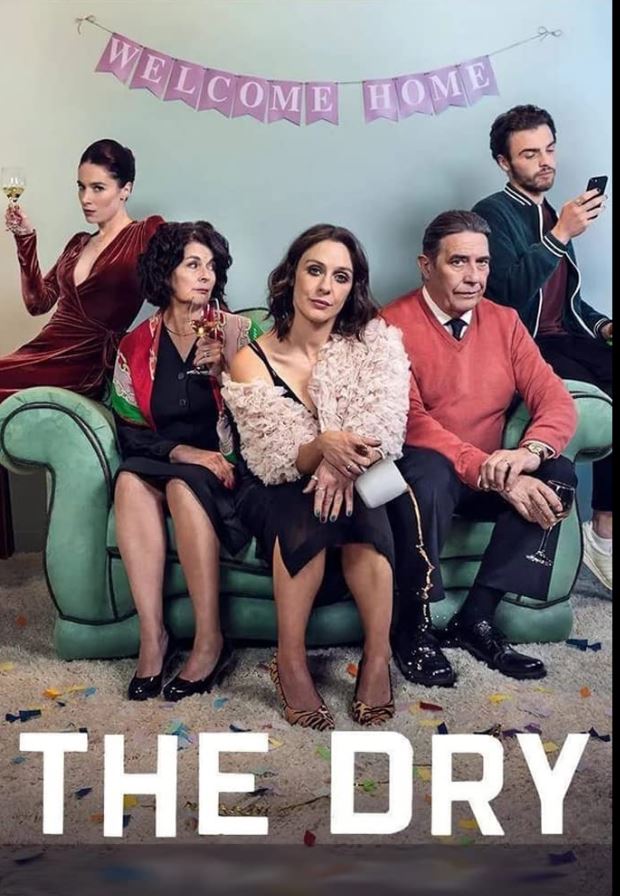
The trailers for the new comic drama series The Dry (RTE One, Wednesdays) looked promising as were the first few minutes, with recovering alcoholic Shiv trying to engage in conversation with a guy in the airport drinking morning pints. But he accused her of being ‘an f#!* religious nut’. Then they launched into a shouting match with constant and intense swearing combining the F-word with the name of Jesus. It was a gratuitous insult to Christians, in a way that wouldn’t happen to any other group, and showed a complete lack of respect, at a time when ‘#Respect’ is fashionable in some quarters. It came across to me as a studied insult, someone trying to childishly push boundaries. You’d expect such juvenile stuff on RTE 2, but this was prime time RTE One, and heavily promoted.
26/1/23
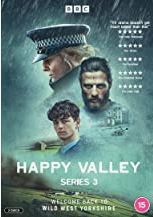 Happy Valley (BBC One, Sunday), recently returned for a third series. This is also adult drama with crime violence and bad language, but it is so much more genuine on a human and dramatic level. It can be emotionally searing – after a one hour episode you can feel you’ve been through the ringer, and each episode packs so much in that it feels like a feature film. The acting, especially by the three female leads – Sarah Lancaster, Siobhán Finneran and Charlie Murphy is outstanding – BAFTAs ahead I hope. There’s a crime plot as expected but also the ongoing story of jailed psychopath Tommy Lee Royce (James Norton, the minister from Grantchester) and the ongoing effect on his traumatised victims. There’s an odd plot device where a prison chaplain (a clergyman of indeterminate denomination) tells the police something presumably told in confidence. In one episode there was a touching but difficult discussion on forgiveness in the most challenging of situations in Happy Valley – ironic title or what!
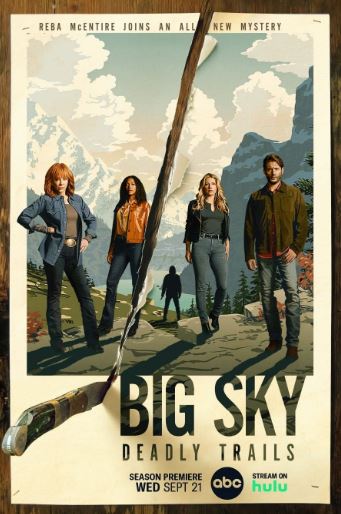
Big Sky (Disney+) yet another US crime drama series. Don’t be fooled by the Disney branding, this one is from their more adult orientated Star channel, and this is certainly for adults, with grim crime violence and bad language, though not overly graphic. It started well with quirky characters and occasional humour topped off with a shocking end to the first episode. However, 3 episodes in, the appeal is beginning to fade as it becomes more formulaic and predictable. The Montana scenery is striking but if the plot isn’t up to it you might as well watch a travelogue. Religion figures, but, as so often happens in TV drama, the supposedly religious people are weird. There’s a cult in the woods but so far this seems random and not connected to the main plot, which concerns disappearing women and human trafficking. We get a wad of transgender promotion from one character who also says that psychotic people are usually religious! To appeal to the psychotic man keeping them hostage the victims start singing hymns – musically excellent but in context it felt rather cynical. Further, the kidnapper has a dysfunctional relationship with his overbearing mother who, wouldn’t you know, has a crucifix on her wall. There's a visit to this household from a Catholic priest who is concerned. It gets violent, but the priest is portayed sympathetically. After 9 tense enough episodes, but still in the first season, the plot largely changes and the break in continuity does not work well.
28/10/22
I was unenthusiastic about Lord of the Rings: Rings of Power (Amazon Prime) after the first two episodes. It is certainly eye-popping on the visual front, and is best watched on a big screen with big sound. I thought the script often sagged under its own weight, though the plot had promise - with a quest that seemed part justice and part revenge. I did stay with it, enjoyed it and finally finished the last episode of the current series. It built up to an impressive Episode 6 – full of tension, action and important plot developments. The absence of Harfoots/Hobbits helped! Things eased off for the final two episodes, with fallout from Episode 6, the return of the Harfoot/Hobbit sub plot, some interesting revelations and much setting up of the next series – rings appear at last! There were subtle religious elements – various rituals and one scene looked downright Eucharistic as a good wizard wielded a monstrance-like staff. There was much reflection on duty, selflessness, sacrifice and the temptation of power.
6/10/22
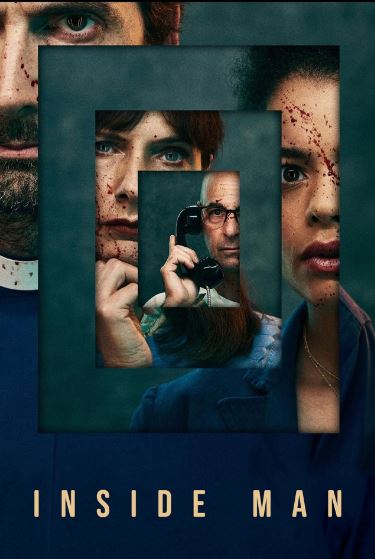 I love a drama series that’s unpredictable, steers clear of stereotypes and has a sharp script, a touch or more of humour and fluid acting. Inside Man on BBC One, which concluded last Monday and Tuesday fits the bill with delights to spare. Its black humour reminds me of Coen Brothers material, especially the Fargo film and series. David Tennant plays a highly conflicted vicar who lands himself in a compromising situation involving a USB drive that he casually agrees to mind for a troubled acquaintance. The random act of kindness propels him into a hellish spiral as he gets tied up in moral knots to rival a dodgy fishing line. This vicar has a foul mouth on him, but is this caused by stress? I’d love to know what kind of vicar he was before the crisis descends. In the throes of it he spins between sacrificial love and cynical manipulation – especially in a church confession scene that’s hard to watch. His son’s maths tutor Janice (the excellent Holly Wells) gets caught up in all of this in the most bizarre of ways.
Meanwhile, and initially connected by just the thinnest of threads, a certain Mr Grieff (the hypnotic Stanley Tucci), a prisoner on death row in the USA who solves mysteries from his prison cell, is drawn into the mystery, along with his wisecracking and serial killer neighbour on the row. Credulity is stretched. The script is sprightly and razor sharp, philosophical, reflective and at times cynical. I loved the dig at ‘the recreationally outraged’ and Mr Grieff’s quip ‘self-loathing is clarity’ as well as his interest in deeds of ‘moral worth’.
The vicar’s faith could do with more exploring. He seems to believe to an extent, despite his misdeeds while his wife, under pressure, mocks his faith. There’s a cheap shot dig about priests and altar boys – that and some crudeness and bad language are unnecessary. Like so many films it does go off the rails somewhat as it nears conclusion and strains credibility to breaking point. The final musings on human nature are rather downbeat, suggesting that deep down we are all capable of murder. I didn’t find anything here for the RE classroom!
23/6/22
In more familiar entertainment territory the latest season of Young Sheldon (RTE One, Fridays, E4, Sundays) has taken a somewhat darker turn, hence, I suspect, the later time slot. The family is under pressure – George, the father, isn’t doing so well at his school team coaching work, a story line that came to a head in last Friday night’s episode. For a while he was enjoying the company (just that) of the divorced woman next door who is quite interested in him. Mary, the very religious mother, is fraying a bit at the edges too, and has been enjoying the company of a trendy young pastor at her church – they even have some guilty cigarettes together! Despite the crises there have been some really funny and touching moments.
A prominent plot line in recent episodes has been the 17-year old son Georgie getting a girl pregnant – and she’s in her late 20’s! She’s Catholic and her parents want nothing more to do with her – believable but it does feed a lazy stereotype. Georgie’s parents are shocked but eventually react with acceptance and some generosity. Mary sees marriage as the desirable option and wants the baby to be brought up in their family’s Baptist faith! George isn’t so sure and all reactions are coloured by the fact that Mary was pregnant when he married her.
Things get quite serious when folks at Mary’s church get all judgemental and attendance at her Bible studies group dries up. She admits that she might have been one of the judgemental ones if it wasn’t her son that was involved. Last Friday’s episode on RTE was the last of the season and was one of the weaker episodes, involving some silly clowning about Sheldon’s first pimple, with celebrity magicians Penn and Teller playing the pimple and the pus in fantasy sequences. Yuk!
17/6/22
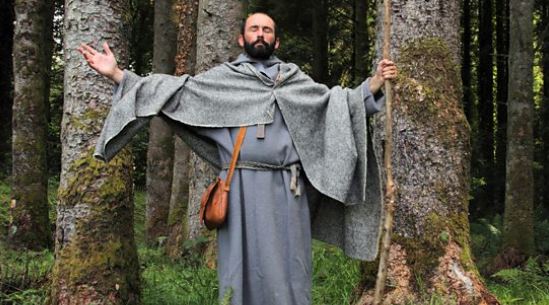
Recently I visited the exhibition relating to St Colmcille (aka St Columba) in the National Museum. It was modest enough but well-presented and informative. So, I was already in the zone for Colmcille – An Naomh Dána (TG 4, last Thursday). It was certainly interesting, but hard to figure out what was historical and what elements were added by later hagiographers. There was general consensus that the monasteries founded or influenced by Columba/Colmcille were centres of great learning. This was true especially of Iona. One contributor described it as ‘the birthplace of Irish literature’. Dr Niamh Wycherly from Maynooth Universitty credited the saint with creating a ‘swathe of ecclesiastical foundations’ which were home to a variety of historical artefacts. Earlier she pointed out that lives of the saints, the hagiography, can reflect more the times they were written in rather than the times they were about, and indeed some stories seemed designed for purposes other than mere history. And so there were stories of the saint sailing on a floating rock, or spreading his cloak miraculously wide to claim a large amount of land. Very often political agendas were at play in these anecdotes, for example as various powers tried to claim Colmcille for themselves and their own purposes.
At one stage it seems the saint was excommunicated or exiled after a row over copyright! Allegedly he had surreptitiously copied a Psalter belonging to another holy man and wouldn’t give it back, which supposedly let to real bloody battles, but again this seemed to serve the agenda of the storyteller. Overall I found lots of historical and folklore interest in the programme but not a lot that was spiritually inspiring. I’m not sure they captured the essence of the man, and maybe that is beyond us now anyway, though one of the points frequently made was that we know much more about Colmcille than about St Patrick or St Brigid. I don’t think the dramatic reconstructions helped – they seemed a bit forced and the saint didn’t come across as very appealing.
This ties in well with the currulum, in relation to people of faith or Irish Christian heritage and teachers may find the full programme or clips from it useful.
Watch on TG 4 Player at this link.
26/5/22
 Dramas based on true stories can be fascinating, but mixing fiction and history can produce odd results. So it is with The Terror: Infamy (BBC Two, Fridays). The first series is still on repeat on RTE 2, Sunday nights, and is an absorbing but very grim story on the ill-fated expedition of Sir John Franklin in the Arctic – one of his ships was called The Terror. The unique aspect of the series is the way it blends in supernatural elements as the historical story is embellished. This new series is running with double episodes, and this time the historical background is the internment of Japanese citizens and US citizens of Japanese origins after the attack on Pearl Harbour. That in itself would have provided an intriguing story, but the ‘terror’ element this time involves a malevolent spirit stalking the camps, leading to some pretty gruesome deaths. The central story concerns Chester, an American of Japanese origin who gets his Catholic girlfriend pregnant. Her parents are unsympathetic to put it mildly. An abortion is planned and this seems to spark the awakening of a nasty spirit who has designs on the baby.
Even as they are considering it the proposed abortion it is described as an ‘offence against God’ and the woman who provides the deadly potion comes to a sticky end. The story is most touching when the woman also considers why she should keep the baby, and in the developing relationship between her and Chester’s family – the personality and cultural differences are huge obstacles, but there was a moving encounter in last Saturday’s first episode between her and Chester’s father.
The second episode last Saturday spends a lot of time on backstory, which drains the tension somewhat. We see an historical adoption and a baby handed in to a Catholic orphanage by a mother who can’t cope. The nun who receives the child is courteous, but doesn’t seem to be caring about the ongoing welfare of the mother. Well, that feeds in to a familiar narrative!
19/5/22
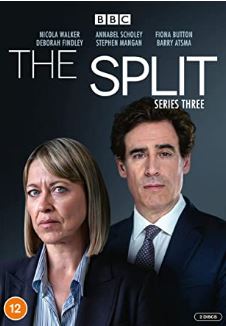
The third and apparently final series of The Spilt ended last week on BBC One. As I’ve written before (see below) it is excellent adult drama, adult in a good way. Mature themes abound but the story is largely character driven, enhanced by marvellous acting and scripting, and for the most part controversial issues are handled with a light touch. For example assisted dying was a recurring theme but I didn’t feel I was being browbeaten by an agenda as a character feared the onset of motor neurone disease. I found it nudged towards choice and autonomy but also flew the flag for palliative care.
The series is aptly named as the main characters are a family of divorce lawyers with their own marital difficulties, with children the victims of the adults’ self-indulgence. I thought that last episode was a tad preachy, not typical of the whole series, with some rather wordy rationalising on the concept of ‘the good divorce’. I don’t buy it. On the plus side the issue of grief was handled beautifully as one character had to deal with the death of her husband. In that episode there was a heart-breaking graveside scene, all the more so as the character didn’t seem to believe in an afterlife. And then, in one of the most moving scenes I’ve ever seen in TV drama, we saw her listening to her husband’s beating heart – in the chest of a man who had benefitted from her generous willingness to donate that organ. There’s also a very touching and subtle friendship between a woman and a widowed vicar. If I’m being vague here it’s just that I want to avoid too many spoilers – for when it turns up later on RTE.
Also noteworthy were the fine original songs contributed to the series by Olivia Bradfield – you’ll find the album on Spotify.
29/4/22
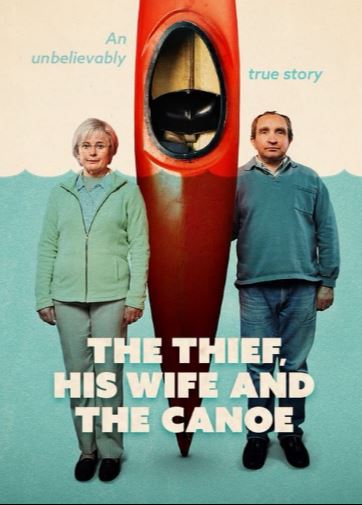 The Thief His Wife and the Canoe concluded last Thursday on ITV. The story itself was quite bizarre – it told of John Darwin, who faked his own death for the insurance money. As portrayed here his wife was reluctantly persuaded to be complicit – even to the point of lying to their two sons, his father and her brothers and parents. This went on for over 5 years and for most of the time he was living in a rented house next door! Later they attempted to move to Panama but a random photo taken there helped to expose the whole thing. The deluded families were devastated and understandably there was a huge family rift. The acting was superb – Eddie Marsan played Darwin as a self-absorbed manipulator with zero empathy (we could have done without his bit of brief gratuitous nudity!), Monica Dolan impressed as the shy and sheltered mother who went along with the scam. Unlike him, you could have some sympathy for her, despite the awfulness of the crime. There was a great humanity about the characters, especially the two sons who had to endure the tragedy of their father’s ‘death’, the joy of his return, (he claimed amnesia) and the sense of betrayal when they discovered the truth. Yet, in the final episode, themes of forgiveness and redemption were beautifully explored. We learned that Anne Darwin was Catholic and we did see her praying at one stage, and later engaging with a prison therapist and chaplain but this side of her life was not deeply explored and her faith didn’t seem to impinge on her calculations.
Even better is the third series of The Spilt, currently on BBC One, Monday nights. This is emotionally searing stuff as a divorce lawyers slug it out in court and in their mixed up private lives. It’s so well acted by Nicola Walker, Stephen Mangan and Fiona Button in particular – I’d give them all BAFTAs. Walker plays a wife who has been unfaithful, Mangan her husband who has been unfaithful and their split is getting acrimonious, especially as he has a new and pregnant girlfriend. Their children suffer hugely as the adults indulge themselves, though they remain very human people we can relate to. Button is one of three sisters, a most likeable character who has her own issues to deal with. In the process she has an interesting friendship with the local vicar who is understanding and supportive. Religion is treated respectfully throughout, but the sexual morals are all over the place. The show mainly shows them and lets us draw our own conclusions. It’s all about the characters and the story and I didn’t feel creator Abi Morgan was browbeating us with any particular agenda.
21/4/22
 Usually there are loads of religious programmes on mainstream media over Easter. Mostly it’s biblical epics and religious services, but I’m always on the lookout for something different and creative. Walled City Passion (RTE One, Easter Sunday) certainly had those qualities. It imagined a peace festival in a certain walled city - Derry, but not identified as such, with a guildhall and a governor! The format was a brash news programme reporting on the event, with reporters and commentators on the scene, when news breaks of a disruptive incident involving ‘Christopher, a Jesus-like character who was allegedly inciting the crowds and fermenting revolution. There were several nods to the familiar passion narrative – the ‘Caiphas Organisation’ out to get Jesus, Christopher falling a few times, the Governor’s release of another prisoner instead of the Jesus figure, the wiping of Christopher’s face by a Veronica character, a news reporter, the security man injured in the arrest (and healed by Christopher) doubling as Simon of Cyrene, and unusually but effectively a devil-like character (actually a high-profile gangster) tempting Christopher with the lure of power.
Yet I found it hard to get very enthusiastic about the drama. At times it felt stilted and awkward, and the shrill reporter on the scene, Jenny, was thoroughly irritating. The kind of things Jesus said were pretty bland (‘vague niceties’ according to one unsympathetic commentator in the show - that may be too harsh!) and certainly not the fullness of the teaching of Jesus. He came across as just a peaceful social reformer, without much of a spiritual context, though at one stage in his agony he cried out ‘Father!’ but no one seemed curious as to what exactly he meant by this. Thankfully they didn’t hedge on the Resurrection and I liked the way that was portrayed, however briefly. That scene stood out as did the scene where he met his mother at the end of his 'via dolorosa', minus an actual cross, which of course would have seemed anachronistic.
More info here: https://walledcitypassion.com/
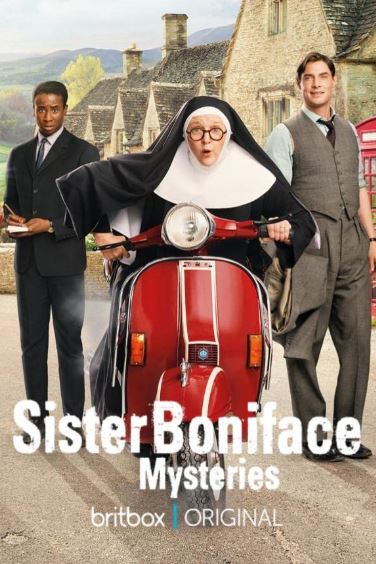
Sister Boniface Mysteries (Drama channel, Fridays) started recently. It is old fashioned in style but recently made and could be described as ‘cosy crime’. Lorna Watson stars as the perky Sr Boniface, described as a ‘nun … and part-time forensic scientist.’ The character appeared previously in the Father Brown series, and apparently she got her skills working in a security role in Bletchley during World War 2 – these stories are set in the 1960’s. It really is rather corny and cringy, with stereotypes in abundance, including some religious ones, though if you’re weary of the ‘adult content’ in modern dramas you might enjoy the mystery frolics. In last week’s episode there are some plot elements with resonance for our times – a real bullet being fired on a film set (like the recent Alec Baldwin case) and a reference to ‘sadistic Soviets’. The whimsy is laid on thick, though some uses of the crucifix might be deemed disrespectful. I did notice a policeman praying – you don’t see that too often in TV drama.
18/3/22
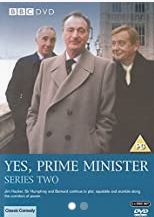 Yes, Prime Minister, currently on repeat (BBC Four, Wednesdays and Saturdays), is as fresh as ever – the political satire still bites sharply. Last week’s episode ‘The Bishop’s Gambit’ is one of the funniest. Very specific to the UK and its Church of England, Jim Hacker (Paul Eddington) the eager-to-please PM has to appoint a new bishop. He is torn between a genuinely religious candidate who has conservative social views, and a liberal who is probably an atheist but whose politics are left leaning and don’t sit easily with the Government. The quips come thick and fast and I can imagine Anglican clergy and Christians more broadly saying ‘ouch’ as the barbs hit their target, but the barbs surely compete with the laughs.
There are so many quotable gems. At one stage the Permanent Secretary Sir Humphrey (Nigel Hawthorne) says: ‘bishops tend to live long lives, apparently the Lord is not all that keen for them to join Him’. The PM suggests letting the Holy Spirit decide which candidate is deserving, but Humphrey is doubtful. Assistant Bernard (Derek Fowlds) says: ‘No one is confident that the Holy Ghost would understand what makes a good Church of England bishop’. I’m not sure that many would agree with Sir Humphrey’s claim that ‘Theology is a device for enabling agnostics to stay within the church’! The PM’s wife is a church goer and she has sound advice: ‘I’d prefer you to choose a man of God’. Hacker responds: ‘I was offered one of them. But he wants to turn the Church of England into a religious movement’. The best joke I thought was Humphrey’s reference to a candidate who had been waiting for very long to become a bishop: ‘Long time no See’.
20/1/22
On a humorous note Young Sheldon (RTE 1, Friday) returned for a fifth season last week. It’s a funny and endearing sitcom which many deft human touches, though with an ambiguous attitude to religious faith. In last week’s episode George, the father, had too much to drink and mildly flirted with the woman next door whose husband had done a runner. Before things got out of hand he had a heart attack and the family rows that carried forward from the last series were all forgotten as everyone rallied round. When he recovered daughter Missy thanked God but Sheldon thanked modern medicine. Perhaps that is the main fault of the show – the tiresome and outdated pitting of science against religion – curious in our fluid times when anything binary is frowned upon.
Sheldon was puzzled that he didn’t get punished for his misdeed of running away from home. He wondered how, in the absence of a divine being (as he sees it), morality and societal rules were to be maintained. He sought advice from his grandmother – with typical directness his opening line was: ‘you’re the least moral person I know’! She didn’t seem to get her punishment either, so Sheldon further wondered - where’s the incentive to be moral? There was a respectful ending as the narrator, the adult Sheldon (from Big Bang Theory) -reflected on where people get their comfort – some , like his mother Mary, get it from a Higher Power as we see her asking God to protect her family, others seek refuge in fictitious worlds (Sheldon is a big Star Trek fan), still others rely on lighter fluid and matches – we see Missy burning a copybook on which she had artistically written the name of the boyfriend who had been guilty of two timing. Nice!
7/10/21
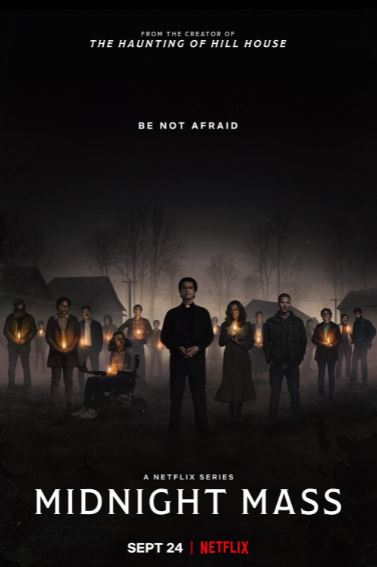 There I was scouring Netflix (it needs cleaning up for sure) and noticed Midnight Mass. And it was only 1 pm. So, it wasn’t a livestream, but a new ‘limited series’ drama with a Catholic background. The first episode was creepy and intriguing. A young man returns to Crockett Island on parole after serving a four sentence for the death by drunken driving of a young girl, who still haunts his dreams (or does she?). A new young priest who doesn’t seem to know his appropriate vestment colours (niche!) arrives with a mysterious trunk, which may or may not contain the previous parish priest who is observed (or is he?) roaming the island in a storm. Cue a plague of dead cats landing on the beach after a storm, eaten by some unseen creature with the wingspan of an albatross. The unfunny thing is, they could have had an interesting story if they dropped the weird stuff and the gratuitous foul language.
The ex-prisoner lost his faith in prison - the opposite of the usual pattern he says. A young pregnant teacher has returned to church and likes it. We see an ultrasound of her unborn baby. The ex-prisoner’s mother is very religious and welcoming, his father is very religious and wary. He insists on the adult son going to Mass, but says he shouldn’t go to communion as he hasn’t been to Confession (someone with splinters of a Catholic background must have written the script). Oddly the priest draws attention to this in front of others, suggesting that Jesus was most interested in sinners anyway. The sacristan-teacher is very religious and a fussy pious woman (or is she?), the sheriff-shopkeeper is a Muslim (not tokenism) and he prays with his son, who smokes dope to fit in with the foul-mouthed altar boys. Oh boy.
After that first episode it’s a mixed bag. There are some moving moments involving forgiveness and redemption, relatable characters searching for purpose in life, some interesting sermons, gorgeous hymns throughout, some surprisingly long theological discussions between people of faith and non-believers, a strong emphasis on Eucharist … why didn’t they just develop these intriguing strands? Instead, like the witches adding ingredients to the cauldron in Macbeth, they threw in bits of Fr Jekyl and Mr Hyde, Sr. Carrie, The Walking Deadly, Angels or Demons, with nods to the X-Files - one character has a picture of Scully on his wall, AND Annabeth Gish, who starred in later seasons of that creepy show, plays a unbelieving local doctor trying to cope with the occult shenanigans – she gets to carry the pointless obligatory gay sub plot (POGS) in a rather box ticking way to keep the diversity police away. I didn’t notice any garlic though.
All seven episodes are named after a book of the Bible and with each one the horror gets worse, as implausibility descends into absurdity and a mighty blood fest. And to please everyone a smidgeon of almost every life philosophy is thrown into the mix. Ultimately religion doesn’t come well out of it and I felt the atheistic or agnostic perspective fared better. Also it’s more than distasteful to see aspects of faith we hold dear being exploited for schlock horror. Some scenes are quite disgusting and repulsive – the horror genre is not known for subtlety and nuance. Yes, we get it, religious extremism is destructive, but the entertainment business too often seems happier dealing with psychotic religious people than with people of genuine faith.
26/8/21
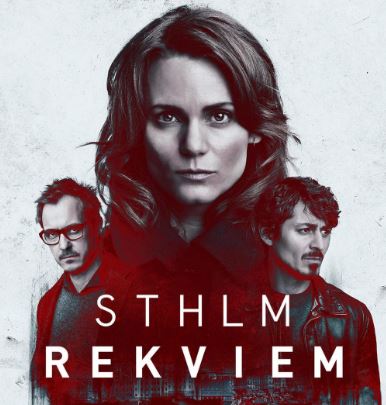 Stockholm Requiem (All Four) is is pretty dark, starting as it does with a two-parter, ‘Unwanted’, about the kidnapping and murder of children – rather grim and unsavoury. Religion figures in that a religious anti-abortionist, wouldn’t you know, is a suspect. Sinister pro-lifers make for handy scapegoats. Yet in another way it has a pro-life message. Women regret abortions, it’s seen as an ongoing deep down pain. The explicit message is ‘Love Them All’, and one woman seems sad that that she didn’t, as she effectively admits to having an abortion, and now is having difficulty having any more children. There are hints too of sheltered religious families not showing compassion. In another two-part story, ‘Bloodline’, a priest and his wife are killed in an apparent murder-suicide, but of course in cop shows, things are not always what they seem. At least the priest (Lutheran I think) is involved in charity work as are his daughters, though there are suspicions of dodgy dealings in the charity, and credibly the sense that the couple were so involved in their charity work that they didn’t give their own children the attention they needed. Another minister, a woman, is upset and speaks of ‘her wife’, ticking the diversity box and going nowhere with it. As the series went on there were many moral dilemmas, but there was also an understanding of the fragility of human nature that was endearing. A regular chat in a taxi between the two main characters served as a motif for reflection and continuity through the series.
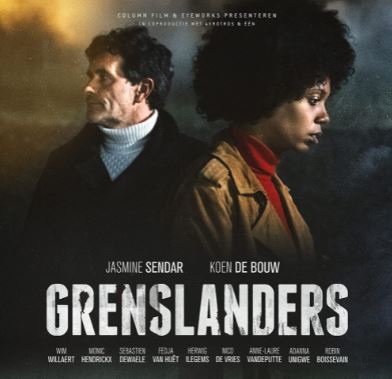 Floodland (All Four) is another dark thriller series, this time based in Belgium and the Netherlands as police tackle human trafficking and their personal demons both sides of the border. The lead character is Tara Dessel (Jasmine Sendar), an insomniac detective with issues who has the knack of annoying just about everyone else in her dogged pursuit of the trafficking network and the murders that follow in its wake. She partners with a police psychologist Bert Dewulf (Koen de Bouw) who has his own troubles at home and in his private practice. So many police characters have damaged home lives, caused it seems by the all engrossing demands of their professions. Maybe there should be a celibacy rule for detectives? At one stage a young migrant is discovered to be pregnant and we get a touching scene where she is delighted to see her baby on an ultrasound. Dessel immediately says she should have an abortion, but the girl wants to keep the baby and the psychologist seems to support her in that choice. As in so many TV dramas I’ve seen the message is that there ought to be the choice, but keeping the baby is the better choice – not exactly the pro-life position, but perhaps heading in the right direction. Nevertheless it’s hard to recommend the show. There are some skewed vales, and while acceptably gritty it’s occasionally grotty as well, with some unsavoury scenes.
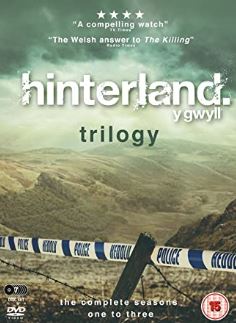 I’ve been catching up on Hinterland (Netflix) an older drama that I missed on live TV. Again child abuse figures, but not so much of the clerical kind, though one clergyman does have regrets about not speaking out about his suspicions relating to a care home, while another minister is anything but religious in his home life. It’s a strange show, sometimes classified as ‘Welsh Noir’, but it has a certain hypnotic effect, especially if you binge watch. Dialogue is sparse – often characters just give each other knowing looks instead of speaking, as if they’re telepathic. There’s an inordinate amount of driving around the Welsh countryside, and as is often the case, once the new detective arrives in town the body count goes up – only once is he even suspected of contributing. It’s relatively free of ‘adult content’ or bad language, but the crimes are violent and there are way too many instances of suicide, perhaps to the point of irresponsibility. At one stage it seemed that many of the criminals cornered by the detective (DCI Matthias, played by a glum Richard Armstrong) ended up killing themselves or trying to at the end – disconcerting to say the least.
20/8/21
Worrying concerns about life and death were the subject of The Salisbury Poisonings (RTE One, Tuesdays), a four part BBC-made drama series about the true story of the poisoning, by nerve agent novichok, of Sergei and Yulia Skripal allegedly by Russian agents. Even though we knew the broad outlines of the case (from 2018) the drama was absorbing. The characters, even the minor ones, were well drawn, credible human beings caught up in a potentially drastic incident. The absence of a central villain was actually a bonus – the authorities had enough of an adversary in the poison itself. The human perpetrators were peripheral as the focus was on the investigators and the victims.
The family members of one infected policeman were not affected at all, though he had shared a home and physical contact with them. One investigator said he was a scientist but that one word for this was ‘miracle’. Also there was mention of a woman lighting candles in church with her daughter and the religious funeral ceremony was very moving. So, though grim, it was uplifting at several levels – not a bad achievement.
5/8/21
Mystery drama Manifest is back on SKY One for a third season and I’ve been working my way through the 13 episodes ... I’m not superstitious at all! The drama is about survivors who return years after their plane crashes, with no evidence of aging. It’s take on religion is rather scattershot, as if Uncle Thomas Cobbley was one of the scriptwriters. In the first episode of the new series a young girl is criminally oppressed by her overly religious parents, with ongoing psychological effects on her. Of course this can happen but it’s a bit of a worn out cliché at this stage. A lead character Ben (Josh Dallas, over emoting at times), having witnessed strange phenomena, wonders if he should now start believing. His sister Michaela (Melissa Roxburgh, consistently strong performance) wonders if the visions the survivors get are messages or ‘callings’ from God. A Government agent wonders if they’re experiencing ‘divine intervention’, others personify the Universe. There’s talk of resurrection, the pocalypse and themes of redemption, doing miracles without God, some dabbling in Egyptian mythology. At one stage a mysterious box arrives from the Vatican and it felt like they were going full Dan Brown. While adult fare, it’s mostly free of the graphic excesses of other shows, there’s no bad language I can remember, but there are generous helpings of corn and soap. A gay relationship feels like diversity box ticking.
The science-religion debate gets aired a few times, with one no-nonsense scientist saying 'perhaps faith has a seat at the table after all'.
It’s trying my patience as it goes on and on and gets repetitious, with new plot angles pulled out of the hat in what feels like random efforts to prolong the series. But many of the characters are likeable, so it’s easy to care what happens to them.
10/6/13
I’ve largely enjoyed the new crime drama series The Pact which finished on BBC One, Tuesday of last week. It was the story of a group of female brewery workers who engaged in a conspiracy (not far right!) to cover up a potential crime, a prank gone wrong. One of them kneels at her bedside to say her prayers after insisting on the cover up and later we see her in Church in a touching conversation with one of the others who is an ex-prisoner on probation and can’t afford to get mixed up in anything remotely illegal. She has several touching conversations with her local clergyman about her purpose in life though at another level she is morally compromised. The clergyman has issues of his own but his character is underdeveloped.
It’s an effective mix of conspiracy, paranoia, moral dilemma, tight plotting and excellent ensemble acting, though with the usual woke elements, especially in relation to same sex relationships, and relatively restrained ‘adult content’. We also get to see people for whom religion is an important part of their lives, however much they struggle with its challenges. Another struggle features an unplanned pregnancy- the father tries to bully the woman into having an abortion but she resists, and there’s a touching scene where we see the unborn baby in an ultrasound. The pro-choice rhetoric is there but the pro-life choice is seen as the better one. There were several high impact plot developments in last week’s episodes, though I wasn’t so enamoured with the morally questionable ending.
Mare of Easttown (Sky Atlantic) is another hard hitting drama series just finished last week. It’s a tightly plotted crime drama, but like the best of them the emphasis is as much on character and relationships as it is on figuring out whodunit. There are plenty of surprises and unexpected plot twists as the murder of a troubled girl is investigated by Mare Sheehan (Kate Winslet), a cop with quite an amount of her own baggage, as is the way with most TV cops these days.
The treatment of religion is pretty positive overall, though the spectre of clerical child abuse hovers. There are a few excellent sermon scenes and themes of forgiveness and redemption are strong. Church attendance is unnaturally large in one of these scenes, but it’s a useful dramatic device for gathering most key players in one place. There’s a benign view of a same sex relationship, prominent enough though ultimately it feels tokenistic, ticking the diversity box. The language is foul, worse than I’ve come across for a long time. The profanities are particularly grating and strangely gratuitous. Does the scriptwriter not trust his story to be gritty and hard hitting enough without all this? Mare Sheehan is particularly foul-mouthed, but Winslet excels in the role, conveying a wide range of troubled emotions.
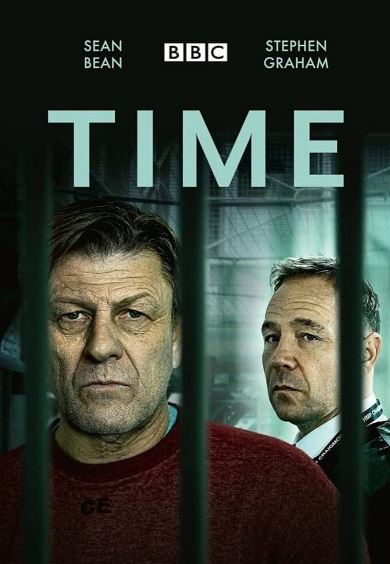
A
new series, Time (BBC One, Sunday) got started last Sunday. I’m not particularly a fan of prison drama, but when I heard this one was written by Jimmy McGovern (Broken, Moving On, The Street) I thought I’d have a look, and I’m hooked after the very promising first episode. Sean Bean plays a teacher jailed for killing a man while driving drunk. The disorientation, even terror, he feels in his first few days in jail is palpable and makes for uncomfortable viewing. There’s a low level of unpredictable violence, and certainly some arrogant and even psychotic prisoners, but there’s also a warm and understanding humanity. This is particularly evident in the emotional visiting scenes, where we see a variety of prisoners engaging positively with their families. Middle aged Mark (the Sean Bean character) is visited by his aging and worried parents in a particularly poignant moment. Mark is uncertain when asked about his religion and ultimately declares himself a lapsed Catholic. Always kind and obliging he agrees to help when Sr Marie-Louise (Siobhan Finneran) from the Catholic chaplaincy asks him to help with some young students on a visit to the prison. When she asks he says ‘I’m not into God I’m afraid’, whereupon she replies cheerfully ‘You don’t know what you’re missing!’
6/5/21
The current series of Line of Duty (BBC One) ended last Sunday night with much fanfare in advance and much criticism afterwards. This show is unique in the way it has brought people together for unmissable live TV – no binge watching here! It’s pretty much essential to watch it live, or better still on slight delay so you can rewind to catch the smallest of details that might be significant. If you wait too long you might be exposed to spoilers that will ruin the twists and turns of the convoluted plot. That last episode, while gripping as always, lacked the big punch people were expecting, and once again Twitter blew up, this time with the term ‘disappointing’ trending.
The world of the show is almost entirely secular, though last Sunday Superintendent Ted Hastings (Adrian Dunbar) worried about the judgement of God on a, error of judgement he had made that had tragic though perhaps unintended consequences. His iconic phrase ‘Mother of God’ doesn’t come across as disrespectful, and on a recent show he topped this with an expression of exasperation ‘Jesus, Mary and Joseph and the wee donkey’, which set the internet alight with searches for images of St Joseph to use in Twitter memes. Maybe in this year of St Joseph the saint had a wry smile at the sudden renewal of interest. Heaven knows what it might lead to.
I added another confession scene to my collection from drama series Viewpoint (ITV) last week. It was a pretty intense adult thriller with a ‘Rear Window’ vibe as a surveillance team kept watch on a murder suspect. In one episode the police officers followed a person of interest and found him in a church, coming out of a confession box … so ha! he must have something to hide! One officer blessed herself and sat down respectfully, the other approached the sinner and reminded him that it doesn’t count, that it’s only words, if you don’t do restitution. So, he urged the man, who had provided a fake alibi, to come clean.
22/4/21
 It’s sad I know, but as those of you who've attended my workshops know, one of my hobbies is collecting Confession scenes from film and TV drama. I added a new one to my collection last week. A Confession scene in Fair City (RTE One) caused a bit of a stir. Unfortunately I came across the controversy first and caught up with the offending scene in omnibus edition last Saturday morning, so I did have pre-conceived notions. Artistically, I found it rather stilted, contrived and inevitably soapy – a woman claims she wants Confession but it turns out she was the priest’s old girlfriend (from pre-seminary days!) and, unknown to him until now, the father of her 30-year old daughter, thanks to a one-night stand the night before his wedding to another woman. Potboiler or what! Sounds like the extended title to a Dr Phil episode.
 The scene took place in an oratory (featuring the lectern put to more respectful use in RTE’s studio masses), and though it starts like a Confession, it quickly gets derailed into recriminations and insult trading – he berates her for causing misery as a money lender, leading to messes he, as a priest, has to clear up. It's a fine social justice speech, but the context of Confession is hardly the place for it. She accuses him of hypocrisy and fires off a few standard broadsides against the Church ‘bishops in palaces’, ‘Catholic hocus pocus’ … I was surprised our old friend Catholic Guilt didn’t have a cameo. I’ve seen a lot worse on RTE, but I think it did wander over the border into disrespect, especially with the smoking and drinking in the oratory. And there was no ‘firm purpose of amendment’ in the room!
1/4/21
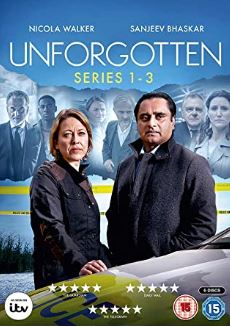 Unforgotten has been back on ITV for a fourth series, with yet another historical crime being unearthed much to the discomfort of those originally involved. Nicola Walker and Sanjeev Bhaskar are always watchable in the lead roles, though the idea is getting a bit formulaic at this stage. The drama has its woke moments. The race issue is handled in an interesting way - an Asian policeman plays the race card frequently to avoid being brought to book for dodgy activities. A high ranking female officer is involved in a same sex relationship though it seems tokenistic, ticking the diversity box (curiously this is the third cop series I've seen lately where a senior female police officer is involved in a lesbian relationship). In one plot thread a married woman is contemplating abortion after a tentative diagnosis of disability. The husband is initially supportive, though expressing pro-choice sentiments of going through with the pregnancy but pulls back when he gets drawn in to the ongoing investigation. The mother is hugely conflicted and at one stage describes abortion as ‘this brutal really horrible thing’. Now there’s a frankness we don’t get very often. The final episode is emotionally gruelling, touching and very human. And there's a beautiful attitude to to the prospect of a Downs Syndrome baby.
The issue was also treated in a noteworthy way in a new Irish thriller series . Smother (RTE One, Sundays) started reasonably well with a tight enough plot and good acting (Dervla Kirwan stands out). By episode three it was wilting a bit, but I’ll probably stay with it at this stage. One plot thread features an arrogant bullying father who, despite making the pro-choice spiel, effectively forces his young daughter into having an abortion – with serious knock-on consequences for her wellbeing. In last Sunday’s episode the baby’s father apologised years later for not being there for his girlfriend, but again the scriptwriter made sure to put in a pro-choice sentiment.
19/2/21
 It was striking how many prejudices and stereotypes relating to Catholicism were in the UK cop series Waking the Dead, (Drama channel, last Tuesday). This melodramatic potboiler featured among other things, an Opus Dei assassin, a pro-choice seductress of bankers who was also an Opus Dei member, a sly dig at a ‘good Catholic girl’ and an old favourite, Catholic Guilt. Maybe they should have hired a theological adviser! Artistically it was something of a hotch potch, with overly dramatic music and scene cuts. If felt older but at the end I was surprised to find it was made in 2007. It was the subject of some controversy at the time - read this article.
11/2/21
Young Sheldon (RTE One, last Fri) turned its attention to youth and religion, in a Baptist context. Sheldon, a young atheist, doesn’t want to go to Summer Bible Camp (his sister Missy is quite OK with it, though I'd for mere social than religious reasons), but, when the alternative 'Stamp Camp' is cancelled due to lack of interest, his very religious Baptist mother Mary insists. He gets a sudden interest in Bible Trivia when a rival prodigy seems to know more than him. There ensues fierce competition for prizes like a Psalm verse bookmark, a Noah’s Ark rain poncho and a John the Baptist pencil topper! The almost ever cheerful Pastor Jeff tries to rustle up some Bible enthusiasm. Missy wonders about God, hell and ‘monkey heaven’ while Sheldon insists on his atheism, being a champion of science and buying into the unnecessary notion of a conflict between religion and science. The show is endearing, moving and funny, but its take on religious faith is often jaundiced, and I fear could provide other budding young atheists with a simplisic rationale. The show could do with a character who is religious and rational, and more nuance would help, though young Sheldon himself isn’t much blessed with that particular quality.
10/12/20
Wonderful visuals effect were evident in the new animated drama Angela’s Christmas Wish (Netflix), based on characters created by Frank McCourt, and following on from the touching ‘Angela’s Christmas’. This time little Angela is still having conversations with baby Jesus in her local church’s crib. The focus this time is on her trying to get her father back from Australia as a Christmas surprise for her mother. The animation, by Brown Bag Films, is marvellous, beautifully coloured with an amazing attention to detail - just look at those floorboards, and the breaths of the characters in the cold air. But effective technique would be rather empty without the engaging, genuine and believable characters, and a Christmas story to draw in the viewers. Highly recommended.
3/12/20
 Who would have thought that an absorbing drama could be made of someone playing chess! Up to now the best chess film I’d seen was Queen of Katwe but drama series The Queen’s Gambit (Netflix) is making quite a stir and everyone I know that has seen it is impressed. Anya-Taylor Joy plays the enigmatic Beth, a chess prodigy who sweeps all opposition before her as she rises to the top of her game, literally. But is she happy? She has had a troubled past, was orphaned at a young age, was raised for a while in an orphanage that wasn’t brilliant but wasn’t as harsh as the usual clichés and was eventually adopted by a childless couple where the father is not enthusiastic and eventually drifts away. The mother is supportive but drinks a lot and finds some validation in Beth’s successes. Beth has addiction issues and seems to have difficulties with emotional connections. Chess is her obsession and others do warn her about negative aspects of her life.
It is filmed and scripted brilliantly and holds the attention through all seven episodes. Like so many good dramas the secondary characters are interesting and three-dimensional and suggest their own internal dramas – the mother, the chess opponents, the amiable chess-loving twins who are her true friends. The story arc is unpredictable, and though it’s based on a novel it has the feel of a true story. We could have done without the relatively mild ‘adult content’, the intermittent crude language and one particularly offensive profanity. Otherwise it would have been a drama that parents and teens could profitably enjoy together.
I found a jaundiced attitude to religion where it did feature, which wasn’t very much. The orphanage is religious run, and Beth frequently skips hymn singing to practice chess - it's presented as an either or. At one stage Beth decides to accept funding for a Russian trip from a Christian
group intent on using her fame to get a Christian message into that Communist country. Things don't go well when she gets a visit from two stuffy Christian ladies about a statement they'd like her to make - now she must decide as to whether she'll take the money and be a hypocrite.
10/9/20
It was ironically titled and decidedly weird - the TV drama Perfect Parents (Virgin Media 3, Friday). Subtitled 'The deadly consequences of a simple lie) and originally from ITV (2006), I was drawn to it by the always excellent Christopher Eccleston being in the cast. The plot was bizarre – parents want their young daughter to get into a well-regarded Catholic school because the local schools are rough, but they’re not Catholic and so they pretend to be and get the sweet daughter to lie and go along with the fiction. They forge a baptismal cert and bribe a priest to write references. The priest is also being blackmailed for allegedly abusing a young boy years ago. Beatings and deaths follow. Vitriol is directed at Church teaching on divorce, homosexuality and contraception, while the Catholic school’s admission policy (catering mostly but not exclusively for the Catholic community) seems to be the root of all evil. It’s a hotch-potch of every anti-Catholic trope you could imagine (even the obligatory dig at Catholic Guilt!) and the scene where the parents go to Communion just to look Catholic is quite jarring.
Despite the deception the young girl takes enthusiastically to the faith much to the surprise of her parents. The compromised priest (David Warner) gives them a thorough drilling in the basics of the faith so they can pass muster at the school interview and they swot from ‘Catholicism for Dummies’ (there is such a book!). The principal of the school, a nun, is prissy at times, but is sharp enough and has a good heart.
I may be wrong, but insofar as the drama has a consistent viewpoint it seems to be that of a lapsed Catholic with an unresolved love-hate relationship with their faith and Church.
As for any educational use, the constant digging at the Church is offputting, but there's a touching Confession scene (somewhat soured later), and the young girl's opportunist Baptism is also quite moving, though the overall context tends to undermine it, though the girl seems sincere. In fact, ultimately, she's about the only decent moral compas in the film.
27/8/20
 The film Hope – Our Lady of Knock (EWTN, last Friday) marked the anniversary of the apparitions of 1879. Directed by Campbell Miller it was a historical docudrama and regular readers know I’m not a fan of the genre, preferring either documentary or drama, but this was quite acceptable. I liked the scenes where we saw the witnesses giving evidence and trying to be as accurate as they could be. A scene where a tenant farmer saw his potatoes turning to mush in the famine was effective, and the subsequent eviction scene was suitably unsettling, but I wasn’t a fan of the uninspiring background music that seemed rather randomly added – it was especially irritating during interviews. And those interviews were quite effective and interesting – speakers included Archbishop Eamon Martin, the Rector of Knock Fr Richard Gibbons, as well as staff members of the shrine and museum at Knock, including the youth ministry.
I liked the way the historical context was set, with special emphasis on the famine, though at times I felt a little too much time was spent on that. I found the latter sequences about the investigations and miracles particularly engaging, as was the coverage of Knock Shrine today (or at least pre—Covid) with its emphasis on Confession – described as ‘the engine room’ of the shrine, where people often leave in tears having unburdened themselves and received absolution. This sequence has huge catechetical application, as has the theological analysis of the apparitions.
 I checked out the drama series Sacred Lies on Facebook Watch - the half hour episodes are unusual for a crime drama, but the production values are on a par with mainstream TV. This one looks promising – a young girl escapes from a cult and an FBI psychologist tries to piece together what happened. Too often religion is portrayed in drama as weird, but so far it’s a little more nuanced here. The FBI guy says he investigates ‘religious crimes’ – he wants to find out ‘why people hurt each other in the name of God, and try to stop it from happening ‘. The young girl is described as ‘a crazy cult person’ she has no hands, can be violent, says she attacked a man because she thought he was God and wanted to kill God. She firmly denies she’s a Christian, not surprisingly. As a regular cop puts it, referring to the cult leader – ‘What kind of nuts follow a prophet named Kevin ’? It is a dark show and I don’t know what direction it will take, but I’ll find out!
Added 3/9/20: After watching a few more episodes I find the story still engaging, but though it's exploring the world of a cult mainstream religion does not fare very well. There are too many isulting swipes at religion, even God, without any apparent understanding of it, or any awareness of the love that's preached and practised by so many. One could argue that these are just the views of particular characters, but there isn't any balance. The religious characters are portrayed as naive, gullible or superstitious. One cynical character, a young woman in prison, who seems to be clued in to reality at a certain level posits the lazy assumed notion that science and religion conflict with instead of complement each other. Yet she quotes the Big Bang Theory, unaware I presume that this was developed by a Jesuit priest-scientist. Asked by the young girl who's an ex-cult member what was there before the Big Bang she says we don't know ... yet. The girl is confused but knows she's had a strange experience that can't so easily be explained away.
Added 4/9/20: As well as dismissing the idea of God, the cynical young woman is also, significantly dismissive of the idea of love, and is both blasphemous and violent. The hard shell seems indicative of inner trauma - both characters are in a reform institution for young offenders.
Added 7/9/20
Finally got Season 1 finished - quite intense. Lots of interesting developments in the religious elements - one episode explores the age old question about why bad things happen to good people. The FBI psychologist, a troubled but good hearted man himself, who is interviewing the young girl, whose name is Minnow Bly, says this question is one of the reasons why people turn to God. Despite Minnow's awful experiences at the hands of the cult, he says that 'not all things done in the name of God are bad'. He says that faith can inspire charity, loyalty and compassion and that religion can give people a sense of meaning. In a later episode Minnow, thoroughly disillusioned with her cult's version of religion explores the approaches to faith of the Christian, Jewish and Muslim girls in the juvenile detention centre. In response to her atheist cell mate she says that 'science is great but it doesn't have all the answers I'm looking for'. When she hears a Bible quote urging us to beware false prophets it really resonates with her. In the final episode she concludes 'no matter what you believe it's no excuse for hurting someone'.
All in all this is for very mature audiences. Religion takes a lot of stick and while the counterbalance is there it's not as strong. There's some, but not enough distinction between cults and genuine mainstream religion. The violence and cruelty in the cult is disturbing and there are same sex relationships among some of the girls in the detention centre. There are themes of anger and redemption, but there's also a warmth towards genuine humanity despite the delusions and evils perpetrated by some.
20/8/20 Elements of Jewish religious ritual featured in the unsettling US TV drama series The Plot Against America (Sky Atlantic/Now TV). I was expecting a tense political thriller, and it was that but so much more. Based on a novel by Phillip Roth, it imagined an intriguing alternate reality where famous aviator Charles Lindbergh became President, America stayed out of the Second World War and the country slowly descended into fascism and anti-Semitism. The main focus was on a Jewish family – some were blind, some saw what was coming, some protested, some adapted and the children observed in confusion and fear. That fear was palpable and almost unbearable as it moved through the last few episodes.
 Zoe Kazan gave an outstanding performance as Bess, the wife of hot-headed Herman, while Winona Ryder was excellent as Evelyn her naive sister who marries a Rabbi (John Turturo, intense and magnetic as always) who co-operates with the authorities in supposedly voluntary re-locations of Jews to the rural heartland – he thinks this ‘absorption’ is best for his community. They also also like the limelight as they are favoured by the First Lady, Mrs Lindbergh.
The drama has some unsubtle anti-Trump messages for today, and at times pursues a simplistic ‘Democrats good Republicans bad’ narrative. We get more insight into Jewish race and culture than into the religious beliefs, though there are as indicated elements of ritual. Catholics get a mention as one of the groups targetted by the Ku Klux Klan.
This was adult drama, with plenty of gratuitous bad language and some ‘adult content’, relatively mild by modern standards (low bar!).
As with many of these dramatic explorations of history you wonder how fair it is to the real people involved and their familes, some of whom are still living.
6/8/20
 I’ve been catching up on the TV drama series Mrs America (BBC Two) which came to an end last Thursday. It was an absorbing dramatisation of the culture war between radical feminists and activist conservatives over the Equal Rights Amendment in the USA in the 1970’s. While I found the show, predictably, much more favourable to the leftist side, it wasn’t quite as biased as I expected, with both sides humanised, and major flaws shown on both sides. Neither side is happy with the portrayal – some from the conservative side complain about the way their home life is portrayed, feminists accuse the show of promoting the ‘Catfight Theory of History’, and also claim the film over estimates the role Schlaffly plays..
Leading conservative campaigner Phyllis Schlafly (Cate Blanchett) was portrayed as a tough campaigner, politically astute, a loving family woman, perhaps imperious and patronising at times and sometimes insensitive to her friends. These negatives became more pronounced as the 9-episode series developed, but as with all such dramatisations of history the average viewer has no way of knowing whether this truly represents the actual person, so there’s always the strong possibility of deep and hurtful injustice.
On the other side Gloria Steinem (Rose Byrne), is a young feminist activist, flaky at times (politically and personally), unsure of herself, a gung-ho advocate for abortion, though a flashback seems to show her pushed into having an abortion when she was a vulnerable young woman. Principles struggle with pragmatism as she tries to get the Democrats to support abortion – in the wheeling and dealing prior to a key vote at a convention she wants ‘right-to-lifers’ not be allowed to speak – she doesn’t want to hear anyone calling abortion ‘murder’ just before a vote. The pro-life position isn’t articulated as strongly as the pro-choice argument – the humanity of the unborn and the human rights argument against abortion barely feature.
The race issue surfaces, mainly through efforts to get a black woman, Shirley Chisholm on the presidential ticket, which leads to more splits among the feminists – again principles v pragmatism. At one of Schaffley’s meeting she is uneasy at the racist talk of one of her supporters and quickly ushers her off stage. The other side however is quite enthusiastic about throwing around unfounded slurs about involvement of the Ku Klux Klan in her movement.
Most of the focus is on the feminist activists. They are given more attention, are seen as heroes, especially in the last episode, though it’s warts and all – in these ranks there is considerable in-fighting and disloyalty, and personal lives are characterised by broken marriages, threesomes, sleeping around and more. And yet we see at times that women on both sides of the polarised debates have common concerns – all have to put up with chauvinistic men, two-faced politicians, and family problems. In one episode we see both Schlaffly and one of the feminists hugging their daughters in times of difficulties. And yet they seem to be from different planets, with gaps in age, attitude, dress sense, politics and temperament. In one pre debate meeting in a washroom Schlaffly and radical feminist Betty Friedan (Tracey Ullman) trade smart remarks, yet in a couples debate Schlaffly and her husband have a friendly chat with the opposing couple.
Content wise this is a show for adults. Same-sex relationships are portrayed rather frankly.An anti-marriage play is particularly crude, and there’s a bizarre sequence when a ‘Mass’ said by a feminist nun is attended by a conservative woman, Alice (a fictional composite character, played by Sarah Paulson) who has had too much to drink. This is somewhat clichéd - conservative woman, sheltered, very interested in her family and her recipes, gets out for a political convention and goes off the rails. More realistically she does pull back a little from the campaign - she feels somewhat taken for granted by Schlaffly and can see some common ground with the feminists as regards generaly equality issues in society.
There's a strange Confession scene as well where Schlaffly
expresses angst about having, possibly, a gay son. We don't get the priest's reaction. This must surely be the most unsatisfactory use of poetic licence. The scenes where the family says grace are more appealing and present a more positive view of faith. As if to match this the feminists are seen having a secular moment of meditation.
As drama it is riveting, with brilliant performances all round, but, apart from names, facts and looks, how much is historically true? For the uninformed the drama may become the history.
I wouldn't see much application for this show in a school setting, apart perhaps for the grace scenes.
23/4/20
Coming to an end last Sunday was the costume drama Belgravia (UTV), adapted from his own novel by Julian Fellowes (Downton Abbey). I was lukewarm at first and yes it had many of the clichés of the genre (including hidden family secrets and the inevitable cad!), but it had a certain humanity, the characters were reasonably engaging, and the acting was classy. It was interesting to see Tamsin Greig and Paul Ritter from Friday Night Dinner in very different roles, showing how versatile they are, and they were joined to great effect by other stalwarts like Tom Wilkinson.
Though not particularly religious or spiritual, the drama was infused with themes of morality, family devotion, sin, redemption, hope, class privilege and judgementalism. One of the most obnoxious characters was a vain pastor with an addiction to gambling, a total lack of personal insight, and a repulsive sense of his own importance. The one time he had to deliver a sermon (pre-written by an absent colleague) it was all about his own sins! A better man might have taken it as a sign, but he just took it as a nuisance. In one key scene a woman of loose morals actually referenced Christ when she tries to convince her husband of his own worth, in that while he was tempted, as Christ was, he did the right thing. I found the ending quite acceptable – enough closure to be satisfying but enough openings for a potential second series.
9/4/20
Funny for sure, though questionable as a children's show, Young Sheldon (E4, last Thursday) explored the matter of prayer. In the episode ‘Slump, A Cross and Roadside Gravel’ (also this Good Friday, RTE 1) Missy, Sheldon’s twin sister, was doing poorly at baseball so she prayed about it, much to the delight of Mary, her mother. She even was willing to wear a cross that was special to the mother. All was going well until it turned into superstition – Missy’s game improved and the cross became a talisman – she was even rubbing it on the other players’ sporting equipment! At one stage the mother got frustrated – in her prayer space in the garden she lamented that she had one child who didn’t believe in God (young Sheldon), one who thought God was a magic trick (Missy) and one (Georgie) who wasn’t interested because God was not a teenage girl! I liked her parting words – ‘Lord … give me the strength to keep guiding my family to you, I can’t do it on my own’.
19/3/20
One of the religious programmes that caught my attention during the week was a new film I Am Patrick that landed on Netflix last Thursday. I’m not a fan of docudrama (two stools and all that) and this film didn’t cure me of that prejudice. I was glad that the film makers (Christian Broadcasting Network) relied almost exclusively on St Patrick’s own writings, the Confessio and the Epistola, using the translations of Fr Pádraig McCarthy and Thomas O’Loughlin so there were no snakes scurrying away. The drama sequences were naturalistic for the most part and the visions the saint spoke of were there but rather low key.
Three actors played Patrick at different stages in his life – I was particular impressed by John Rhys-Davies (Gimli in Lord of the Rings)as the older Patrick. He added a certain gravity to the part, a certain modesty and dignified tiredness as he settled down to write his Confessio, partly to defend himself and his ministry against accusations from church authorities in Britain. I’d like to have seen more focus on this role as the rest of the dramatization was somewhat stilted. The cultural setting was well done and the cinematography well succeeded in capturing the rugged Irish landscape – much of it from Clare and Mayo and hardly changed since the saint walked those paths.
I found the documentary sections more engaging, including interviews with Dr Tim Campbell from the St Patrick Centre in County Down, Dr Elva Johnston and Dr Charles Doherty from UCD, biographer Thomas O’Loughlin (‘Discovering St Patrick’) and Fr Billy Swan who concentrated on the saint’s close relationship with God, following the line of his book ‘The Experience of God in the Writings of St Patrick’.
As regards school use, I'd say students might find the whole film too long for one setting but use of selected clips could be very effective in exploring the life of St Patrick as a person of faith, and dealing with the topic of Christian heritage. The justice theme of human trafficking could likewise be explored via the fate of Patrick in his early days.
6/2/20
 Messiah is an intriguing 10-part drama series on Netflix. One of the more striking scenes was a dramatic march on Washington led by a character thought by his followers to be the Messiah returned. It is not a theological work and some of the premises don’t sit too easily with Christianity (e.g. at one stage he seems to be negative about Scripture), so some faculties have to be suspended to enjoy it. Some of his activities have echoes in the life of Jesus (e.g. with his followers in the desert, being interrogated by authorities, slipping through the crowds unnoticed). He has some wise sayings alright (e.g. ‘if you seek comfort you won’t find truth, but if you seek truth you may find comfort’) but these may have been lifted from other sources. It’s all very ambiguous and mysterious but quite intense, absorbing and rather unpredictable. Michelle Monaghan excels as a conflicted CIA agent and there are other interesting characters – an angry Israeli agent who won’t confront his many demons, a disillusioned Baptist Minister who finds new purpose in following the guru. So is this mystery man really a/the Messiah or a charlatan or a fantasist or political extremist?
As far as any objectionable content goes, we could have done without the fairly frequent F-words and unfortunately it is also marred by a gratuitous sex scene that’s fairly graphic. Apart from that I think it would be unsuitable for school use as I reckon it would cause more confusion than anything!
30/1/20
The US comedy Young Sheldon often hypes up the alleged conflicts between religion and science, with Sheldon the science-obsessed atheist child sometimes dismissive of religion. Yet the show does show warmth towards its religious characters, especially Mary, Sheldon’s mother who is kind, loving and fiercely protective. In an episode on E4 last Wednesday, Sheldon was overwhelmed by his father getting him to keep a secret from his mother. The burden was too much and he turned to his Catholic friend Tam, whose family is Vietnamese. Tam told him about Confession which Sheldon thought was “a great idea”, so he wanted Tam to hear his Confession. After puzzling it out Sheldon reckoned that if he wasn’t a Catholic and Tam wasn’t a priest, it made “perfect sense” to proceed! After the ‘Confession’ Sheldon felt “a weight lifting off” his shoulders and “felt like a new person”. I’ve always thought the Sacraments made so much sense on a human level, but I wasn’t expecting to find this view validated from such an unlikely source!
I didn't find the scene disrespectful and I have a very curious addition to my collection of Confession scenes. The clip might be useful for teaching the Sacrament of Reconciliation in class.
5/12/19
 The Royal Family in Britain has been hitting the headlines recently and it’s not all good stuff. Coincidentally, I presume, the latest series of The Crown landed in its entirety on Netflix last week and I’m enjoying getting through it.
First hurdle for the programme makers was to effect the transition of actors – especially the role of Queen Elizabeth, with Olivia Colman taking over from Clare Foy who had made the role her own in the first two series. The transformation was handled rather tongue-in-cheek, with the powers that be changing her face on a stamp to reflect that fact that she was getting older – but the profiles were so different! Jason Watkins is superb as Labour Prime Minister Harold Wilson – all the more because he is more used of late to play comic roles – in the excellent BBC send-up W1A and the lacklustre John Cleese sitcom Hold the Sunset.
So far I’ve seen two exceptionally good episodes. Episode 3, ‘Aberfan’ centred on the disaster in 1966 when a coal mining pit collapsed killing 116 children in that small Welsh village. There was an emotional intensity that was fully genuine. The mood was sober and sobering throughout as the country and the royals tried to come to terms with the scale of the disaster. The mass funeral scene was almost unbearable to watch. The drama centred on what might be the appropriate response of the royals to the tragedy – whether to remain distant and aloof in the tradition of the office or to show a human side and bring comfort to the bereaved locals.
The following episode, ‘Bubbikins’, was as good if not better. With huge echoes of another event from last week, we saw a royal (Prince Philip in this case) giving a car crash interview on TV. To mend that and give better PR to the Royal Family they agreed to do a BBCdocumentary and that went down like a lead balloon. Early on we were introduced to an elderly chain smoking nun looking after the poor in Greece, a feisty woman who turned out to be Princess Alice, mother of Prince Philip. Her arrival in the rarefied atmosphere of Buckingham Palace provided some of comic moments. But she was also devoted to prayer and stressed the vital nature of faith to Phillip who said his faith was ‘dormant’.
Faith themes were picked up again in Episode 7, ‘Moondust’ which explored Philip’s religious life in more detail, and tied his faith development into his obsession with the 1969 moon landings. His private audience with his moon walking heroes (different planets, almost literally!) contrasted with his heartfelt opening of heart and mind with a group of troubled clergymen in a retreat house he supported. Rarely has religion been treated so seriously and maturely in a TV Drama.
The main historical events are presumably accurate, but obviously all the private conversations are imagined, and I’m not sure that’s quite fair to people who are still living. However as drama it is intense, emotional, powerful and surprisingly relevant.
12/9/19
In drama land there has been a glut of new shows on TV. Manifest (Sky One, Tuesdays) has an intriguing premise – passengers on a plane from Jamaica experience severe turbulence and when they finally land it’s five years later! Life has moved on without them which causes quite a few relationship issues, and to cap it all they have visions and premonitions (characterised as ‘callings’), which seem benign.
There’s speculation that there might be a religious dimension and some take that too far, regarding the ‘returned’ as saints or divine or at least as miraculous healers. One of the returned sees potential, sets up the Church of the Returned for the devotees and passes the collection basket. Melissa Roxburgh makes for a feisty heroine, a prickly, sometimes surly cop whose boyfriend has married her best friend in her absence. At one stage she has a chat with a priest about her situation, but this plot line hasn’t been developed yet. Needless to say shadowy elements in the military want to weaponise the special powers of the passengers and intrigue ensues. It bears comparison to Lost in plot terms (mystery flight etc.), though it’s more ‘Lost Lite’, at least so far.
Some of it is clichéd but the characters are sympathetic, there are some interesting speculations on science and religion, meaning in life is regarded as important, there are residues of traditional morality (e.g. family is vital, a particular adulterous one-night stand is seen as morally wrong) and it moves along at a sprightly pace.
15/8/19
 I've been getting some laughter therapy from US sitcom The Kids Are Alright (RTE 1, Friday nights). The show features a US Catholic family in the 1970’s – eight boys (we get it – large Catholic family) with no-nonsense parents. It’s fast paced, witty and avoids sentimentality.
Much of the time Catholic element is background. The eldest has left the seminary, there are references to the mother going to church, the boys cover the eyes on a picture of Our Lady so she won’t see their mischief – and there’s a lot of it! Despite bringing the boys up strictly the mother has a certain moral flexibility – in one episode she gets a fancy hairdo and leaves what she thinks ought to be the price rather than the actual charge, which is greater. The local priest, Fr Dunne, doesn’t get much of a look in – given that he’s played by Paul Dooley I hope he features more prominently in future.
References are made to his sermons and in one episode the father insists on bringing one of the boys, 18 year old Eddie, to Confession after he comes home at 3 am having visited his girlfriend. These are suspicious parents and usually their suspicions are well grounded – I’d say most parents can relate to staying awake restless until all the family members are in bed.
Last Friday's episode tackled on the family planning issue, with the parents trying to find ways and means in line with Church teaching. This leads to a hilarious Confession scene that treads a shaky line on the respect front. The moral flexibility surfaces again and the advice from the priest is not of much help. The mother has a sly dig at the Church for not being scientific, which begs a few questions. At times the parents show that are loving, at times they seem even dismissive of the kids' concerns e.g. in a rather offputting scene where a meaningful child's toy is binned.
Creator Tim Doyle has created a show that’s entirely credible, based it seems on his own upbringing. He does the role of narrator himself and it has to be said this show reminds me particularly on The Wonder Years, and to an extent Malcolm in the Middle and Young Sheldon. And that just means the show is in pretty good company.
25/7/19
 I have mixed feelings about US sitcom Last man Standing (new episodes 5 Star, Tuesdays) starring comedian Tim Allen coping with a house full of women – a wife and three daughters. It can be funny, moving, and annoying too – e.g. I’m uneasy with how much the Allen character likes guns (he runs an outdoor sports store). The Allen character Mike Baxter is a Republican, in the past has thrown plenty of digs Obama’s way but other characters, including one of the daughters and especially son-in-law Ryan have different views leading to lots of political banter. At times it seems to promote traditional family values and we often see the family saying grace or attending church.
In last week’s episode however some of the adult children casually try a séance as if it’s a harmless joke – complete with Bernie Sanders ‘Keep the Flame Alive’ candles! We are reminded that Ryan runs a pot shop which he has taken over from Mike’s father, with Mike’s reluctant approval – marijuana is legal in Colorado where the show is set, and that’s often seen as a joke too. So, it’s a rather odd mix of values.
I’ve written previously that I’m not a fan of the approach to religion in US comedy series Young Sheldon (RTE 2 and E4). Too often it seems rather dismissive, patronising and maybe even mocking, though sometimes what is being sent up is the poor attempt at religiosity by some of God’s children, a bit like The Simpsons. So, teachers might find some clips useful to illustrate a point, but might have reservations about directing students towards a show whose overall thrust might not be conducive to faith, expecially among those whose faith is immature or shaky anyway.
Whatever the case, I found last Wednesday’s episode on RTE 2 rather moving. The most genuinely religious person, Mary, young Sheldon’s mother, has a crisis of faith after the death of a young girl in a car accident. Pastor Jeff, a rather ambiguous character constantly harried by the awkward questions Sheldon poses in church, says he has doubts too but deals with it by throwing himself into even more intense religious practice. Mary tries, and there’s a striking scene where she prays in her newly constructed faith garden. But it doesn’t quite work for her – next she cuts loose with a night of drinking with her mother! Unsurprisingly the experience isn’t enlightening. In a genuinely touching scene at the end Sheldon, a science obsessed non-believer, assures her that considering the precision of the universe belief in a creator is quite logical, but more importantly she is moved to tears when he says that of all the people in the world she is exactly the perfect mother for him – ‘What are the odds of that!’ You can watch the clip here.
In a related episode on E4 last Friday Mary got upset, fearing she wasn’t a good mother. Her own mother Meemaw puts her right – ‘you’ve done a fantastic job with those kids’, and reminded her that mothering is ‘not a job that gets a lot of compliments’. Nice one.
11/7/18
I have mixed feelings about Wild Bill (ITV Wednesdays and Virgin Media One Mondays). It’s a crime thriller with an American cop taking over a UK police department, ironically in the English town of Boston, Lincolnshire. Cue some predictable cultural differences with mild comic effect. Played by US actor Rob Lowe (comical in Parks and Recreation) Bill Hixon is a cranky enough cop, not strong on social skills and not popular as he has the task of effecting redundancies. There’s some gratuitous, though infrequent, bad language and his affair with a local judge stretches credulity. All that being said, the crime stories are well plotted, there’s a dedicated police woman who has some difficult moral dilemmas, the minor characters are well drawn but most of all the show has a warm humanity at its heart. In episode 3 a criminal has turned his life around and retreated to a Jesuit institution to make a new life. But he has left a daughter behind and the story of their relationship is ultimately quite touching. Likewise there’s a prickly but interesting relationship between the chief and his teenage daughter – she is coping with a new school and life without her mother who has died, and he is having trouble coping with her. Curiously in that episode the Jesuit institution has a sign outside ‘No women beyond this point’ which I thought to be anachronistic. A Jesuit source tells me such a sign would never appear on any of their houses.
In Episode 4 we find that Bill is familar with scripture as he meets with a suspect who, as in the above case, is
trying with the help of religious faith, to reform himself after previous brushes with the law. Again, the end of this episode is quite poignant.
13/6/19
One of the contemporary problems in the area of religious belief is the mistaken assumption that science and religion are in conflict. You get people quoting the Big Bang theory as if it contradicts religious belief without realising that the theory was developed by a Jesuit priest - Fr Georges Lemaitre, and that Soviet scientists rejected it because they thought it came too close to supporting a religious view of the world and creation!
The false polarisation between religion and science is a bugbear with some RE teachers and unfortunately was evident in comedy drama Young Sheldon (E4, Monday of last week) which, ironically, is a spin off from another show, The Big Bang TheoryIn this episode Sheldon declares he doesn’t believe in God but accepts the challenge of the pastor (who says he has ‘the coolest boss’) to do some research, like a good scientist would do. The mother is not too happy when he starts exploring other religions for his database – ‘Your database is Baptist – that’s all the date you need!’
Sheldon takes to the study with his usual thoroughness and makes some learned comments about the Gospel of John. His discussion with a young Catholic, student, Tam, is less enlightening, though of course these are little children talking about religion, always interesting even if the theology is a bit off. This Catholic says Jesus is not God, but ‘the Son’, and adds that there’s a ‘Ghost’ as well, but not the scary kind, more like Casper (the friendly ghost!). Sheldon says he doesn’t have any sins, but Tam says therefore he has the sin of pride. Eventually Sheldon invents his own religion, Mathology, where the only sin is stupidity! This is after he has a dream about binary code being God! Among other things this version of God says that without evil and suffering there can be no good and happiness.
Though very funny at times, and the mother is certainly a likeable character, Christians may have reservations about a somewhat negative attitude to religion in the show, and in relation to any possible school use, it might well reinforce nagative prejudices towards religion among young people.
6/6/19
Is there anything funny about the battle between good and evil? Can it be be taken lightly in any context? Even in the world of fantasy fiction?
These questions were prompted by the new drama series Good Omens which was launched in its six episode entirety on Amazon Prime last Friday. I binge watched in the line of duty! Considering that the original book was co-written by Terry Pratchett (with Neil Gaiman) it should come as no surprise that the plot is silly and that all sorts of religious faiths, legends mythologies are jumbled together in a comically occult, but entertaining, hotch potch. The storyline features a rather foppish angel, Aziraphale, (Michael Sheen) and a sleazy demon, Crowley (David Tennant) who get along quite well with each other as they go about their business on earth. But they have in a sense gone native, got to like the earth so much that they are not too keen when they hear that Armageddon is imminent and their cosy lifestyle will come to an end. The demon delivers the anti-Christ to a hospital run by satanic nuns but, in a staple of many comedies, the babies get mixed up, and so the anti-Christ is lost.
If a mature believer could get over unease about the ludicrous premise and the digs against God about suffering you might enjoy some of the dubious theological banter. At times there’s a serious edge to it, as when a modern witch-finder says the Churches don’t do the battle against evil anymore, in this ‘desperate age’, or when the demon having being described as ‘fallen’ says ‘I didn’t mean to fall, I just hung around with the wrong people’. Other times it’s just comical, as when God is described as liking The Sound of Music or when the Angel Gabriel smells something evil about the Aziraphale’s ’s book store, the latter says ‘That’ll be the Jeffrey Archer books’!
Frances McDormand plays the Voice of God, as a rather detached narrator making quirky comments – I thought this aspect could have been better developed, and the series could have done with a theological advisor. I was reminded of The Screwtape Letters by C.S. Lewis, but that had a spiritual depth sorely lacking in this outing. The brief Garden of Eden nudity could have been handled more discreetly (bummer!) and the occasional foul language struck a sour note, especially in a show featuring children. Apart from one dodgy comment the crucifixion scene was handled with respect – thankfully they resisted the temptation to make a skit of it.
If there’s any philosophical coherence it’s an unsubtle humanistic one – with the other-worldly forces of good and evil seen as capricious and uncaring, and the real battle being between heaven and hell on one side and humanity on the other. As for artistic flaws, it went on too long, and as it was about Armageddon, could have had more dramatic tension.
18/4/19
Comedian is Tim Allen stars in the sitcom Last Man Standing (currently on satellite channel 5 Star). Allen is Mike Baxter, an American conservative who sells guns and sports gear but often finds himself at a loose end with his wife and three daughters, not all of whom share his views. It can oscillate between cringy and touching, but prayer, church going and the value of family are central, though any trace of sentimentality is usually dispatched with a joke. In a recent episode the show tackled an issue that I’d say causes lots of heartbreak to religious parents – when the offspring stop going to church. Mike values church going, though he frequently sleeps through the sermon. His wife points out that church services don’t have to be entertaining. Initially Mike advises the reverend to liven up his sermon with jokes and initially this seems to go down well and bring the youngsters back, but the effect is just temporary. He realises that for a more permanent solution the young adult offspring must become more invested in what’s going on, and so one does the collection, one designs new robes for the gospel choir and one leads the singing. The idea that people would flock back to church if the songs were better is rather lame, but the involvement message is spot on.
Another recent episode tackled the dificult issue of what religious parents do when their adult offspring don't want to get married in church. Christmas episodes often get in plenty of humourous digs at the secular or politically correct approches to Christmas.
21/3/19
I've been watching a new comedy series, Home (Channel 4, Tuesdays) which I find funny and warm, unfortunately with bad language, that was pointless, gratuitous and grating, especially so with a child actor taking a central part. This series tells the story of Syrian refugee Sami, an English teacher who stows away in an English family’s car while they are passing through Calais. When they unpack they get more than they bargained for. The script is sharp, smart and funny and the characters are likeable, which always helps. The mother is generous and wants to help Sami - at one stage all she has for him is a loyalty card from a coffee shop – if he buys a few more coffees he’ll get a free one! The mother’s new boyfriend is very suspicious of Sami but he’s also something of a blow-in to the family and after a row ends up sleeping on an adjoining couch to Sami.
There are touching moments as Sami tries to re-connect with his family, lost in transit, and between the many funny situations there are timely reminders of the plight of asylum seekers and reflections on welcoming strangers. Sharp points are made about attitudes to refugees through the prejudice that Sami meets.
In Episode 2 the young son prepares a prayer space for Sami, complete with Muslim prayer mat, but he has to tell the parents discreetly that he's Christian!
Left to himself, in a touching scene, he does pray in his own way.
15/3/19
Last time around I thought Derry Girls (Channel 4) had potential but was spoiled by the gratuitous profanity and bad language. I had faint hope that the new series (started last week) would be an improvement, but no, right from the start the language was profane, foul and gratuitously crude. The sad thing is that it would have been just as funny without it, and could have been a warm but quirky drama most of the family could enjoy. And admittedly it was very funny – this time the girls from the Catholic school in Derry went on a bonding exercise with boys from a Protestant school in in order to build bridges between the communities during The Troubles, but it wasn't that kind of bonding the girls had in mind. The accompanying nun, Sr Michael, a tough nut seemed to have no time for priests, especially the suave philandering cleric who led the wishy washy workshops. Eventually she found common cause with a prim teacher from the Protestant school, a lay woman who couldn’t see the point in getting them together at all. There was particularly funny scene where the priest tried to get the youngsters to outline what Catholics and Protestants had in common, but all they could come up with were differences - what appeared on the blackboard during that scene is taking on iconic status.
The second episode this week featured much less foul language, which was welcome, and most if not all was from Michelle, for whom it's a character trait. There was nice interplay between idealism and cynicism as a new English teacher inspired some of the girls with a love of poetry ... but it wasn't that simple and avoided sentimentality. It was a bit like the film Dead Poets Society, but edgier. However it was marred by a very offensive remark about a statue of the Child of Prague (which was being kidnapped at the time!). Easy target - I'd suspect this would not have been made about a Buddha. It's such a pity as there so much to be admired about the show, including a very low key Tommy Tiernan, and the usual drawn out pedantic shtick from Kevin McAleer.
16/1/19
RTE’s War of Independence drama Resistance (RTE 1 Sunday nights) was preceded by much hype. Now two episodes in, it is better than I expected. So far the pacing is brisk, the acting quite good, and the script serviceable. The creative team are obviously keen to highlight the role of strong women, but for a particular group of women their strength and service is reduced to caricature and stereotype, especially in the first episode. Yes, it was the nuns! No doubt there were unpleasant nuns and cruel practices, but that was far from the full story. Unfortunately that’s all we’ve got so far in the forced adoption story here – no nuance for the nuns. The Black and Tans were rather one-dimensional also, though two-tone by name, but even one of them was shown as having a heart, uneasy with the arbitrary violence of colleagues.
Last Sunday’s second episode featured the reappearance of one of the nuns, and it was an improvement, with her being a strong woman, defending the rights of a child in her care not to be bartered in return for intelligence information for the IRA. But then she had a private off-screen chat with a republican priest and hey presto the young boy is spirited away by shadowy figures. There were harsh words too for the IRA gunmen, though their characters are more diverse and three dimensional, from those who are trigger happy, through those turning a blind eye, to those with qualms about an armed struggle.
10/1/19
BBC has also launched a new dramatic adaptation (no singing!) of the Victor Hugo novel Les Miserables and as of last Sunday night it’s two episodes in. So far it’s reasonably good, and of particular notes is the character of the Bishop (Derek Jacobi), a generous man whose striking kindness turns a convict’s life around. The convict, Jean Valjean (Dominic West) has been treated with severe cruelty, given 19 years hard labour for stealing a loaf of bread. Needless to say his attitude to humanity is rather jaundiced, but his inherent goodness is sparked into life by the selfless hospitality of the Bishop, not at all the typical villainous or vain Bishop character of so many dramas. Like all the BBC’s costume dramas the attention to detail is impeccable, but attention is also given to pace, plot, script and character, with a strong empathy for suffering humanity included. Some elements were spiced up, sometimes to excess (presumptions about what a modern audience is looking for?) so showing it after the 9 pm watershed made sense. Last Sunday’s episode was particularly tense as it detailed the descent of Fantine (Lily Collins) into prostitution. It inspired reflections on the kindness and cruelty that humans are capable of, with the themes of redemption and forgiveness to the fore.
The scene with the Bishop in Episode 1 might be suitable for classroom use, when exploring themes of forgiveness and redemption.
The Bishop's comment at the end of the scene 'I have bought your soul ... you belong to good' might need some debriefing!
15/12/18
One interesting new TV drama, with some religious elements, is Mrs Wilson (BBC One). This is an intriguing true story of a woman who finds out she doesn’t know her husband very well when secrets surface after he dies suddenly. Ironically this Mrs Wilson is played by her granddaughter Ruth Wilson – and she’s really good at portraying the dismay as she discovers layers of secrecy. Again there are some suggestive scenes and a somewhat skewed morality at times, but it is engaging. The husband in question was Catholic, at least in name – in one bizarre moment we see him saying a guilty Rosary after a pre-marital fling with the future Mrs Wilson. In the second episode we saw the confused and betrayed Mrs Wilson in a church, apparently saying the rosary, or at least hanging on to the Rosary beads when she is approached by a kindly priest (Ian McElhinney), her late husband’s pastor. This plot strand is further developed in the third and final episode, where the priest guides Mrs Wilson through some frustrating times. At one stage she takes out her frustration on that Rosary beads and on pillars in the church, but later there are surprising developments on the faith front. This final episode is intense, strong on themes of understanding, forgiveness and redemption. The drama has more than its fair share of family conflict but it feels like it is marked by an understanding and love of humanity, with so many characters you could empathise with. The final scenes where we get to see the real characters on whom the drama is based is quite moving. And it's rare to find a TV drama so positive to religious faith.
14/12/18
I found it hard to warm to Death and Nightingales, a BBC-RTE co-production based on a Eugene McCabe novel I haven’t yet read, but this drama does it no favours. The Catholic-Protestant background in 19th Century Northern Ireland is interesting enough but under-developed, as are the political plot threads. The script is dull, the pace slow-moving and the plot rather hackneyed (young girl escapes brutal stepfather and takes up with poor but handsome young lad). Jamie Dornan is passable in the latter role, while Ann Skelly shows some potential as the young girl. The Dornan character is Catholic in name though he has a picture of devils beside the Sacred Heard picture and makes a disparaging remark about the latter. There are some unnecessarily suggestive scenes, as has become all too common. There’s major guilt on behalf of the abusive step father, but for once it’s not ‘Catholic Guilt’! In last week’s episode the pace slowed down further and it really was turgid, when, with a crime plot afoot, it should have been tense. I nodded off twice! At least the priest character (Sean McGinley) is pleasant enough though I’m not sure he’s entirely genuine. The third and final episode improved slightly, but there were unconvincing monologues from the Skelly character, though these might have worked well in the novel. It was as if chunks of poetic dialogue were plonked in characters' mouths without an appreciation of how it would transfer to screen. The ending had potential but I though the possibilities were wasted. Maybe a 90 minute film would have served the novel better.
6/12/18
Drama series Blood ended recently on TV 3. Minor spoilers ahead! I had to duck all the axes being ground as agendas were served with cavalier disregard for art. And so we got mean spirited digs at the Church and at priests in particular. Gay sex was featured more strongly than heterosexual sex (the main character’s brother fell for the window cleaner), and for good measure there was a pitch made for mercy killing. Yup, all the boxes ticked! As if it wasn’t bad enough they drained out whatever little tension there was when the last episode was almost entirely taken up with a dismally slow flashback to explain away all the mystery.
Carolina Main is obviously talented and did her best as Cat, but could somebody please give her a better role! Likewise Adrian Dunbar was poorly served in his role … I may be wrong but I’d say he was longing for a return of Line of Duty or Broken. The script was turgid, the pace painful, the plot clichéd, and it was almost completely humourless, except where it was laughable.
15/11/18
 I’ve been following Informer on BBC 1, Tuesday nights, and the main policeman, Gabe, played with nuance by the versatile Paddy Considine, is certainly a troubled soul and morally ambiguous in the extreme. He handles informers in counter terrorism operations, often leaning heavily on vulnerable minor offenders to get them to ‘snitch’. But his own undercover past is catching up with him, and it seems he had infiltrated a white supremacist group in the past and gets drawn back into this world. There was a disturbing scene in last week’s episode where he treated an Asian Pizza delivery man like dirt just to keep his street cred with his racist ‘friends’ - though this week's episode threw a different light on the incident.
An acquaintance from this ugly world was trying to rehabilitate with the help of a Christian community centre (apparently he crawled upm to a church and was rescued by a priest) but Gabe treated him with contempt and pushed him over the edge, dismissively tossing his Bible at him and leaving him drink though he knows the guy is trying to stay off it. The storyline is intriguing, cleverly worked around flashbacks after a mass shooting and the acting especially good, but the whole thing leaves a sour taste.
2/8/18
Anne With an E (Based on the children's novel Anne of Green Gables) is back on Netflix for a second series and judging by the first few episodes it's still maintaining the high quality. From the gorgeous autumnal tones and catchy music of the opening credits to the exemplary acting of young Amybeth McNulty from Donegal the show is a real treat. There's a warm gentle humanity about most characters - the longings and lost loves of the unmarried brother and sister that adopt orphan Anne are particularly touching. It's a glorious tribute to a child's imagination as we journey with Anne's flights of fancy.
There’s more prayer (and scones!) in this show than in most TV dramas though the show is not at all preachy and any sentimentality is subtly handled. Adult themes like prostitution and childbirth are touched on and so far there's a hint that one of the schoolboys is having gender identity issues, perhaps a sop to the politically correct requirements of our time, which feels like an imposition on the original and beloved novel.
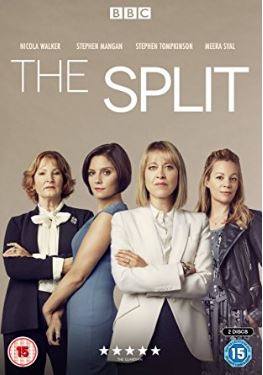 The Split is a British legal drama currently on RTE 1 Tuesday nights (recently on BBC 1). Divorce and adultery are strong themes and certainly the irresponsibility and devastation involved are strongly portrayed. There's quite an array of intersecting characters, many of whom are having or contemplating affairs with each other. The central character, Hannah, is powerfully played by Nicola Walker, previously brilliant in River and Unforgotten . She brings several shades of nuance and edginess to the role and thankfully the lesser characters are given detailed attention as well, with the help of a strong supporting cast, including Stephen Tompkinson of Ballykissangel and DCI Banks. There was one peculiar scene where one of the sisters in the central family attended a pre-marriage advice session in a church. The vicar does well but the girl is giggly and doesn’t seem to be taking it seriously. The groom-to-be tries to be more serious, and later says ‘I believe in Jesus’ but then blames the girl for the awkward situation as she’s the one who wanted the wedding in a church. This may well be a common situation though it’s not clear yet if it relates to the main plot or is just some shorthand character development. It's definitely an adult drama though so far relatively restrained by modern standards. I think I’ll stick with this one.
Episode 2 featured another scene from the informal pre-marriage
course - this time the couple disagree on how soon they want to have children. For each person the attitude of the other seems to come as a surprise. The vicar listens and seems bemused. So far the prospective groom features only in these scenes .. I'd like to see his characer developed more. His bride-to-be is one of three sisters whose father returns after walking out on them years previously. The reunion with the father is emotionally intense and I found it quite moving.
16/6/18
 Scientists and philosophers have always been fascinated with the concepts of intelligence and consciousness. Channel 4’s Humans (Thursday nights), now in its third season, explores these ideas in dramatic form – with robots (‘synths’) moving from artificial intelligence to consciousness. The conscious synths are an anomaly and become an oppressed minority, suffering all the prejudices that human minorities suffer. Perhaps the parallels made are rather obvious but the appeal of the characters and plot twists are sufficiently engaging. Previously we’ve even seen some synths developing a sense of God, even attempting prayer. In this latest series one of them seems to be thanking God, but we learn that his attention is directed towards his human scientist ‘creator’ – he even has built a small shrine to him.
Despite some unsavoury elements there is a strong sense of morality. In last Thursday’s episode for example, a character who sought revenge is upbraided by the original victim: “I asked you not to…you did it just for you”; a young girl is distraught that an innocent man may go to jail for her crime; a woman who commits adultery has immediate regrets; a female synth gives guidance to a separated man who still loves his wife – “maybe you didn’t put Laura’s needs before your own”. She has motherly instincts, and most interestingly is upset that her programing won’t let her put herself in danger for the synth child she is looking after – “I can only protect Sam if it poses no threat to my own well-being …I can’t be a mother”.
In this week's episode the synth child is trying to figure out death. in a graveyard he meets an elderly man talking to his deceased wife, and is puzzled because he thinks the man is talking to the ground. One of the main humans, Joe, tries to explain but doesn't get beyond suggesting that rituals around death are merely to console those left behind.
this doesn't entirely exclude the religious view of life and death, but so far there is no religious figure to give a fuller picture.
11/6/18
The latest episode of Friday Night Dinner had a religious element but it was not in good taste - the Goodmans' annoying neighbour Jim has a funeral ceremony for his dog and proceeds to carry a large white cross to the grave - I'm uneasy with the Christian iconography used for a cheap laugh. Mrs Goodman says they can't have a huge cross in their garden because they're supposed to be Jewish (we never see them taking their faith seriously).
7/6/18
 Families, warts and all, are essential communities in society, and the Goodman family in Friday Night Dinner has more warts than most. This Channel 4 sitcom is mildly crude, unfortunately peppered with gratuitous profanities, but is really funny and has a warm sense of family. The Goodmans are Jewish but relatively little is made of this, a lost opportunity I think. The awkward neighbour does get a bit confused about Jewish rituals and ends up assuming a few Shaloms will impress, and thee was a funny Christmas episode when the Goodmans celebrate Christmas anyway, not convinced it has much to do with Jesus! Last Friday’s episode, The Violin, was the second last in the current (fifth) series, and featured that most embarrassing of family moments – offspring being made to perform for relations and friends of parents. It also saw a hilarious guest appearance from upcoming Irish actor Jonny Holden (a past pupil of mine!) as Spencer, a failed medical student with doctor delusions. Nice one!
11/5/18
 Recently have been catching up with Madam Secretary on Sky - just a few episodes in but I like it - more thoughtful than Designated Survivor, but some similar crises in the White House. The Secretary of State is well played by Tea Leoni and Tim Daly plays her husband, who is rather unusually a theology professor and much given to quoting St Thomas Aquinas! So far he is a person of conscience, rather more so that his wife who sometimes goes for political compromises she's not too happy with. However doing what's right is important to her as well. Generally it's not corny, and while not radical, it does sometimes question US foreign policy in specific matters, while not doing much questioning of the larger issues. Sometimes it doesn't ring quite true - e.g. an early Season 1 episode where a priest who is a human rights activist is caught drug smuggling to improve the lot of his people.
1/3/18
Recently I've watched a few episodes on The Crown on Netflix. It wouldn't be my favourite show by any means, but the historical background is interesting, and Claire Foy's performance as Queen Elizabeth is impressive. Of interest here is the way it shows her as taking her sense of duty to the State and her religious faith seriously - after all she is head of the Church of England. In some episodes we see her saying her night prayers kneeling beside her bed - not often you see a main character doing that in a TV drama. Such clips might be useful in dealing with the theme of prayer in RE classes. In one episode (Season 2, Episode 6) she is impressed by the teachings of evangelist Billy Graham (who died recently), and she invites him for a discussion in person. Others in her circle are sceptical, even cynical. Also any teacher dealing with themes of Church and State might find some useful material. The show is slow moving and anything but short clips wouldn't go down too well in class I'd suspect, not with boys anyway. Also there are some unsavoury scenes, especially relating to the amourous liaisons of Pricess Margaret, which is a pity and unecessary considering the audience the show appeals to.
22/2/18
The funniest show I saw during the week was last Sunday morning’s episode of Everybody Loves Raymond (Channel 4). In this episode (from Season 4) Debra’s sister Jennifer announced she was going to become a nun, much to the surprise of the family as she had been a freewheeling hippy in her younger days. The family was awkward about it (an uneasy grace before meals) and of course the situation was thoroughly milked for comedy, though the vocation was treated respectfully. There were references to ‘the nun thing’ and ‘the nun phase’, and to The Singing Nun with her 60’s hit Dominique. When Jennifer wanted to go to 6.30 am Mass, Ray asked ‘Is God even up then?’ There was a touching moment when Debra finally explained why she was upset – she hadn’t seen much of her sister in recent years, and now she is off on the missions, to Zaire. She declared, tearfully, ‘I want a sister, not a Sister sister’! The programme, or clips from it, would be suitable for classes on vocation.
9/1/18
Over the Christmas period you expect lots of feel-good movies and carol services, which is all very good, but every year I look out for something new, something different , a programme that engages in a creative and contemporary way with the Christmas story of the Gospels. Happily I found a few such programmes this year.
Best of all and useful for the younger classes in schools is Angela’s Christmas (RTE 1 Christmas Eve). Based on a short story by Frank McCourt this short animation came from Brown Bag films who brought us the marvellous Give Up Yer Aul Sins cartoons. It told the story of a young Limerick girl, Angela, who didn’t want the crib Jesus in her local church to get cold. She wanted to warm him up ‘like a little holy sausage’ so she brought him home, leading to some consternation. The animation was gorgeous, the storyline simple and the characterisations excellent. Baby Jesus is said to hold his arms out to the world, and there was a great quote from Angela’s mother – ‘that’s what families do – they shelter each other from the storm, they bring joy where there is sadness and warmth where there is none.’ One for the World Meeting of Families!
The Alternativity (BBC Two) which started with a ‘making of’ documentary on the Sunday of Christmas week was an unusual piece of work – the artist known as Banksy had asked film director Danny Boyle to direct a nativity play in Bethlehem, in the car park of his ‘Walled-Off Hotel’, billed ironically as having the worst views – of the huge security wall erected by the Israelis.
It was most enjoyable watching the play take shape – finding a suitable donkey and making artificial snow were two of the most entertaining sequences. Predictably there were political undertones to all of this, but Boyle said he didn’t want to exploit the children for adult concerns, and it was all sweet and innocent, though under the watchful gaze of an Israeli guard tower, which made some parents uneasy about their children taking part. The plight of the Palestinians in this divided Bethlehem was highlighted but Boyle also understood that security measures followed from shocking acts of terror. Banksy wanted it to be a Nativity for everyone, so consultations were conducted with Muslims and Christians. It was harder to engage with the Jewish settlers due to security concerns, but that was a pity considering the origins of Jesus.
On the Wednesday following we got to see a film of the impressive live performance. The Palestinian children were excellent, the young girl playing Mary especially so. In a nod to contemporary concerns the characters had to pass through a metal detector (‘Herod’s Checkpoint’) and the annunciation was Mary getting a text from an unknown number with the crucial news! It was great to see the joy and wonder on the children’s faces, especially when the artificial snow fell on them. There were tears from proud parents.
The original story was respected and if it got too political at any stage it was in the song by rap group the Shoruq Girls as three wise women (‘behind every wise man…’), especially when they revealed a babygro with the slogan ‘Free Palestine’. Banksy, as always, remained unseen, but Danny Boyle and local director Riham Isaac were like little children themselves as they enjoyed the show from the audience.
Hopefully this will be replayed next year, and those in NI or UK may be able to find it on the BBC iPlayer, but it will certainly be a useful resource for classes in Advent next year, and for studying how contemporary culture engages with the Gospel story.
30/11/17
 Sometimes one series of a TV drama is enough, as quality can deteriorate, but I was delighted to see The A-Word back for a second series on BBC 1, Tuesday nights.
This is the story of an autistic boy, Joe, and the struggles of his parents and wider family to cope with the situation. It’s a tough subject, but the tight pace, the excellent ensemble playing of the cast and most of all the large dollop of humour save it from being too grim, too preachy or too sentimental. As well as being hugely entertaining it is moving as well, and I’d say there’s been quite a few viewer tears.
There are lessons about accepting children with special needs, and not only autism. In a subplot there’s a Downs Syndrome young man seeking employment and doing well at it. The show exudes a warm humanity and a noteworthy appreciation of family as well – Joe’s grandfather provides much of the humour (a fine turn by Christopher Eccleston) and there’s all sorts of confusion in the extended family – Joe’s uncle has split from his wife but they pretend to be still married so as not to offend her parents, one of whom is a philandering clergyman! But they’re splitting too, leaving the clergyman staying behind to mend his daughter’s marriage. It’s complicated.
The young actor playing Joe (Max Vento) is totally credible, while there are touching performances from Morven Christie as the mother and Lee Ingleby as the father, loving each other, loving Joe, but struggling to cope. Some of the language is quite frank and the sexual morals could do with some tweaking, but an adult audience with any bit of heart should enjoy it immensely. Due to content I doubt it would be suitable for school use in RE .. a lot of careful clipping would be needed.
Last week’s episode was particularly impressive, with a nice thawing between the clergyman and his daughter, a note of caution on the appropriate boundaries between married men and their female friends and a subtly emotional last scene as Joe gathered his family as if for a photo.
On the home drama front I’m rarely enthusiastic about what passes for comedy on RTE 2 but last Thursday I did enjoy the first episode of The School a mockumentary set in an Irish primary school. Being a teacher, albeit at secondary level, I suspect the writer must have insider knowledge as it rang entirely true, but of course with comic exaggeration. There’s the new principal whose patience is sorely tried by the overbearing secretary, an incompetent teacher and Department inspectors. The show needs a few more quirky characters – apart from the main three the other adult parts are weak, though engagingly naturalistic performances are elicited from the young pupils. The school Nativity play figures in the plot and so far the treatment is mostly respectful. Apart from a few iffy religious references the usual crudity is absent and a bit of trimming in that department could have made it an enjoyable family show, with enough humour to keep children and adults alike laughing all the way to the staffroom.
14/9/17
Finally finished series one of Anne With an E (Netflix) and was really disappointed that it's over, for now at least. The high artistic standard was maintained throughout, as was the positive attitude to religious faith. There was a little sentimentality, and some stock situations, like the fire that gets the community into supportive mode and the farm running into financial trouble, but the show has such a warm humanity that you'd forgive a lot! The Christmas episode was quite touching and didn't get overly mushy. I still feel it works better as a drama for adults about children, though I'd say many girls will find lots to relate to in the spunky, independent minded, imaginative heroine. Her arrival to puberty was handled rather frankly, and another modern touch that was hardly in the original novel was the hint, with approval, of a long term same-sex relationship involving an elderly lady who visits a neighbour, and who becomes a role model for Anne.
5/9/17
Have just started watching the show Anne With An E on Netflix. It's based on the well known classic Anne of Green Gables and is treat to watch. The plot features a lively young orphan girl, Anne, who brightens up the lives of an aging brother and sister on a farm in Prince Edward Island off Nova Scotia. It's a warm, human, optimistic show, confident in human dignity and decency, all heart but with no little pain as well. Amybeth McNulty is outstanding in the title role - the girl who has seen tough times and a rake of disappointments, but who still manages to maintain an optimistic outlook despite everything. He problems stem from her orphan state, the fussy and unfeeling adults around her and her own distaste for her appearance - all red hair and freckles. The opening episode (feature length) has a wonderful scene or two where she takes enthusiastically to prayer, especially the Lord's Prayer. Anne is infused with a marvellous sense of wonder and a very fertile imagination which leads to an amount of tall tales, but she is basically honest and good hearted. This makes it difficult when she comes up against the petty spite of some adults, and the mean-spiritedness of both teacher and fellow students when she starts school (Episode 3). As she realises herself, and has it pointed out to her, she talks a lot which often brings unwarranted attention on her, and so far she is struggling to cope.
In a way it's a programme for adults, challenging themto reflect on how they treat children, though there is nothing so far that might be termed 'adult content'. There are dark flashbacks to times when she was mistreated, and some risqué conversations about sex among the students, a fact which lands Anne in more trouble.
The cinematography and music are excellent (check out the marvellous opening credits), and all in all so far it's a fine work of art.
1/9/17
The State (Channel 4), which finished on Wednesday of last week was sad, disturbing, absorbing, and the recent terrorist attacks made this story of people joining ISIS all the more topical and unnerving. The four young central characters abandoned their old lives, leaving England for Syria in the dead of night. The question of motivation wasn’t explored enough, nor was the issue of how they were radicalised. Even more so, the motivations of the Westerners who joined were vague, but there was a dig at the converts knowing the rules better than the average Muslim! Their motives seemed largely religious, but they were marked by a striking naiveté – one young woman wanted to be a “lioness among the lions”. Another woman, a doctor, brought her nine-year-old son, and thought she’d be able to do some good for the cause by tending to the wounded. Considering the attitude of ISIS towards women they were in for a shock. One young man was following his brother, allegedly a martyr for the cause, but he was misinformed and hadn’t the stomach for the brutality.
And iIt was all there – the beheadings, the slavery, the child soldiers, but it was less graphic than it might have been, though they could hardly have done the drama properly without showing some of the horrors. Thankfully the camera turned away at some of the most violent moments. In fact at various stages I felt that ISIS was being a little sanitised. The severe and sometimes graphic violence makes it highly questionable for school use.
Yet in all this madness of violence and propaganda there were crises of conscience and acts of kindness. One of the new English recruits bought two Christian or Yazidi slaves to protect them. He also tended to the wounds of a local chemist whose torture he had just attended, passively. It’s impossible for me to know for sure, but it all seemed authentic. Every now and then Islamic terms were explained in dictionary-like subtitles. There were arguments among the Muslims as to whether their principles allowed the barbarity. There was a key scene where the father of one of the Englishmen tracked him down and berated him for the dishonour he had brought on his family, accusing him of being selective as to which bits of Islamic teaching he’d follow, and also for turning his back on the country (England) that had taken his family in, in their time of need.
A few of the ISIS fighters seemed cruel by nature, others seemed very ordinary, even pleasant, enjoying the cheerful camaraderie even as they partook in the butchery because they thought their cause justified it. It showed how it’s so much more important to be right rather than be sincere and think you’re right.
5/7/17
Well, I'm glad to report that Broken (BBC 1) was back on form last night with a deeply moving sixth episode to bring the series to an end. I suspect the return to top quality was due to the fact that, like the first two episodes, Jimmy McGovern, the show's creator, was the sole scriptwriter. Many of the storylines were brought to a satisfactory conclusion, and perhaps the ending was a tad sentimental, but I'm not complaining! What struck me most about this episode was the way the theme of forgiveness was woven through the story. Fr Michael (Sean Bean) was described by Fr Peter (Adrian Dunbar) as a man who forgave others quickly but was slow to forgive himself. Past guilt plagues him particularly at the consecration . He feels he's an imposter and hypocrite at this high point of the priesthood .. but is being too hard on himself. His crisis gets worse in this episode and his personal journey is painful but deeply human. Other strands from the series get some sort of closure, especially his touching relationship with his mother, though it wasn't always that good. There's an incredibly tense inquest sequence which works really well and is totally absorbing. The gambling issue is somewhat resolved, with a stirring sermon against such evils, but the consequent breaking up of slot machines was rather melodramatic. I felt for the sympathetically portrayed betting shop worker who had to sit through that sermon.
Actually, on of the many great points of the series has been how those who would, in more clichéd dramas, be portrayed as nasty villains, were humanised to varying degrees. Even the betting shop owner is in forgiving mood at one stage after his machines are broken, like so many hearts in the story. I've seen some critics giving out about the misery in the show, and there is certainly social deprivation and personal disaster, but it's thoroughly human and sympathetic to, and understanding of people, especially those who are broken in so many ways. Though sad at so many times I found it ultimately positive and uplifting.
Religion fares better than in most other mainstream shows. It's an affirmation of the priesthood, of prayer, of sacrament and of service. I don't think I've ever seen so many prayer and Confession scenes in TV drama. Yes I'd have issues on the general absolution issue and on attitudes to Church teaching in the middle episodes. It's an adult show and teachers looking for scenes to use in RE class with have to choose carefully!
Finally I must say something about the haunting and most appropriate music - the show opens with Randy Newman's 'I Think It's Going to Rain Today' sung soulfully by Nina Simone - the key words are "human kindness is overflowing". At the end there's Ray Davies song 'Broken' - "We might be bruised but we're not broken"
- see video above.
29/6/17
Last Tuesday night I saw the fifth episode of BBC's drama Broken, and my disappointment after initial enthusiasm continues. The suicide related story continued briefly but the focus this time was on homosexuality. To me it felt like it was dragged in to tick some diversity box as a new character was created for the occasion, a sort of gay deus ex machina. Carl McKenna (played by Irish actor Ned Dennehy) was a neighbour of Helen, whose son Vernon was treated unjustly by the police in an earlier episode. Though the area figured large in earlier episodes there was no sign of neighbour Carl until now. Cue the arrival of Helen's brother Daniel who is so homophobic that he won't even shake hands with Carl. Wouldn't you know it the one person who objects most to homosexuality is offputting, unkind, holier-than-thou - in one bizarre scene he goes to Confession to Fr Michael (Sean Bean) to convince the priest that he hasn't sinned! The specific incident was when Daniel punched Carl because Carl used the 'n' word after Daniel hadn't made his children apologise for using the 'q' word. Carl is no saint either, and eventually Helen gets annoyed with both stubborn men. This takes place during a meeting facilitated by Fr Michael to ease the tension - a rather awkward sequence where various perspectives on homosexuality are spoken by the characters - more dcumentary and even ideology driving than drama. The usual myth is perpetrated that the Church teaches it's a sin to be gay. Fr Michael largely toes the Catholic line in public though his main approach is to practice kindness and tolerance and also seek reconciliation.
I think the programme makers could have left it that, opting for subtlety
and prompting viewers of all shades to think. But for me they spoiled it all with a heavy hand by have Fr Michael going on a foul mouthed rant against Church teaching on sexuality, in private with his mentor Fr Peter, who doesn't even disagree or challenge him. In case we didn't get the point Fr Michael says all priests he knows feel the same. It felt like a case of cynically using the character to push an agenda rather than letting the character breathe.
Another thing worth mentioning is how much this series is about mothers. Fr Michael has had a troubled relationship with his mother in the past but now in some of the drama's most touching moments he looks after her now that she is very ill, praying and singing with her on his weekly overnight visits. In the first two episodes we had single mother Christina (Anna Friel) and issues with her own mother. The suicidal gambler was also a mother, to teenagers, and this made her intentions all the more painful. Helen suffers much frustration as she looks after her son Vernon who has serious mental health issues. Carl, who is in his 40's, has always lived with his mother and is grieving after her recent death. The betting shop owner wanted to become a mother but couldn't and was upset about that. Easy to see why the show is called 'Broken'.
22/6/17
Well, my initial enthusiasm for Broken (Tues nights BBC 1), is wearing off some more after this week's fourth episode. It's still absorbing, and, largely unique amongst modern drama series, takes religion seriously. But Tuesday night's episode, focusing on the suicidal gambler who came to Fr Michael in an earlier episode, was disturbing to say the least. The woman in question is in some respects a victim (of addiction), and Fr Michael wants to campaign against the proliferation of betting shops in a poor area, but much of the time she is quite unsympathetic, in her dealings with her family, the workplace she has stolen from and with Fr Michael who is doing his best to keep her alive, offering practical advice as well as assurance of God's love. Her chief sin seems to be that of pride - she is not really sorry for the wrong she has done, and doesn't want to live with the shame of people knowing what she has done. There were so many twists and turns in this episode that had me going through a gamut of intense emotions. I'm not sure how pleased suicide prevention services would be with the way this was treated. That being said, the emotions rang true and the acting, especially by Sean Bean as Fr Michael and Paula Malcolmson as the woman in question was outstanding. Catholics will also be bothered by the way the seal of confession is treated, and by the unecessarily crude suggestion made by the woman to the priest. There wasn't much in this episode that would be useful for school/RE classes, and considering the theme, quite the opposite.
16/6/17
Have just caught up with the third episode of Broken, shown last Tuesday on BBC 1. While still very good and emotionally credible I found it the weakest episode so far. It focused on a police cover up after the events of Episode 2, and went all 'Line of Duty', with many of the stereotypes of the genre, e.g. conniving police authorities. The main emphasis was on a young policeman who is pressurised to conform to the official account of what happened. His crisis of conscience is dramatically portrayed, and Fr Michael plays a central role in advising him. This policeman prays with his young child, has the support of his mother, but fears he hasn't the courage to tell the truth. Fr Michael also feels compromised as he failed to take a call on the night of the incident, because he was tired and didn't grasp the urgency of the situation.
His flashbacks continue and it becomes clearer that he was
a victim of clerical child abuse and cover up - there's an intense scene when he confronts an the now aging ex-priest who abused him - this guy is pathetic but also arrogant and unrepentant. We've had so many portrayals of clerical child abuse, and it does feed in to an unjust stereotyping of priests, but this treatment is marked by a sense of the importance and credibility of genuine religious practice, as seen in Fr Michael and many of his parishioners.
There's also an early scene where Fr Michael, normally subtle in his approach does a bit of a rant on the Church's attitude to women and the need, as he sees it, for women priests, bishops and popes! Somehow it didn't ring as true as the rest of the show and felt like a big glob of somebody else's agenda landed in Fr Michael's mouth ... the art suffering at the hands of the ideology.
8/6/17
Last week saw the start of the much anticipated drama series Broken (BBC One, Tuesday nights). It was postponed by a week out of sensitivity over the Manchester bombing, though I’m not quite sure as to why.
Sean Bean stars as Father Michael Kerrigan, an inner city priest struggling with his own demons and the problems of his varied parishioners, and I think it’s one of the best things Bean has ever done. He manages a quiet but strong empathy, portraying Fr Michael as a gentle soul, confident in his work but bothered in private by flashbacks from what seems a difficult childhood.
The show, written by Jimmy McGovern (Brookside, Cracker) is reminiscent of the work of director Ken Loach, sharing some of his concerns about poverty, social welfare, bureaucracy and more. I was reminded of Kes (the hawk in the flashbacks) and Raining Stones (parents splashing out more than they can afford for first communion outfits), and there were similarities to a US show from the mid 90’s Nothing Sacred, which also featured a priest in a socially deprived parish.
I was most impressed by the touching prayer scenes, and any of these would suit class work on the theme of prayer. In one, after saying he wasn’t Our Lady’s greatest fan, which a bit jarring, he turned it around by saying a heartfelt Hail Mary with a woman who has just found out she can’t have children, while in another he prays the Our Father with a woman, Christina, whose mother has died. Christina is the other main character so far, a vulnerable single mother not coping very well with the demands of family life. She is so well played by Anna Friel, a versatile actress who can do everything from whimsy (Pushing Daisies) to psychosis (Marcella). Adrian Dunbar (Line of Duty) appears as Father Peter, but his role is as yet undefined - in his only scene the role seems to be that of counsellor, for now.
On the whole it’s an adult drama, with a modest amount of bad language and some dirty jokes at a comedy club but overall it has huge heart and sensitivity. The cinematography and music are excellent, though the flashback scenes feature a poetry-quoting priest who cruelly slaps the young Michael because he reckons he got help writing a poem for class. It’s not all nasty church imagery though, and the young Michael seems imbued with a sense of wonder in the church, and inspired by the poetry of Hopkins. In an early scene, Fr Michael seems dismissive of the idea that first confession children would have any sins at that age and is strong on the idea of general absolution for all at the ceremony, but apart from that he is neither trendy liberal or cranky conservative.
(a version of this review appeared originally in my column in The Irish Catholic newspaper).
2/6/17
Damilola, Our Loved Boy (BBC One, last Sunday night) told the tragic story of Nigerian schoolboy Damilola Taylor, stabbed to death in London in 2000, and the efforts of his parents to come to terms with his loss and seek justice. I was glad it avoided sentimentality and didn’t gloss over the family conflicts caused by the death. Guilt, blame, regret and anger provided for a totally credible emotional landscape. The murder was heart-breaking, but the emotional fallout in the family was also painful, and communication deteriorated, often to the point of stony silence.
The mother, Gloria, was played by Wunmi Mosaku, who deservedly won this year's BAFTA Best Supporting Actress award for the role, and was adept conveying the spectrum of emotions from joy to shock. She was the rock of sense and strength in the family and the one most committed to her Christian faith. She was the focus of the many impressive prayer scenes – especially praying for the strength to cope. These would be most useful in classes on prayer. In one scene, before the court case, she stresses to her other son – ‘God did not give us a spirit of fear’. The husband, Charles Taylor, played by Babou Ceesay in an equally impressive performance, is loving but authoritarian, inclined to blame and subject to dark moods. He finds some relief in helping troubled juveniles, but as he genuinely stresses the need for father figures, discipline and respect he seems often oblivious to the needs of his own family. Eventually, in a particularly poignant scene, Gloria has to confront him with some home truths. I wonder what the real Charles Taylor thinks of the portrayal.
18/5/17
RTE launched a new TV drama series, Redwater, last Sunday night. It was a bit of a hybrid – an RTE/BBC co-production that featured characters (Kat and Alfie, pictured) from BBC soap Eastenders. For the most part I liked it – the acting was mostly confident and relaxed the script was witty, and the profanities relatively infrequent. The Waterford seaside setting (Dunmore East location) was used to good effect and some of the cinematography was downright poetic. The plot, and especially the relationships, were hard to follow at times and I had to pause the credits to get a handle on how the main characters were connected. Oisín Stack was interesting and as local priest Fr Dermot, sympathetically portrayed, at least until the rather melodramatic ending, which included a rather tasteless scene involving the Eucharist. Stack was interviewed on the Ryan Tubridy Show (RTE Radio 1) last Monday morning, when he said they researched the look of modern young priests to guide them for his portrayal.
[added 25/5/17: I must admit I was disappointed with the second episode of Redwater. Maybe the novelty is wearing off, but the acting seems stiff and stilted, and plot development has slowed down considerably. Fr Dermot is still the main focus of religious interest but he's going off the rails big time. How often have we seen in drama that the religious person is the disturbed one. I did however get a bizarre new clip for my collection of Confession scenes - where Fr Dermot confesses to him himself!]
Meanwhile, US disease drama Containment (RTE 2 Saturday nights) has a religion problem as well. The virus that has a chunk of Atlanta under quarantine may be highly contagious but I doubt if enthusiasm for the show will catch so quickly. As is often the case, the initial premise had the makings of tense drama, but too much of it has sagged under the weight of soapy plot developments and clichéd platitudes. In last Saturday’s episode some characters went to what seemed a Protestant Evangelical church complete with healing preacher . One described the place as creepy and blamed the nuns (!) for being ‘sadistic’, sending them there for Bible study when they were young. Looks like they’ve also got the prejudice infection. Really, I think it's a problem of religious literacy - the idea of nuns sending schoolchildren to a bible-belt style church. Either that or it's just plain nasty.
I’ve also been following Designated Survivor on Netflix and after a promising start, dramatically speaking (US President and Congress blown up in a terrorist attack), it has dwindled substantially into a humdrum political drama. It feels more and more like a vanity project for Kiefer Sutherland, who, as the new inexperienced President, takes off his glasses for significant moments more than is artistically healthy, and while he’s independent of party affiliation the Democrats come out best, wouldn’t you know. Natacha McElhone is shamefully wasted as his wife and in fact she didn’t appear at all in a few recent episodes. It’s often uncannily topical, as in an episode that was partly about difficulties in appointing Supreme Court judges. I dozed during a recent episode when one of the main plot lines was controversy over an arts grant! They also fitted in a political demagogue addressing an alt.right rally, and the President attending a children’s choir recital where at least they sang a Gospel song! Last Thursday's new episode improved a little, and had a satisfyingly tense ending with a bomb about to go off in three minutes ... there's hope for it yet.
4/5/17
Clerical crime drama Grantchester is back on ITV Sunday nights and be3 on Mondays. Now in its third season, it’s creaking more than a tad. The friendship between Rev. Sidney and the copper Geordie is interesting but unlikely – would the policeman really take the Rev on all his murder cases, and really, aren’t there too many murders in such an otherwise idyllic town? Looks like Rev Sidney is a murder magnet, like Father Browne, Inspector Morse, Lewis et al
His crusty housekeeper is softening, his gay curate is gaining in maturity and common sense in the parish , (though he has taken on a girfriend and pretends to drink beer), but there must be something weird in the water. At least there was in the beer in last Sunday’s episode which featured a mass poisoning at a cricket match, some ugly racism, pertinent reflections on male-female relationships and a gratuitous sex scene.
Rev Sidney has a problem in that he is very friendly with a divorced woman he fancies, and she is living alone with her baby. The archdeacon is not amused and wants Sidney to give good example to his parishioners. So far Sidney is just about toeing the moral line, though his cop friend Geordie is having a steamy affair with a colleague, despite having a lovely wife and lovely children at home.
[added 11/5/17 - Spolier warning! ell, Sidney just crossed the line in last Sunday's episode! It's getting all a bit Mills-and -Boony now with not enough attention being given to the crime stories. I was quite funny in a way - Sidney gave a stirring sermon about grabbing happiness in the here and now, and then rushed off for an adulterous fling with the married girl he has always fancied. And earlier he confronted his gay curate for developing a romantic friendship with a local woman. Oh it'll all end in tears]
16/3/17
 Broadchurch has returned for a third season (TV3 and UTV, Monday nights) and while it’s not as good as the first season, I still enjoy the prickly chemistry between Detectives Miller (Olivia Colman) and Hardy (David Tennant – it’s a great double act. The story is slow moving so far, centring on a sexual assault case. The story writers, and the fictional cops, handle the crime sensitively, but there’s lot of graphic descriptions, and a sense that we are being subtly preached at as to how such cases should be handled - preaching does not mix well with fiction.
Characters from the earlier series, including the local clergyman, are blended in quite well. In one episode there was a touching scene with the vicar agonising over his role in the parish, and in last Monday's episode misbehaving students from the local school were sent to him for graveyard cleaning work as punishment! The man who brought them had a very dismissive remark about religion. The Rev has been presented in a mostly positive light in the series, a supportive and moderate voice when emotions run very high.
8/2/17
In the past few weeks I’ve been following the English crime thriller series Unforgotten on ITV. This is series two and the high artistic standards set in series one are thankfully maintained…though really it’s the same plot with different characters – a body is found that has been hidden for years, and gradually the police work out what happened. Several people who have moved on with their lives now find themselves with the truth closing in and their new lives unravelling. Nicola Walker is again superb as Detective Cassie Stuart, incisive, perceptive and sympathetic, while Sanjeev Bhaskar is impressive as her colleague Sunil Khan.
As seems obligatory these days, the cops have their own personal baggage but it never gets in the way of the main story (a lesson for the makers of Sherlock?). The actors who play the chief suspects are impressive also – the only one who appears to be thoroughly nasty is the victim, and you alternatively feel sympathy and revulsion for the suspects as they struggle, often dishonestly, to confront the past. Their respective spouses, largely in the dark, have their own challenges coping with the dramatic revelations.
There is some bad language, child abuse figures more strongly as the story progresses, and a gay couple trying to adopt a child is a significant plot element. Religion figures very little. On lady with dark secrets in her past is now part of a Muslim community and at one stage we learn that parties where child exploitation took place were supposed to be Bible study sessions to put parents at ease! Oh well.
20/01/17
 The new channel 'be3' started a re-run of Ballykissangel last Sunday night, and I really enjoyed it all over again. It was whimsical and thoughtful, with some colourful characters, all the better because it wasn’t trying too hard to be a comedy. The first series is definitely the best, written as it was by creator Kieran Prendiville. My memory is of later series losing the deft touch of these early episodes. And so, in last Sunday’s opening episode we had the arrival of the hi-tech Confession box, complete with fax machine - and it literally fell off the back of a lorry! The Confession scenes were very funny, though the moral advice given by the young priest was decidedly dodgy, so I'd be wary of using that in class. There was a touching scene where the new priest, Fr Peter, heads out on a night call to attend to a dying man. From later episodes I've used scenes where the local garda feels he has a vocation because a falling statue narrowly missed him (very funny and useful for classes on vocation), and another where Fr Peter tries to protect a family from eviction by a local businessman. Of added interest is the fact that I live near Avoca where the series was filmed and occasionally I spot some past pupils turning up as extras!
24/11/16
 I’ve been following a particularly entertaining crime drama, Paranoid, on ITV Thursday nights. It’s adult drama in a good way, with a sense of morality that’s sometimes dodgy and sometimes strong but with a multi-layered plot and strong belief in humanity and intriguing characters. Lesley Sharpe is wonderful as Lucy, a Quaker women with an appealing calmness in the midst of dark events related to dubious drug trials. In fact excessive pill popping is a strong motif throughout. A chemical company has a giant see-though statue of Jesus full of pills in the lobby – troubled cop Bobby (Robert Glenister) takes offence and smashes it in one visually dramatic scene. Indira Varma is the annoying-appealing detective Nina who makes questionable relationship choices but is thrilled at an unexpected pregnancy. Alec, (Dino Fetscher), her colleague, has to be one of the nicest, most obliging and unflappable cops in TV crime drama, with quirky German detective Linda (Christiane Paul) coming in a close second. Though only on ITV for now, it will probably come to UTV Ireland before too long. More info at IMDB.
1/9/16
 Usually you have to wait for the new season to find some good new dramas, but BBC One got off to an interesting but early start Tuesday of last week with an intriguing new crime drama, One of Us.
It was all a bit confusing at first with an array of seemingly unrelated characters, but one thing was for sure – a newly married couple was murdered rather gruesomely. They were just back from honeymoon, and she was visibly pregnant. Rightly there were warnings of disturbing scenes. We could see from wedding clips that they were very much in love, but showing the bride heavily pregnant was a curious choice. When the news broke with both families, one parent naturally enough asked about ‘the child’. Another early scene was set at a church service where the clergyman explored the nature of suffering – it was in reference to the destructive weather, but had a resonance for what was to come. One young fellow at church spent more time playing with his phone than listening. Between that and his father playing Hank Williams on the way home, Sunday morning was not a happy time for him!
The families were of course devastated by news of the murder, and it seems they have some dark secrets, but the plot took a peculiar twist when the murderer had a car crash near the victims’ families and was seriously injured. Unbelievable coincidence I thought, but then we learned he had their addresses in his pocket. Cue a major moral dilemma for both families when they discover he’s the one who murdered their children, and there are varied responses to the situation, some decidedly more moral than others.
Two veteran actors add substance – our own John Lynch (recently in Dickensian)and Juliet Stevenson (who played Mother Teresa in The Letters), while the lesser parts are well filled. A good start, so I’ll be tuning in again.
14/7/16
 I love a good ghost story and BBC does it better than most.
Their latest offering is The Living and the Dead, a drama series running on BBC One on Tuesday nights. Colin Morgan is intense as a young 19th Century psychologist taking a while to realise that strange goings on in his locality have a supernatural basis. He assumes psychological origins at first when the vicar’s daughter starts acting strangely, but is open to other ideas and in the first episode performs a sort of emergency Baptism when he finds out that the person allegedly possessing the girl was never baptised. And it seems to work.
Fair enough the plot is ropey enough – young couple moves into new house, things go bump in the night, man naively reluctant to accept there’s anything spiritual going on … we’ve seen it before many times, but the creepy mood is well created and there’s a fine attention to period detail, with some striking cinematography. Like the best dramas it is character driven, and best of all you can care about the characters – flawed individuals trying to do their best in a difficult situation.
In last Tuesday’s episode the focus shifted from the possession of the vicar’s daughter to ghosts of young boys killed in a mining accident, with a loss of focus on the initial story, and I wondered if it wasn’t going to be ghost-of-the-week stuff . If so this rural area must be a hot bed of dubious spiritual activity, as, say, Midsomer attracts more than its fair share of murders! There was a curious discussion between him and the vicar, with the vicar being the one to dismiss the idea of ghosts, but when they got down in the mine the vicar was the one praying and the psychologist the one questioning God.
Children figure large in the storyline but the show certainly isn’t suitable for children, though any ‘adult content’ is fairly restrained.
10/6/16
 As regular readers of this blog know I love a good crime drama and I find English ones far better than their American counterparts.
So I was glad to see the start of a new series Unforgotten, on RTE 1 Tuesdays. It’s a 12-parter, generous by English standards, and originally made for ITV. The leading role is played by the excellent Nicola Walker (brilliant as a dead woman in last year’s River) as a police inspector, Cassie Stuart, investigating a 40 year old death when a body is found buried in an old cellar. She’s supported by an impressive cast including Tom Courtenay, Trevor Eve, Gemma Jones and Cheri Lunghi. The first episode threw a dizzying array of seemingly unrelated characters at us, but of course towards the end it became clear that all these characters were connected in some way to the dead man and no doubt some deep dark secrets will be revealed over the coming weeks. One such character was an Anglican minister comfortably played by Bernard Hill – Rev. Robert Greaves is likeable, down to earth and charitable but having some low level domestic issues, though I’d better not get too enthusiastic about this positive portrayal of a clergymen until I found out what he was up to in the past! There's already a hint of financial irregularities in the parish, and the second episode saw him pawning his wife's jewellery to make up the difference.
Meanwhile, over on BBC One, Sunday nights, Wallander is heavier stuff. Based on an original Scandinavian noir, Kennet Branagh again plays the Swedish detective in this latest season. The opening episode a few Sundays ago was just about tolerable, with Wallander transported to South Africa investigating a political crime in the wide open spaces. Two of the characters were missionaries and religious faith figured briefly but positively. However it could have been any detective, and not at all typical of the series, but the last two episodes have seen a return to form in the more brooding and claustrophobic Swedish landscape, with Wallander’s family and health issues back in the frame. It seems modern cops have to have psychological or health issues!
Last Sunday night’s episode brought the short season to a close in a most intense manner. The crime story was well up to scratch but Wallander’s deteriorating health was, if anything, more central, and it was handled in a most humane way. One could even argue that it was pro-life in the broadest sense, with kindness, empathy, concern and family support the hallmark of an approach to serious illness. I won’t give away the ending but it was one of the most touching and satisfying I’ve seen for a long time.
24/2/16
In, Babylon, the recent second last episode of the revived X-Files there was an interesting conversation between Mulder and Scully. They were in a reflective and touching moment after a troubling story of Islamic fundamentalist suicide bombers. Mulder wondered about the ’angry God’ of the Bible (he must have missed the Great Commandment to love) and Scully said something similar about the Koran, but a strand of the plot impressed him. He had seen something ‘that trumps all hatreds’ - the deep and unconditional love of a mother, which had a resonance for Scully as her mother died in the previous episode and some years ago she had given her son for adoption to protect him from nefarious forces. While Mulder had seen love in the episode Scully had seen hate and they wondered how the two could be reconciled. Mulder referenced the Tower of Babel story and Scully reckoned that maybe it was God’s will that we find a ‘common language’ again. Scully thought we needed, like the prophets of old, to ‘open our hearts and truly listen’.
There was certainly openness to belief in God and at the end Mulder, but not Scully, hears a mysterious sound, the sound of trumpets - a phenomenon referenced in an earlier scene – ‘music as if from the heavens themselves ... as if God himself was making music’. I wasn’t too impressed with Mulder taking banned substances to help him communicate with a dying terrorist. It didn’t help that his tripping was treated comically, with a welcome guest appearance by his old and deceased pals The Lone Gunmen. This surreal sequence featured a pieta-like image that was in poor taste, but maybe it was redeemed somewhat by the way it was linked at the end to a mother’s love.
29/1/16
It's been around 14 years since the last episode of the TV series The X-Files was broadcast. The final moments included a touching gesture of friendship between Mulder (David Duchovny) and Scully (Gillian Anderson) and a discussion that reflected on the afterlife and the people who have died and gone before us. The series featured many religious themes over its nine year run and I've written about it all here. With great hype and anticipation it returned to RTE 2 last Tuesday and Wednesday night and for the most part I wasn't disappointed. The same creative team is reunited, especially creator Chris Carter and the main actors, and even the opening credit sequence is the same. The main plot line so far focuses on the alien story arc, with lots of messing about with alien DNA. The conspiracy paranoia is stonger than ever, giving Mulder great big wads of turgid dialogue. The style remains so true to the original (better than messing with a winning formula) that they seem to have felt the need to keep reminding us it's 2016, in case we thought these were leftover episodes from the old days! So we get references to Edward Snowden, Obama Care, greater cultural acceptance of gay relationships and Scully makes a knowing comment about finding information in pre-Google days. There isn't much to celebrate on the religious front. Scully, who comes from a Catholic background and still wears her cross, is working in what seems to be a Catholic hospital (Our Lady of Sorrows) but wouldn't you know she discovers there what seems a nasty experimentation programme run by a dodgy doctor renowned for his work to help the unborn. There's a nun who seems a throwback to bygone days ... she supposedly looks after single mothers with problematic pregnancies, has a poor opinion of men and their lies and calls desire 'the devil's pitchfork'! It's all a bit ropey, and some of the violence is more graphic than I remember from the earlier series, but I'm enjoying the nostalgia. There's still a considerable chemistry between Mulder and Scully, and though it was platonic for most of the time, there seems to have been some biology as well as late in the original series it seems they had a son together, and his fate is a central mystery this time around.
23/1/16
Reflecting on Rebellion again - last Sunday night’s third episode was less favourable to religion. Several characters made snide remarks about the Church, while Barry McGovern did a predictable turn as that most familiar of stereotypes, the nasty bishop (I’m not saying there aren’t any!). On the other hand one of the nurses said she felt called by God to look after the wounded, while another was critical of the treatment of Catholics in the North.
One thing I did like about the latest episode was the way it showed some characters having second thoughts about their roles - Arthur (Barry Ward), in a firing squad, couldn’t bring himself to shoot a civilian and contemplates desertion, Frances (Ruth Bradley) the Pearse acolyte, gets upset after shooting a young British soldier (and finally gets a chance to be more than a cardboard character) and Elizabeth (Charlie Murphy) seems to have given herself totally over to nursing having originally been part of the attack on Dublin Castle.
The series was discussed on Liveline (RTE Radio 1) last Thursday. A very articulate and moderate history teacher complained about the bad language and sex scenes as otherwise she could have used the programme for her history classes. Other callers agreed with her, but guest presenter Philip Boucher Hayes, who thought the show was ‘absolutely brilliant’, wasn’t having any of it. I thought he was particularly patronising and downright silly, when, in response to a caller objecting to the sex scenes, he pointed out that people did have sex in 1916. Duh! I normally like his style, especially his work on Drivetime (RTE Radio 1), and he was back on form when the programme moved on to a challenging discussion of the morality of the 1916 Rising, with Fr Seamus Murphy developing some points he made in these pages a few weeks ago.
14/1/16
I was rather lukewarm about RTE's new series Rebellion after the first episode. The second episode last Sunday didn't improve my opinion of it. Yes, it's interesting and holds the attention but I often found myself getting annoyed with it, whether for the stilted dialogue, the sluggish pace or the gratuious sex thar rules it out for family viewing which is a pity. However I did get some scenes to add to my collection of clips for the 'Religious Themes in TV Drama' Course! In one scene a priest gives Confessions in the GPO, and in another leads the Volunteers in the Rosary. This is probably true to history, but it does raise issues of approval for warfare. Mind you the priest was just obliging Pearse who requested all this and wasn't in any way pushing it.
16/10/15
 Last Thursday evening a creepy new drama series with strong religious content started on UTV Ireland. Midwinter of the Spirit features a female clerical exorcist of the Church of England confronted with a bizarre murder in which a man was crucified, an act she regarded as sacrilege as well as murder. When I saw that her character was called ‘Merrily’ I thought it was going to be lighter, but this show is light years away from Vicar of Dilby – it takes the presence of intense evil very seriously. It opened will a training session for exorcists , when the trainer insisted that when something apparently supernatural happens all natural explanations must be ruled out first. He declared that ‘deliverance ministry requires a wide skillset’ and believes Merrily has potential in the area because she’s neither fundamentalist nor ‘happy clappy’! He warned that she’s vulnerable because her husband has died recently and because she is a female minister. She encountered a canon who feels he is failing in his struggle against a great evil in the parish, and a deeply nasty man whose evil seems to live on after he dies in Merrily’s presence. It’s not for the faint-hearted, and apart from that I’m always uneasy to see religious symbolism used in gruesome horror stories. The ‘joy of the gospel’ isn’t in evidence, but at least evil is recognised for what it is, faith is prominent, and there are good, but flawed, people struggling to cope as well as they can. Of interest to those into faith and the arts, but of dubious value for school use considering the dark nature of the material!
11/9/15
One programme last Sunday afternoon had a lot of timely messages about prayer – that it's not about manipulating God, that you can't expect all prayers to be answered immediately in the way you expect, that it shouldn't be about selfishly seeking to accumulate material goods.
This was brought to us by an episode of The Simpsons on Channel 4. Homer notices how neighbour Ned Flanders was falling into lots of good fortune, and credited prayer (as well as flossing!). Homer tries his hand and after a few initial successes (like finding his TV remote) prays for a bigger house, whereupon he gets the deeds of Rev Lovejoy's church after a lawsuit. His wife Marge is not pleased – God, she scolds, is not some sort of holy concierge and you can't keep bugging Him. Lisa tentatively sees the move to God's house as offering her more opportunities to 'cloister' herself, but soon Homer has turned the place into a den of ill repute. There is much Biblical resonance as God gets displeased with the goings on and sends a flood, but Rev Lovejoy, having abandoned Springfield to its sins returns dramatically (by helicopter) and pleads with the Lord for mercy. Sin gets a whipping, there's valid commentary on sin and human vanity, God is portrayed in a good light, though there are a few digs at his smiting and anger. Seeing the church getting thrashed is unsettling, and Homer playing the cross like a guitar was more than a bit off - Homer's disrespect certainly, but it was in no way approved.
16/4/15
 I'm
sure some would dispute The Simpsons being regarded as art, but
last Thursday's episode 'The Simpsons Bible Stories' on RTE 2 was imaginative,
topical and religious. In the opening sequence Bart writes his punishment
on the blackboard, 'I cannot absolve sins', and the notice board outside
the First Church of Springfield declares - 'Christ Dyed Eggs for Your
Sins', perhaps a dig at our peculiar Easter habits! At church on the 'hottest
Easter ever' (!) Rev Lovejoy' long readings from the 'Good Book' send
the Simpsons asleep when the bible stories mingle with their dreams. Homer
and Marge play Adam and Eve (with pre-banishment fig leaves) and Flanders
is a generous God until the whole apple eating thing ('Applegate') when
he is portrayed as a God who bears a grudge, something of a sour note
there that should prompt discretion where young students are concerned.
But then I think it would be naive to regard the Simpsons as a children's
programme, despite the colourful cartooning. At the end of the show the
Simpsons wake up (or do they?) to find an empty church. Outside it's the
Apocalypse in full swing! The Flanders family ascends to Heaven and Marge
wonders why her family doesn't, until she remembers, ' Oh right, the sins'!
Cue descent into fiery pit, which Homer takes to be a barbecue.
I'm
sure some would dispute The Simpsons being regarded as art, but
last Thursday's episode 'The Simpsons Bible Stories' on RTE 2 was imaginative,
topical and religious. In the opening sequence Bart writes his punishment
on the blackboard, 'I cannot absolve sins', and the notice board outside
the First Church of Springfield declares - 'Christ Dyed Eggs for Your
Sins', perhaps a dig at our peculiar Easter habits! At church on the 'hottest
Easter ever' (!) Rev Lovejoy' long readings from the 'Good Book' send
the Simpsons asleep when the bible stories mingle with their dreams. Homer
and Marge play Adam and Eve (with pre-banishment fig leaves) and Flanders
is a generous God until the whole apple eating thing ('Applegate') when
he is portrayed as a God who bears a grudge, something of a sour note
there that should prompt discretion where young students are concerned.
But then I think it would be naive to regard the Simpsons as a children's
programme, despite the colourful cartooning. At the end of the show the
Simpsons wake up (or do they?) to find an empty church. Outside it's the
Apocalypse in full swing! The Flanders family ascends to Heaven and Marge
wonders why her family doesn't, until she remembers, ' Oh right, the sins'!
Cue descent into fiery pit, which Homer takes to be a barbecue.
10/4/15
The Ark (shown Monday of Holy Week) was an original BBC drama
based on the story of Noah. The advance publicity said it was based both
on the Bible and elements of the Qu'ran, but there certainly was as very
modern sensibility about it, with the ancient background being used to
air more contemporary debates. For example, Noah discusses the science-religion
debate with a rich trader, talks agnosticism with his son, while another
son wants himself and his wife to have their 'own space'. The best thing
about it was the touching and credible relationships in Noah's family,
under severe strain when Noah (well played by David Threlfall) tells them
that God wants him to build an ark in the desert during a drought.
Noah is a sympathetically portrayed man of strong, well-articulated faith,
and, while other viewpoints are aired, there is no attempt to be cynical
or debunk religious faith, very much the opposite in fact. Noah's relationship
with God is reasonably well teased out. The news about the oncoming flood
is delivered by a messenger, who appears miraculously, presumably an angel.
Noah trusts God and sets about the strange task, and he hopes that his
own sons will trust him the way he trusts God, but it doesn't entirely
work out that way. The location work and cinematography are impressive,
with the desert being almost like another character, while the nearby
town is a den of iniquity and permissiveness.
This film is much less concerned with spectacle than the recent Noah film
featuring Russell Crowe. If anything the flood when it comes is a bit
of an anti-climax and I did think it all ended too quickly. Clever, though,
how the flood is portrayed as a tsunami. Once again the BBC has produced
a religious drama that is imaginative, modern and respectful, taking religion
seriously and working well on an artistic well.
26/2/15
 The
cloistered religious life featured Tuesday night of last week in the fictional
Midsomer Murders (UTV Ireland). Misdsomer is one of the these quaint
English towns that attracts murder at an alarming rate. The series must
be quite popular to have lasted so long but I find it rather limp. Last
week's episode had a nun and a priest murdered, so the police had to enter
the cloisters. I don't remember the convent being mentioned before and
indeed one of the characters didn't even know the place existed until
the nun's murder. It was a dwindling congregation, struggling financially,
but, typical of the genre lots of people, including the remaining nuns,
had secrets. I thought I detected a faint distaste on the scriptwriter's
part towards the nuns and religious life. One of the police forensic team
called the nuns 'crows' and said her convent education had led her to
be a 'rational atheist'! The nuns were dedicated, but some weren't that
pleasant, and the detectives seemed bemused by their lifestyle - e.g.
one asking what an elderly nun's name was 'in real life'. The stereotypical
Reverend Mother put him right on that one. A younger nun was very enthusiastic,
modern and spiritual, though she too had a secret, one that turned out
to be innocent. The main detective asker her at the end how she was going
to get more entrants in these modern times and she answered that it would
be through faith and prayer. Could hardly argue with that. The hard-drinking
local priest was generally disliked and came across as a rather slimy
character. It was hard to get any sympathy worked up when he became the
second murder victim. The bishop however was portrayed sympathetically
and the young nun's final vows ceremony was touching, with a muted interior
kind of joy. A few clips would be useful for RE - especially in scenes
involving the young nun, Sr Catherine, talking about her vocation.
The
cloistered religious life featured Tuesday night of last week in the fictional
Midsomer Murders (UTV Ireland). Misdsomer is one of the these quaint
English towns that attracts murder at an alarming rate. The series must
be quite popular to have lasted so long but I find it rather limp. Last
week's episode had a nun and a priest murdered, so the police had to enter
the cloisters. I don't remember the convent being mentioned before and
indeed one of the characters didn't even know the place existed until
the nun's murder. It was a dwindling congregation, struggling financially,
but, typical of the genre lots of people, including the remaining nuns,
had secrets. I thought I detected a faint distaste on the scriptwriter's
part towards the nuns and religious life. One of the police forensic team
called the nuns 'crows' and said her convent education had led her to
be a 'rational atheist'! The nuns were dedicated, but some weren't that
pleasant, and the detectives seemed bemused by their lifestyle - e.g.
one asking what an elderly nun's name was 'in real life'. The stereotypical
Reverend Mother put him right on that one. A younger nun was very enthusiastic,
modern and spiritual, though she too had a secret, one that turned out
to be innocent. The main detective asker her at the end how she was going
to get more entrants in these modern times and she answered that it would
be through faith and prayer. Could hardly argue with that. The hard-drinking
local priest was generally disliked and came across as a rather slimy
character. It was hard to get any sympathy worked up when he became the
second murder victim. The bishop however was portrayed sympathetically
and the young nun's final vows ceremony was touching, with a muted interior
kind of joy. A few clips would be useful for RE - especially in scenes
involving the young nun, Sr Catherine, talking about her vocation.
3/1/14
 I've
finally caught up on the rest of The Bible series. Fair play to
TV3 (Irl) and Channel 5 (UK) for giving such a huge chunk of prime time
TV to a religious series. As the series moved on through the life of Jesus
it grew on me. I got to like Diogo
Morgado in
the role of Jesus, and the women characters were well done, especially
the roles of Mary Mother of Jesus (played by co-producer Roma Downey),
Mary Magdalen (Amber Rose Revah) and Pilate's wife Claudia (Louise Delamere).
For school use there are some useful set scenes - for example the sequence
from the start of that fateful Passover week was well handled, with considerable
attention given to the atmosphere and political background. The violence
was still strong as in the Old Testament sequences, even at times gratuitous,
though not on the extreme level of Mel Gibson's Passion of the Christ.
I've
finally caught up on the rest of The Bible series. Fair play to
TV3 (Irl) and Channel 5 (UK) for giving such a huge chunk of prime time
TV to a religious series. As the series moved on through the life of Jesus
it grew on me. I got to like Diogo
Morgado in
the role of Jesus, and the women characters were well done, especially
the roles of Mary Mother of Jesus (played by co-producer Roma Downey),
Mary Magdalen (Amber Rose Revah) and Pilate's wife Claudia (Louise Delamere).
For school use there are some useful set scenes - for example the sequence
from the start of that fateful Passover week was well handled, with considerable
attention given to the atmosphere and political background. The violence
was still strong as in the Old Testament sequences, even at times gratuitous,
though not on the extreme level of Mel Gibson's Passion of the Christ.
You
could see however the influence of that other film - e.g. the devil figure
moving through the crowd, and the atmospheric scene in the Garden of Gethsemane.
The Pilate character, though a bit one-note, was one of the most menacing
Pilate's I've seen on film, thanks to the acting presence of Greg Hicks.
Of the apostles, Peter, John and Judas made an impression but could have
been stronger.
The Resurrection always poses a challenge to film makers and this version
takes an approach very like that seen in BBC's The Passion from
a few years ago - Mary Magdalen heads out to the tomb on her own, finds
it empty and meets Jesus, though all too briefly. The meeting on the road
to Emmaus is conflated into the apostles breaking bread and meeting the
risen Jesus in the upper room (this setting is reminiscent of Zefferelli's
Jesus of Nazareth).
There's not much on Jesus' time on earth after the Resurrection, but the
Ascension is done reasonably well. At least Jesus doesn't take off like
a rocket as in one version I saw. Unlike many film versions there is some
coverage of events from the Acts of the Apostles. The coming of
the Holy Spirit at Pentecost is handled innovatively - lots of wind and
speaking in tongues but no tongues of fire. The martyrdom by stoning of
Stephen (Irish accent!) is fairly rough and I don't remember ever seeing
that on film before. There was a touching scene of the apostles praying
the Lord's Prayer. Paul is shown as a particularly nasty bit of work before
his encounter on the road to Damascus, and unfortunately this side of
him creates a much stronger impression that his post-conversion persona.
What I thought the series missed out on was the poetic side of the Bible
- the Psalms and the parables in particular. Indeed while the series was
technically adept I thought an innovative artistic hand was missing. All
in all it was an impressive series in its broad scope, technically it
was a fine achievement and there were some worthy performances and a few
striking set pieces, but I wondered, especially in the Gospel sequences
whether anything that new or exceptional had been done compared to other
TV or big screen versions. However this series may bring the Bible stories
to a new generation and make them curious enough to follow it up. Certainly
the character of Jesus was portrayed in an appealing way, and now that
the Gospel segments are being re-edited into a movie version called Son
of God, due for release in February 2014, the reach of this project
should increase considerably.
31/12/13
One of the many religious shows over Christmas was a new dramatization,
The Bible, a mini-series from USA's History Channel that premiered
on TV3 and Channel 5. From advance reading I knew it was well meant and
stemmed from the faith of producers Roma Downey and Mark Burnet. I wanted
to like it, but my initial reaction wasn't too enthusiastic. In particular
I wasn't enamoured of the Old Testament sequences. Partly it's a problem
inherent in trying to cover the whole Bible - the full text is just too
unwieldy for filming. A mini-series helps in that it allows more time,
but this version didn't escape some of the common pitfalls, like the one-dimensional
characterisations. A lot of it was without context, and the intermittent
use of a narrator didn't solve the problem. Dramatic coherence was damaged
by time jumps - captions like '40 Years Later' are never a great idea.
The spectacular aspects of the Old Testament stories were overemphasized
- obvious example being the parting of the waters as Moses led his people
to freedom. The violence was quite strong and some scenes were downright
disturbing (e.g. Pharaoh's men throwing babies over a cliff). If you knew
the stories you'd have some idea of how they fit in to the story of God's
people, but to anyone without the background and sound catechesis it must
have seemed all very strange and unappealing. For school use it's a way
to familiarise students with Old Testament stories that were very familiar
to an older generation. One scene that struck me as useful for classes
on images of God was Moses encounter with God in the burning bush (clip
above).
So far the New Testament section is much better. The actors playing
Mary and Joseph do a good job, and their part of the story has more coherence,
a tighter focus and a more personal approach. The strong violence is still
there, and while some scenes, like the miraculous catch of fish and Jesus
walking on the water (clip on left) are well done , others are stilted.
Diogo Morgado does reasonably well as Jesus and becomes more appealing
in the role as you get used to him. More anon as I catch up on the final
episodes.
6/6/12
It pushes a few agendas and takes a few digs at religion (or at least
at its flawed practitioners) but I find it hard to take offence at The
Simpsons. Two of the "religious" episodes turned up last week on the
innumerable reruns on RTE 2 and Channel 4. In "I'm Going to Praiseland"
(Channel 4, Wednesday of last week) the indefatigable Ned Flanders decides
to set up a Christian Theme Park (a dig I'd say at those Evangelicals
who try to Christianise popular culture). A gospel singer laments that
her band had changed from gospel to pop - they just changed "Jesus" to
"baby" in their songs. But, not surprisingly, the venture fails. At one
stage people praying at the statue of the late Maude Flanders get visions
of Heaven - we could relate to that I suppose we all have our own visualisations.
The comic store sci-fi man imagines Heaven as an episode of Star Trek,
Disco Stu meets Frank Sinatra at a heavenly disco (after St Peter helps
him skip the queue), but for Sinatra that's hell! Entertaining though
the visions are it turns out they are only hallucinations brought about
by a gas leak. Oh well.
In "Bart Sells His Soul" (RTE 2 last Thursday), cynical Bart is hard up
for cash and sells his soul to friend Millhouse for five dollars. Later
he offers to sell his conscience and even his sense of decency. But gradually
the loss of soul has a detrimental effect - automatic doors won't open
for him, his breath leaves no fog on the shop's ice cream freezer, he
looses his sense of humour. A dream sequence (always worth a try if you
want to try something wacky) sees all his friends playing happily with
their souls, leaving him miserable while his soul rows a boat for Millhouse.
Eventually Bart is desperate to get his soul back and when he does, thanks
to the love of his sister he gobbles down the soul-selling contract. A
religious believer could have no complaint about such a ringing endorsement
of the existence of the soul, though people looking for orthodoxy might
quail at Lisa's suggestion that perhaps people are not born with a soul
but have to earn it. But then, she is only 8!
18/11/11
Last time round I wasn't too enamoured with Rev., BBC's comedy
drama about a Church of England vicar. When it returned for a new season
last Thursday night on BBC 2 I thought I'd give it a second look. The
programme opened with the Rev, played by Tom Hollander, saying what seemed
like heartfelt prayers while on retreat. So far so good, you don't see
too many people praying on TV drama. (The next startling innovation should
be a lay person praying!) The episode got a bit silly then when the Rev
was treated as a hero because he was wrongly credited with tackling a
mugger. At least this led to a worthy scene where his rationalising about
accepting an award crumbled in a conversation with the Bishop of London
- a charismatic cameo by Ralph Fiennes. Another plot strand about a school
tour was more troubling. I got the impression that the show was struggling
towards some insight when the Rev was called a "pedo" in the street and
when he was struggling with huge child protection requirements for the
tour. But there was a cheap shot at the Catholic Church - suggesting that
you'd certainly need the protective measures if a Catholic school was
involved. Admittedly the man making the slur was a dodgy character, but
then in the "happy ending" the same character went off with the children
on the outing despite child protection warnings, and the last shot saw
the children and himself making obscene gestures from the back of the
minibus. It left a queasy feeling, and there were some unnecessary crude
elements as well, as if someone felt they had to make it "edgy".
7/6/11
Last Sunday
BBC 1 Wales carried the first part of The Passion of Port Talbot,
an intriguing documentary on a community based passion play in the Welsh
town that had suffered over the years from poor development. The initiative
was led by local man, Michael Sheen, now a famous actor (he played Tony
Blair in The Queen)but it seemed he mainly wanted to tell the story
of Port Talbot using the Jesus story as a vehicle, complete with crucifixion
scene. At one stage he said this was all he wanted to do, but later when
local clergy became uneasy about the direction the play was taking, he
did listen and reassure them that it actually was the story of Jesus (in
the guise of "The Teacher"), told in a different way. Fascinating theatrically,
but I thought it felt somewhat empty spiritually. The performance itself
will feature in part 2 this Sunday night.
13/7/10
There was
much to like and much to dislike about Rev. the new comedy series
that started recently on BBC 2. Practising Christians will easily relate
to the mild mannered vicar who struggles to make ends meet in an inner
city parish. His Archdeacon (on the way to the launch of atheist Christopher
Hitchens' latest book!), is breathing down his neck and mocking his puny
fund raising ideas - he needs the money to repair a vandalised window
of artistic merit. In an unlikely plot twist the congregation is swelled
by new members who are there only to gain some Christian credentials so
that their children can attend the highly rated local Church school. The
new attendees don't know whether to stand or kneel, mobile phones go off,
brats play with their games consoles, others read the newspaper in church.
There are interesting, if stereotyped, secondary characters - the inevitable
foil Nigel, the Rev's assistant who is rather stuffy, revelling in the
chance to flush out a few hypocrites, the rather underwritten vicar's
wife, and the eccentric parishioner Colin who deeply resents Richard Dawkins
for writing a book about God being deluded! Then there's the attractive
young headmistress that the Rev fancies, and regularly compliments, though
it's not clear how much he's aware of this attraction.
The show goes over the top in showing the Rev to be an ordinary guy -
he smokes, swears and sometimes drinks to excess. Unfortunately the programme
is unnecessarily crude at times, probably alienating quite a segment of
the show's natural audience, which is a pity, as the show is relatively
positive towards the Rev, and isn't negative to religion as such, but
does skewer hypocrisy, vanity, politicking, and religious pretence.
In one of the best scenes, the Rev has a little prayer to God where he
apologises for his vulgarity and reflects on his problems - I hope such
a set piece will be a regular feature.
30/11/10
Lately I've been doing my Transition Year module on Religious
Themes in Drama. You can get an idea of what I do from the "Previous
Blogs - Drama" link on left, or here.
I've many of the old reliables, but have added some new material. Covering
TV drama I was delighted to be able to use the final scene of US drama
Lost - (clip on left) where all the main characters gather in a
church to get ready to move on into the next life. When Jack meets his
decesed father in the sacristy you can see a rather unusual stained glass
window in the background - featuring the symbols of the major world religions,
though the church seems predominantly Catholic, and certainly Christian.
Even playing it in class I found it quite moving, though I've seen it
several times. It certainly held the attention of the class. In general
the clips that worked best were those from programmes the students were
familiar with, like Lost, Prison Break, The Simpsons. The
latter I used in a class on animated drama - I used a clip from the episode
where Homer and Bart become Catholic. There are some crude references
and what might by some be considered anti-Catholic prejudice, but, employing
judicious selectivity, I played a scene that includes the vision of Protestant
Heaven (very sedate, like a refined country club) and Catholic Heaven
(much more fun, including Jesus bouncing on a trampoline!). This year
I also inclded clips from The Miracle Maker (life of Jesus) which
uses cartoon and claymation. Some students were familiar with this from
Primary School, and it did hold the attention.
28/5/10
Had
to watch that ending of Lost again! And still very moving. (See
clip on left) And what about that beautiful background music - simple
but effective.
Interesting that in its final moment the show opted for what's a largely
religious approach. The main characters from the show gather at a church,
which apparently is some sort of Limbo or Purgatory state, before they
move on to the afterlife. One character, a man with the significant name
of Christian Shephard (!), opens the door to reveal a heavenly light,
as the characters take their seats in the church as if for a service.
The light pervades the church in a beautiful optimistic moment. These
scenes, and the earlier scenes where the characters re-unite emotionally
in this most attractive of afterlife scenarios, are intercut with scenes
of Jack dying. It's not that the characters were dead all the time on
the island (at least I don't think so) - but that they all died at various
stages on or off the island, and find each other in this "church" state
where time doesn't matter and they prepare to move on together. It seems
like a Christian church - there's a large welcoming statue of Jesus outside
and most of the imagery is Christian, even Catholic, but the ante-room
where Jack Shephard meets his deceased father features symbols and icons
from many religions - in particular there's a stained-glass window with
the symbols of the major religions - suggesting perhaps that there's room
in heaven for people of good will from all faiths. I could see myself
using this scene, as a discussion starter in RE class when dealing with
the afterlife, and it has already sparked some discussion in class. There's
also a lovely scene just before they go into the church where Ben (one
of the show's nasties, who achieves a measure of redemption) asks Locke
(one of the show's most enigmatic characters) for forgiveness and gets
it very graciously.
Definitely a good one for forgiveness and reconciliation themes. I mustn't
get carried away however. The show doesn't coincide neatly with orthodox
Christian thinking. There doesn't seem to a consistent purification process
in this purgatory state. Some of the characters have very serious morality
deficits that aren't really sorted out (murder, promiscuity and more),
more a case of them being ignored. But I do like the way a good character
like Hurley can find the residual goodness in Sayid, who is very down
about the evil he has done. The most obvious omission in this afterlife
scenario is God, unless we are to take "Christian Shephard" as some sort
of God figure as well as being Jack's father, or unless we are to take
Hurley as some sort of rotund Jesus figure. Maybe one could assume that
the next phase in this death experience is to meet God, and I suppose
it's not surprising that the programme makers didn't get too explicit
about such a meeting.
Looking at reaction on the web it's evident that many fans were disappointed
at the ending, but I don't share that. Some complain that all the questions
were not answered, but isn't that ambiguity what gives the show its appeal?
One of the most puzzling things for me was what to make of the alternate
life scenarios we've been getting for the characters throughout this 6th
series. It was a clever move for the script writers who haven't been content
to sit on their laurels. In early seasons we got to see lots of flashbacks,
telling us about the character's backstories. Then, in a startling move,
it was flashforwards to how some of the characters got on when they managed
to leave the island. Later we had time-shifting. Finally in series 6 we
saw the characters having alternative lives - where they all met and interacted,
but in different ways (impossible for the casual viewer to follow!). Gradually
however this seemed to be a façade, one that in some way the characters
created as a way of finding each other again (as Christian Shephard implies)
and one that crumbled away as characters remembered their island lives
- sometimes remembering how they died, and realising, with remarkable
calmness and serenity that they were dead. But even in death there was
solidarity, the bonds of friendship surviving death and becoming even
stronger. That "church" reunion scene resonates with what we'd all aspire
to - meeting those we love as we move into the afterlife.
29/3/10
Picture this: an obviously repentant man, on the verge of execution, goes
to Confession seeking absolution for his sins. A scruffy priest refuses,
telling the man he hasn't time to repent and that the devil awaits him
in hell, and then walks off taking the man's Bible with him!
So it was in the latest top-notch episode of Lost, the cult drama
series on RTE 2 (Thursdays) and Sky One (Tuesdays). And it gives me another
worthy addition to my collection of Confession scenes from TV and movie
drama! (this episode is due on Sky One this Tuesday 30/3)
This scene, set in 1867, was part of the backstory of Richard Alpert,
the character who never seems to age. After accidentally killing a man
he is taken in chains to the new world only to crash land (in a ship!)
on the Lost island. Gripping as that was, far more interesting
were his encounters with the island's two main protagonists - Jacob and
a nameless man in black that I'll call Black Smoke Guy (BSG) - he turns
into a black smoke creature to wreak destruction.
I've written here before about Lost being a kind of Purgatory experience
(here), but in the flashback Richard believed
BSG that the island was Hell and that Jacob was the Devil, who had stolen
his humanity and trapped him on the island. Richard believed this for
years and assured the modern-day crash survivors that they were all dead
and in Hell. But Jacob seemed more likely to be the good guy - he explained
how the island was like a cork in a bottle, keeping evil (BSG) imprisoned.
He brought people to the island to find "candidates", people worthy to
replace him, and to help people learn right from wrong on their own -
he says it's meaningless if he has to step in and force them. BSG, he
claimed, thinks people are corruptible and likely to sin by their very
nature. It's an intriguing stand off with cosmic implications, and the
philosophical implications are as complicated as the mind twisting plot
developments.
Are these two meant to be God and Devil slugging it out? It's hard to
see it in purely Christian terms - e.g. Richard asks Jacob if he can absolve
his sins, but Jacob says he can't so he's hardly meant to be God. The
show certainly makes more demands on people's brains that the average
drama series, yet it doesn't lack a strong emotional content - there was
one particularly touching scene last week when Richard's deceased wife
from 1867 paid him a visit in the present.
22/3/10
I've been doing the "Images of God" theme with 2nd
Year students - always a popular section of the course. Getting them to
draw God produces some interesting questions as usual. There were a few
blank pages and lots of bearded old men! Doing Images of God on film we
looked at the scene in Bruce Almighty where Bruce meets God for
the first time. This is mentioned specifically in the book we're using
(Know the Way) and despite it's being a few years old now many
students recognise it. I also used clips from some of the old "Insight"
videos Veritas used to sell - God as a young man in a white suit in The
Walls Came Tumbling Down, God as an office clerk in Packy, God
as Trinity in Jesus B.C. (see clip on left - some silliness, but
the only film I know that makes a stab at showing the Trinity in this
way). There's a very stereotyped God in the movie Almost an Angel -
in a scene near the start the main character (Paul Hogan) meets a
probation officer God played by Charlton Heston - robe, big beard, judgemental
but grudgingly forgiving. Not the best image of God, but it raises interesting
discussions about stereotypes and pre-conceived notions.
15/2/10
 Lost?
How many viewers still watch this US drama series that returned to RTE
last week? It started with a total recap episode which might have brought
the casual viewers up to date with the deliciously convoluted plot, but
I'd say they were re-established in a state of confusion once the season
opener got going. It didn't disappoint. Earlier seasons have had flashbacks,
flashforwards and people going backwards and forwards through time - this
season there's an even more intriguing plot device of having parallel
or alternative futures. Not much religion yet, but the Sayid character,
as he approached death reckoned he'd be going to a bad place because of
all the torturing he had done, and later he has a sort of resurrection
experience. A hidden temple was discovered on the island - seemed like
a sort of religion, but the devotees there certainly didn't have hospitality
as a core value - their first reaction to a bunch of strangers was "Shoot
them!".
Lost?
How many viewers still watch this US drama series that returned to RTE
last week? It started with a total recap episode which might have brought
the casual viewers up to date with the deliciously convoluted plot, but
I'd say they were re-established in a state of confusion once the season
opener got going. It didn't disappoint. Earlier seasons have had flashbacks,
flashforwards and people going backwards and forwards through time - this
season there's an even more intriguing plot device of having parallel
or alternative futures. Not much religion yet, but the Sayid character,
as he approached death reckoned he'd be going to a bad place because of
all the torturing he had done, and later he has a sort of resurrection
experience. A hidden temple was discovered on the island - seemed like
a sort of religion, but the devotees there certainly didn't have hospitality
as a core value - their first reaction to a bunch of strangers was "Shoot
them!".
These are the "Others", a mysterious group that have been on the Lost
island since the beginning. Their mystical leader Jacob was mentioned
but never seen for the first few series - making his appearance last year
all the more dramatic. One could see him as a sort of god-like or prophet
figure and perhaps his nemesis (smartly named Esau by some smart ones
on the web), the black smoke guy, is a sort of devil figure. But it would
be a headbreaker to try and fit the plot into some orthodox version of
the Christian story.
Caught an episode of EWTN's youth magazine show Life on the Rock last weekend. It highlighted the work of Epiphany Studio - a Catholic-Christian US theatre group that specialises in spiritual material. In particular we got to see clips from Lolek, a one-man show by Jeremy Stanbary on the young adult days in the life of John Paul II. In the studio interview Stanbary explained how he found the world of secular theatre creating conflicts with his faith, leading himself, along with his wife Sarah into their present work. No sign of an Irish tour yet, but I've emailed to see if this might be a possibility for the future. Some of their performances can be ordered on DVD from their website's store. Clips, previews, and interviews are also available on their YouTube channel.
16/1/10
As outlined below I've been using an extract from Jesus of
Nazareth to illustrate classes on the moral teaching of Jesus.
Part of that extract has come in handy when I've been doing "table-fellowship"
with second year students. There's a useful segment where Jesus goes for
a meal to Matthew's house (Luke 5:27-39). Matthew being a hated tax collector
the apostles try to convince him not to go - danger of scandal and defilement!
In the Prodigal Son story Jesus tells towards the end of the extract another
meal figures - the feast thrown for the returning son. When I've asked
to students to name events in the life of Jesus that centre around meals
many suggested the Last Supper, which was reassuring. I showed the Last
Supper scene from BBC's Passion, which I've referred to here many
times before. You can see it in the clip on left - Last Supper begins
about 3 minutes in, but the lead in is interesting too. I also used the
Last Supper scene from The Manchester Passion, another BBC production
that presented a modern version of the story with contemporary music.
This held the students' attention, though I found that it worked better
with older classes. I'm enjoying the table-fellowship theme from the Junior
Cert course - meals, eating, feasts figure rather prominently in the Bible
stories, whether Jesus is eating with people or telling stories about
eating - e.g. comparing the Kingdom to a feast.
13/1/10
 With
5th Year students I've been doing the moral teachings of Jesus
- I usually start by showing what I think is a powerful extract from Jesus
of Nazareth - from where Jesus meets Peter on the shores of lake Galilee
to where Peter and Matthew reconcile after Jesus tells the Prodigal Son
story - about 20 minutes or so. There's so much in this for the moral
teaching topic. You have the apostle John wanting scripture to come alive
in people's hearts; there's the scene of the miraculous catch of fish
(beautifully portrayed) which emphasises the value of generosity; there's
trust - Peter has to trust Jesus and head out again even after catching
nothing so far; hospitality is highlighted when Peter invites Jesus to
his house (along with quite a crowd!), and when Matthew welcomes Jesus
into his house; the concepts of invitation and challenge are strong in
Jesus' efforts to get Peter and Matthew together; there's a powerful lesson
in reconciliation and forgiveness when they do put aside their differences,
which they must do if the are to follow the Lord; forgiveness of sins
is an issue when Jesus cures the crippled man who is let in through Peter's
roof ; the apostles try to argue Jesus out of visiting the despised tax
collector Matthew, but Jesus stresses that the heart of the law is mercy,
and that he has come to call sinners, not the virtuous. This extract has
always held the attention of the senior boys, and did again this time,
but one thing I noticed this time was the giggles when Jesus is shown
with a heavenly expression or aura - this just happens briefly at the
start of the extract, but most the time the portrayal of Robert Powell
in the role of Jesus is very moving and naturalistic - Powell holds the
viewer as Jesus holds the listeners in the telling of the Prodigal Son
story - all the more affecting as we can see the parallel with the reconciliation
of Matthew (the prodigal) and Peter (the grouchy older brother). You can
watch the start of the extract here,
and the telling of the Prodigal Son story here.
With
5th Year students I've been doing the moral teachings of Jesus
- I usually start by showing what I think is a powerful extract from Jesus
of Nazareth - from where Jesus meets Peter on the shores of lake Galilee
to where Peter and Matthew reconcile after Jesus tells the Prodigal Son
story - about 20 minutes or so. There's so much in this for the moral
teaching topic. You have the apostle John wanting scripture to come alive
in people's hearts; there's the scene of the miraculous catch of fish
(beautifully portrayed) which emphasises the value of generosity; there's
trust - Peter has to trust Jesus and head out again even after catching
nothing so far; hospitality is highlighted when Peter invites Jesus to
his house (along with quite a crowd!), and when Matthew welcomes Jesus
into his house; the concepts of invitation and challenge are strong in
Jesus' efforts to get Peter and Matthew together; there's a powerful lesson
in reconciliation and forgiveness when they do put aside their differences,
which they must do if the are to follow the Lord; forgiveness of sins
is an issue when Jesus cures the crippled man who is let in through Peter's
roof ; the apostles try to argue Jesus out of visiting the despised tax
collector Matthew, but Jesus stresses that the heart of the law is mercy,
and that he has come to call sinners, not the virtuous. This extract has
always held the attention of the senior boys, and did again this time,
but one thing I noticed this time was the giggles when Jesus is shown
with a heavenly expression or aura - this just happens briefly at the
start of the extract, but most the time the portrayal of Robert Powell
in the role of Jesus is very moving and naturalistic - Powell holds the
viewer as Jesus holds the listeners in the telling of the Prodigal Son
story - all the more affecting as we can see the parallel with the reconciliation
of Matthew (the prodigal) and Peter (the grouchy older brother). You can
watch the start of the extract here,
and the telling of the Prodigal Son story here.
23/12/09
I've been catching up on the US drama series Heroes via
the box sets -I find it a strange way to watch a series. When it was first
broadcast I didn't think I'd be interested as I'm not that much into superhero
stories. But this time the characters are not super heroes in costumes,
but humans with extraordinary abilities - some can read minds, some can
be invisible, some can time travel and some can even fly. Episodes start
and end with philosophical reflections on what evolutionary or other processes
have lead to this phenomenon, and the series seems quite open to the idea
of God. Themes of choice and personal responsibility abound as some characters
use their powers for good, some for evil. And there is political resonance
for today - in the third series, for example, shadowy government forces
start to discard civil liberties and round up the ones with special powers
- in one scene, as they are hauled off to some unknown destination chained
and hooded in their orange jumpsuits, there's an obvious suggestion of
rendition flights and Guantanamo Bay. A few days ago in school I was doing
classes on the 10 Commandments and when I came to the 8th and 9th there
was the usual difficulty in explaining the meaning of "covet".
I was able to refer to one of the villains in Heroes (Sylar) who
admits that he covets the special abilities of other gifted/cursed ones
- and goes to murderous lengths to get these powers. One of students maintained
that this greed for abilities is one of Sylar's powers/abilities/curses
which raised the issue of choice - how much control does he have or is
this lethal coveting something he can't help? In some episodes he tried
to be one of the good guys but it didn't last, and in one of the posssible
futures shown Sylar is seen as a reformed family man!
27/10/09
On holidays at last, and I get to catch up on Hamlet. Act I
Scene iii features the departure of Laertes for France. He warns his
sister Ophelia to mind her honour with Hamlet, but she's a sharp one,
reminding him to practice what he preaches, giving Shakespeare a chance
to get in a dig at hypocritical clergy who don't follow their own teaching.
Ah the timelessness of it!
" ... But, good my brother
Do not, as some ungracious pastors do,
Show me the steep and thorny way to heaven,
Whilst, like a puff'd and reckless libertine,
Himself the primrose path of dalliance treads"
I have found that saying farewell to family members going on long journeys
is a special but sometimes painful experience. Laertes recognises how
much of a blessing it can be, especially as he gets a chance for a second
farewell:
"A double blessing is a double grace;
Occasion smiles upon a second leave".
18/10/09
Finally I get to Hamlet. As I'm doing this with a 5th
Year English I thought I'd reflect on the religious references that abound
in the play. When he sees a ghost (Hamlet's father) in Act I Scene i Horatio,
Hamlet's friend, on seeing a ghost declares "Before my God, I might not
this believe /Without the sensible and true avouch /Of mine own eyes."
- this reminded me of the apostle Thomas not believing in Christ's resurrection
until he could feel the wounds. The ghost disappears when the cock grows
for dawn leading Marcellus to say that there's a legend that approaching
Christmas the cock crows all night long so that ghosts can't appear at
all, even at night: "Some say that ever, 'gainst that season comes/Wherein
our Saviour's birth is celebrated, /The bird of dawning singeth all night
long; /And then, they say, no spirit dare stir abroad". In Scene ii Hamlet
is heartbroken that his father is dead and his mother remarried to his
uncle Claudius. He won't however commit suicide as it's against God's
law: "O … that the Everlasting had not fix'd /His canon 'gainst self-slaughter!"
Needless to say Hamlet is shocked to hear that his father's ghost is appearing,
and reckons it's a sign that evil has been afoot, but will be revealed:
"Foul deeds will rise, /Though all the earth o'erwhelm them, to men's
eyes". To be continued ....
1/10/09
Kings Episode 12 - The New King 2: And so it ends. This episode
sees the end of the series and it won't be back - it was cancelled in
the USA when it didn't get enough audience support. It was obvious from
the finale that certain plot threads were opened up for the second series
that was originally envisaged. There are some interesting comments from
the show's creator Michael Green (also involved as a producer on Heroes)
on the Kings
website.
On the religious angles here's what he had to say: "The network had no
negative reaction at any stage to religious content within the show. In
fact, they encouraged it and found it hopeful…. It was only when time
came to market the show that a decision was made not to promote the show
as a biblically inspired tale. Fear of reprisal from the religious audience
was the described cause. Something NBC has had bad experiences with before.
As such, any references to 'King David' were actively avoided, in favor
of the limited marketing campaign that many of you saw and have commented
on with derision … There was no "religious agenda" among the writers.
The writing staff was deliberately comprised of a diverse group of geniuses.
Including believers and non-believers, lapsed and actives, people who
are atheist, Jewish, Christian, Muslim. All had done their homework. All
their perspectives were invaluable…. Most religious viewers actually quite
liked the show. Understanding that our creative task was not transcription".
And what a finale! (see highlights in video clip above) It was high-tension
stuff all the way as the political and personal conflict between King
Silas and his son Jack came to a head. Rev Samuels pays the price for
being involved in the plot against Silas - but before that he has an excellent
scene of repentance - a heartfelt prayer to God. I'll certainly use that
in RE class when I'm doing the topic of repentance. Samuel's remorse is
certainly genuine, and it's a powerhouse performance by Eamonn Walker
in the role. And his character has a really interesting role to play towards
the end of the episode. Samuels wouldn't give his blessing or benediction
to the crowning of Jack as King and so fell out of favour with the arch
conspirator, Silas' brother-in-law. We got the incongruous scene of a
civil servant reading out a pre-prepared blessing instead - saying something
about church-state relations perhaps, or about how some states and some
politicians can use the trappings of religion to suit their own very secular
purposes.
The presence of God is felt strongly in this episode - at one stage Silas
begs God for a sign, challenging Him to knock over a whiskey glass! God
appears to oblige, but Silas wasn't looking. Later in a knockout scene
reminiscent of King Lear, we see Silas in a thunderstorm, talking to God,
and apparently being told by God that David is the chosen one to take
over the kingdom (no spoiler to those who know their Old Testament David!)
- this has been pretty obvious all along, but David hasn't seen it - has
just doggedly persisted in his duty to be loyal to the King. He now knows
of Silas' evildoing but helps him back to the throne because the plotters
are worse and planning war when Silas favoured peace. Silas is not pleased
at this news from God, and while at first he seems grudgingly resigned,
he declares himself an enemy of God and plans to stop David who must escape
into exile.
I hope these reviews have been of interest. After going back to school
and having less time I sometimes regretted committing myself to reviewing
every episode, but at least the work is done now. Maybe when I get more
time I'll write a shorter article to bring all the threads together in
a more compact way.
30/9/09
Kings
Episode 11- The New King 1: It's a pity they didn't do this as a two-part
finale for the series - it would have been a heck of a conclusion. However
there was plenty in this episode to satisfy. There was one scene I could
see myself using in school with senior classes when dealing with issues
relating to forgiveness/reconciliation. King Silas makes his son Jack
go through a humiliating and grovelling apology for his actions during
the dramatic trial scene conclusion in the previous episode. Obviously
I'd see this a lesson in how NOT to do forgiveness! It would make an interesting
contrast with the prodigal son story. Without giving too much away the
romance between David and Michelle is in trouble, and no-one but Michelle
and Queen Rose knows about the baby resulting from the affair between
David and Michelle. The political machinations become even more twisted,
with David threatened with execution and an assassination plot on Silas.
The final scenes are high octane as the fates of the main characters hang
in the balance as the political intrigues reach a climax. Roll on the
final episode!
27/9/09
Kings Episode 10 - Javelin: As I expected this was a very
dramatic episode. The Americans do trial scenes better than anybody and
the trial of David for treason was very tense. I was reminded of the trial
of St Thomas Moore, at least as portrayed in A Man for All Seasons.
David protested his loyalty to the king even as the king was part of the
plot to get him condemned on trumped up charges. He remonstrates with
Silas saying his only offence was to keep his affair with Michelle, the
King's daughter, a secret - no sign of the affair itself being regarded
as a sin! The concluding scene was one of the most dramatic scenes in
the series so far. Again the scenes between Rev Samuels and the King are
intense and really well written - at one stage he cautions Silas that
David is becoming only what he is intended to be - presumable king at
a later stage. "Don't give God reason to tear from you this kingdom",
he also warns, suggesting his spiritual powers by causing a blackout in
the store where they meet. But Samuels has been compromised by an incident
in the past and Silas resents him taking the high moral ground now.
20/9/09
Kings: Episode 9: Chapter One. A very scriptural
episode you might say! While there are various interesting plot developments
in this episode, the most interesting angle is the writing of the show's
equivalent of Scripture. A scribe in the court of King Silas is writing
the Book of Silas. David has been sent on a dangerous mission, to recover
the charter of Gilboa (similar in appearance I thought to the American
Declaration of Independence) and with him out of the way Silas wants to
be the hero of his own story. David's plight is not the only example of
someone being sent into dangerous territory, perhaps with a view to his
convenient demise (what King David story does that remind you of?). However
the writing of this particular scripture takes a different turn and we
end up with the writing of the Book of David. It's fascinating and subtle.
On the plot level the Queen and King are up to their usual machinations,
abusing their power in secret, while often appearing magnanimous to the
general public. There is an interesting discussion between King Silas
and David's mother about David's destiny - a destiny that will not appeal
to mother or king ("You and I will wish it never happened", she says to
him). Ian McShane continues to chew the scenery as Silas - I'm be disappointed
he's not nominated for an Emmy Award. Silas' relationship with God continues
to intrigue - in this episode he again feels that he is not in God's favour
(not surprising!) - he asks "Why does he reject all my offerings?". The
dramatic ending of this episode, the arrest of David, promises some intense
scenes to come.
13/9/09
Kings Episode 8, Pilgrimage: David
joins King Silas on a "pilgrimage", but to his surprise it's a visit to
Silas' lover - it seems he is rekindling that affair after abandoning
it in some sort of deal with God (as he imagines it) to save the son he
had in this relationship. David is not so forthcoming about his affair
with the King's daughter Michelle, leading to major trust issues. Meanwhile
the Queen is desperate to keep her son Jack's gay affair out the public
eye, increasingly difficult after his lover tries to go public and commits
suicide. Quite a potboiler. Of course the Bible stories on which all this
is more than loosely based features lots of immoral goings on, but the
moral perspective was clear, whereas in Kings the moral perspective
is far from Biblical! David's affair with Michelle is, I think, seen in
a favourable light (though the deception aspect of it threatens to cause
them serious trouble), while a modern gay rights agenda seems more and
more strongly to inform the story of Jack's difficulties. The lover who
commits suicide is, to an extent, worryingly portrayed as a hero (even
by Rev Samuels who presides at the funeral and is seen by many of the
kingdom to have the voice of God), while Jack is tempted to come out of
the closet - the programme seems to take the point of view that he should
embrace his homosexuality.
31/8/09
Kings Episode 7: The Sabbath Queen. I've just started watching
the series Heroes and may write about that at a later stage, but
I notice that the creator of Kings, Michael Green, was also a producer
on that show and wrote some of the episodes (a point made in the interview
- clip on left - with Susannah Thompson who plays Queen Rose Benjamin
in Kings). Not surprising in a way, as both shows are interested
in philosophical issues.
I've started adding the programme titles to these reviews as there is
some variation in the episode numbering on various websites - depending
on whether the opening double was numbered just as episode 1, or as 1
and 2. The official
website doesn't number the episodes, and for some reason leaves out
the episode "Judgement Day".
This "Sabbath Queen" episode slowed down the pace. The city of Shiloh
is hit by a power blackout and various characters take advantage of the
darkness - Jack to resume briefly his gay love affair, David and Michelle
to have a one-night stand and an unidentified assassin to make an attempt
on the king's life - you'd think these people never got out! I was reminded
about various Biblical quotes about sin and darkness - e.g. this one from
John 3:19: "Light has come into the world, but men loved darkness instead
of light because their deeds were evil", or this from Ephesians 5: 8-13:
"Have nothing to do with the fruitless deeds of darkness, but rather expose
them. For it is shameful even to mention what the disobedient do in secret.
But everything exposed by the light becomes visible".
Apart from the assassination attempt, it wasn't clear that the one night
stands were seen as sinful - yes, they were furtive, and in the case of
David and Michelle, you'd get the impression it was going to come back
to haunt them, but you could argue that the programme was portraying these
events as good, hardly a Biblical perspective. And again they were portrayed
in a way that would make teachers hesitant in using the material in schools.
David still seems to want to do God's will, but wonders which of the voices
in his head come from God, and there was an another interesting God-thread
in is episode, conveyed mostly through flashbacks - the whole idea of
making deals with God. When Michelle was young she was at death's door,
in fact what appeared to be a personification of death arrived to take
her, but Silas bargained for her life. Ironically, so did Michelle herself,
vowing a life of service to humanity rather than to herself, if she survived.
She seems to regard this as precluding her from marriage, but curiously
not from an affair with David! Not exactly a vow of celibacy. So, which
deal, if any, saved her life? Stay tuned.
23/8/09
Kings
Episode 6: Brotherhood. Yet another shift of mood in Kings this episode
as two new plot lines develop. The city of Gilboa is struck by a plague
(very Old Testament!) and King Silas orders a curfew reminiscent of the
Passover - he even mentions a passing over and avoiding the "angel of
death", as every household is asked to put a candle in the window as a
sign of solidarity. Of course the Passover is out of sync chronologically
with the Saul/David story in the Bible which provides most of the characters
and plotlines, but the writers of Kings are not setting out to provide
an exact parallel and there are all sorts of resonances from elsewhere
in the Bible and from more modern events. In the plague story for example
Michelle annoys her mother the Queen by tending to a young boy who is
dying alone from the plague - "she can't be mother to them all", a phrase
which brought Mary, the mother of Jesus to my mind at least.
Silas blames God for the plague - He tests me beyond endurance, he complains
to Rev Samuels, who suggests the problem is something rotten within his
kingdom, a poison that needs to be purged (hints of Macbeth and Hamlet?)
Meanwhile on the political front David and the King's son Jack are on
a mission to capture a terrorist - the visual style here, as they fight
in the forests, reminded me of stories about partisans in World War II
(as in the recent film Defiance).
The relationship between David and Jack (Jonathan in the Bible) develops
- Jack resents David, seeing him as a usurper of his father's attentions,
yet he says he doesn't regard him as an enemy, in fact he can't understand
David. There are hints of the Prodigal Son story here (actor Sebastian
Stan as Jacks exudes an intense anguish of jealousy), and it's a plot
that figures strongly in films like Gladiator and Road to Perdition
- the inadequate son replaced in the affections of the leader by a newcomer,
who becomes the son and heir the leader wished his real son had been.
The relationship between Jack and David gets more intricate as each saves
the other's life during the mission, and both end up in the embrace of
King Silas, who has just seen off another challenge to his authority.
11/8/09
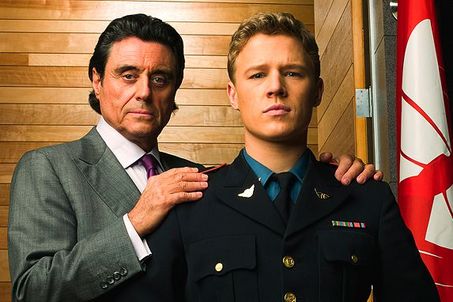 Kings
Episode 5: Judgement Day: One of the things I like about this programme
is the way each new episode (so far) has something distinctive - a change
of location, a change of tone, a new character or whatever, so there are
always surprises. This episode centres around Judgement Day - a special
event in the Kingdom of Gilboa when the King takes on ten cases to deliver
his own personal judgement - "divine wisdom my only counsel" he says.
Sounds a bit like Solomon, and sure enough his son Jack passes some sarcastic
comment about cutting babies in half. Petitioners make their pleas in
orange envelopes and the dramatic sight of thousands of these strewn around
the palace floors is a powerful image of dashed hopes. David is torn between
loyalty to the King and loyalty to his family as his brother Ethan goes
on trial for treason. Chris Egan as David (pictured above with Ian McShane
as Silas) portrays the pain so convincingly. Struggling with his dilemma
he says he doesn't even know if there is a God, but later in an interesting
discussion with the king feels he understands the ways of God - he sees
God working through King Silas, as he seems to accept Silas' declaration:
"I am justice".
Kings
Episode 5: Judgement Day: One of the things I like about this programme
is the way each new episode (so far) has something distinctive - a change
of location, a change of tone, a new character or whatever, so there are
always surprises. This episode centres around Judgement Day - a special
event in the Kingdom of Gilboa when the King takes on ten cases to deliver
his own personal judgement - "divine wisdom my only counsel" he says.
Sounds a bit like Solomon, and sure enough his son Jack passes some sarcastic
comment about cutting babies in half. Petitioners make their pleas in
orange envelopes and the dramatic sight of thousands of these strewn around
the palace floors is a powerful image of dashed hopes. David is torn between
loyalty to the King and loyalty to his family as his brother Ethan goes
on trial for treason. Chris Egan as David (pictured above with Ian McShane
as Silas) portrays the pain so convincingly. Struggling with his dilemma
he says he doesn't even know if there is a God, but later in an interesting
discussion with the king feels he understands the ways of God - he sees
God working through King Silas, as he seems to accept Silas' declaration:
"I am justice".
The romantic subplot between David and Michelle the King's daughter (Michal,
daughter of Saul from the Bible) takes a few interesting twists, while
the mysterious Edward (Macaulay Culkin), the Queen's nephew, returns from
exile. The best scenes I think are those intense discussions between King
Silas and David (as at the end of this episode) and the king and Rev Samuels,
usually about faith and God's will. Some of these would be useful for
RE teaching. Unfortunately I can't say the same for an unpleasant sex
scene, fairly strong by US network TV standards, at the start of this
episode.
2/8/09
Kings Episode 4: As expected, a much more political episode this
time and quite a political thriller, with lots of tension crammed into
the 45 minutes. Lots of Holy Land suggestions with the people of Port
Prosperity rebelling against the King's decision to hand back this land
to neighbouring Gath as part of the peace process. The locals don't want
their God-given "promised land" to be handed over or divided. You couldn't
help but see parallels from Bible times to the modern Middle East. And
in the portrayal of the shipyard riots there was surely a visual reference
to the Solidarity protests in Poland.
Ian McShane continues to excel in the role of King Silas while Chris Egan
perfectly captures the pain of the innocent David - trying to be loyal
to his King and to his family in Port Prosperity. A political coup is
thwarted, the King's son Jack (presumably a parallel for Saul's son Jonathan
in the Bible) is even plotting against him. There's even a possible dig
at CNN - the TV news in the Kingdom of Gilboa is UNN, and there's interesting
talk of the news being "crafted"! Fascinating stuff, and if you weren't
aware of the Biblical connections you'd probably find it so and even more
intriguing.
26/7/09
Kings: Episode 3 (Shown on RTE 2 last Thurs). Episode 3 moved at
a slower pace than usual and had a very different mood. The King's son
Jack took young David on a sleazy night out in the city, but despite Jack's
best efforts he kept his virtue (though there are photos that falsely
suggest otherwise) - he still seems smitten by the King's daughter. We
learn that the King's wife has been the architect of the kingdom and it's
royal family ("we are the performance" she says as the great and good
of Shiloh come to a ballet), a kingdom that she has moulded from when
it was just a place of warring tribes, and she'll be as manipulative as
it takes to keep it that way.
Since his alienation from God King Silas complains "My plans are frustrated",
and he returns to God and Rev Samuels for help when his love child gets
seriously ill leading to some interesting exchanges about what God wants
by way of sacrifice - he accidentally knock's over a deer and wonders
if that will do! The Biblical flavour is present, and not just in the
storyline - King Silas's love child is called Seth, in the Bible one of
Adam and Eve's sons; there's talk of David's star "shining bright"; talk
of an alternative sacrificial lamb; and when a sponsor wants to pay ten
times more for a seat beside David than for a seat beside the king, the
Queen feels the sense of threat - "David commands his 100,000, the King
commands his 10,000".
The next episode promises to be more political as resentment is brewing
over Silas giving away some Gilboan territory to seal a peace treaty with
Gath. Rev Samuels disapproves as part of the deal with God (covenant?)
seems to be "undivided lands, as promised", perhaps a suggestion of present
day issues in the Middle East as well as in Biblical times. You could
even see and Irish political reference in that, though somehow I doubt
it was intended!
20/7/09
The
only thing disappointing about Episode 2 of Kings (the Old Testament
modernisation on RTE 2 Thursday nights) was the fact that it was only
40 minutes or so in length - the pilot had obviously been a double episode.
Though settling into series mode the quality remained as high.
Plot wise, David continues to serve King Silas in the city of Shiloh,
not realising that Silas plans to have him assassinated as he considers
him a threat. David's character (sympathetically played by Christopher
Egan) is appealing - though he can be naive, he is gentle and idealistic,
and in most cases is diplomatic, always finding the right word to say
in awkward situations. The Biblical King David's interest in music is
reflected in David's interest in playing the piano. In this episode he
takes drastic action to save the peace treaty with Gath, without which
he reckons his brother's death will have been pointless. In this episode
there's a strong emphasis on a sense of destiny for David. His mother
Jesse feels this and wants him home because he thinks it will be dangerous.
Silas feels it, feels threatened and wants him dead. David himself wants
to follow the signs given to him. He gets some very strong "Don't go"
messages, including one dramatic scene where he apparently dreams that
Silas is calling out "Don't go" to God in the Heavens. His dead brother
appears with the same message, but it takes David a while to figure out
how he should apply it.
Rev Samuels doesn't figure so much this time, and Silas believes he can
manage without his benediction. The political shenanigans continue in
the kingdom as the King's brother in law tries to ruin him by withdrawing
gold from the treasury, while welcome comic relief is developed through
two of the temple guards who have to clear some birds (pigeons or possibly
doves) out of the palace. The birds have a symbolic role interfering in
the assassination plot on David in the dramatic conclusion. There is excellent
background material on Matt Page's Bible
Films Blog, while the official
website for the series features some useful material, though the clips
and full episodes are for US viewers only.
19/7/09
I watched the first episode of Kings again last night (see entry
for 12/7) and found it useful to have a second viewing. Since then
I've also done some revision on the Old Testament stories on which this
modernisation is based. I'm still positive about the show - it's visually
appealing and intelligently scripted. The Biblical parallels are fairly
clear - King Silas (a great performance from Ian McShane) is Saul, Rev
Samuels is the prophet Samuel, the kingdom of Gath (with their Goliath
tanks!) is presumably the Philistines (in the Bible Gath was one of the
royal cities of the Phillistines). Jesse is David's mother rather than
his father as in the Bible. Apart from such clear references there is
an "Old Testament flavour" permeating the show - e.g. in the names of
other characters and places - Eli (David's brother), Benjamin (the surname
of the royal family), Shiloh (King Silas' new city, and in the Bible an
important city for the people of Israel), Gilboa (Silas' kingdom in the
show, but a mountain where King Saul was killed in battle in the Bible).
You could even detect a New Testament element - in one emotional scene
when David offers his blood to Gath people in order to make peace, the
sense of self sacrifice was reminiscent of Jesus' own sacrifice. And I
was further reminded of the American political background with the reference
to "the Vineyard" - seemed to be a summer palace for the king, reminiscent
of Martha's Vineyard in USA, which had links with US politicians
including the Clintons.
Review of episode 2 to follow soon.
12/7/09
Kings is a new American drama series that started on RTE
2 last Thursday night and it certainly is different. It's a modernisation
of the story of the kings in the Old Testament, with David being a central
character.
The setting seems vaguely American, present day, but the leader is a king,
King Silas. He presides over a powerful kingdom and as the story starts
dedicates the new city of Shiloh, an urban landscape not unlike New York.
He's at war with the neighbouring kingdom of Gath a conflict that provides
a background of political intrigue. Silas is convinced that he has God's
approval, symbolised by a mystical experience with butterflies, and has
been anointed to his role by the mysterious Rev Samuels. He is quite upfront
about declaring this despite the unease of his political advisors ("God
isn't popular at the moment"). However he is no paragon of virtue, not
averse to bumping off political opponents, and having a mistress on the
side despite his loving family and finally Rev Samuels tells him he has
lost God's favour and protection because he agreed to a treacherous war
at the behest of a ruthless businessman to whom he is beholden. David
appears as a David Shepherd (clever!), a country boy who has risen to
prominence in the war because he saved the king's son Jack (does every
series have to have a Jack?), and in the process knocked out a tank called
Goliath!
Earlier Rev Samuels had met him and in wiping a car oil smudge off his
face seemed to anoint him for great things in the future. By the end of
this episode David is visited by the butterflies while Silas looks on
ruefully, while the shadowy businessman is plotting to put the pliable,
grumpy and secretly gay Jack on the throne - in a modern nod to political
correctness Silas tells him that if he lives his life "as God made him"
he won't be fit for the throne. The programmer works on a least three
levels - firstly it's a reasonably good political thriller, featuring
all the usual conniving, with some of the clichés of the genre balanced
by many imaginative touches. Secondly it could be viewed as a political
allegory - a way of teasing out the political power issues of modern America
- the war scenes for example take place in a desert where the visual imagery
is suggestive of Afghanistan or Iraq. And thirdly of course there's the
obvious Biblical parallel - I watched it before I revised my Old Testament
so I could judge that it stood on its own as a good story, but these Biblical
references make it fascinating, adding that extra layer that makes it
stand out. So far I find it respectful to religion. Of course you'd squirm
at the idea of a modern despot (even if he's benign at times) claiming
divine approval, but Rev Samuels provides a moral grounding in his role
as prophet or conscience - "don't pretend I don't know" he says to Silas
on several occasions.
This show has been running for some time in the USA where it has met with
mixed fortunes - it started out in prime time but has since been bumped
to a less prominent slot, though not as bad as what RTE has done with
it - virtually ensuring obscurity by plonking it after midnight.
As regards using it in school, I'll certainly be adding clips when I do
religious themes in drama with Transition Year, but there are many useful
clips for other topics, especially those encounters with Rev Samuel -
could be useful for classes on conscience, on anointing in the sacraments,
on church-state relations, relevance of bible stories for modern times
and more.
6/4/09
 The
US drama series 24 has returned and started on RTE last Monday
night with a two hour drama special to lead into the new series. 24:
Redemption has been out on DVD for a few months, and the cover tells
us that Jack Bauer has been working as a missionary in Africa, so I was
intrigued, as Jack has been a rather ruthless anti-terrorist agent up
to now, a bit of a fascist actually, torturing prisoners, even the innocent.
As always it was a tense and riveting drama, but I felt they could have
done more with the redemption theme. If anything, redemption comes for
a friend of Jack's who is seems to be a missionary of sorts working with
disadvantaged children in a troubled African country. Jack is helping
out at the school, though whether to make up for his sins as one character
suggests, or just to hide out from the American authorities (sleazy stereotypes
as usual!) isn't too clear. The issue of child soldiers is central to
the story and Jack certainly shows courage in defending them, but I can't
help feeling that for the programme makers this is just an excuse, a plot
on which to hang some vicious fighting and blood letting. Maybe I'm too
cynical about this. I'll watch the new series for the drama and tension,
and hope that the redemption theme is continued, but I wouldn't be hopeful
that religion teachers will find much in 24 that they can use in
class. Check out a video trailer for 24: Redemption at Amazon's
page for the DVD.
The
US drama series 24 has returned and started on RTE last Monday
night with a two hour drama special to lead into the new series. 24:
Redemption has been out on DVD for a few months, and the cover tells
us that Jack Bauer has been working as a missionary in Africa, so I was
intrigued, as Jack has been a rather ruthless anti-terrorist agent up
to now, a bit of a fascist actually, torturing prisoners, even the innocent.
As always it was a tense and riveting drama, but I felt they could have
done more with the redemption theme. If anything, redemption comes for
a friend of Jack's who is seems to be a missionary of sorts working with
disadvantaged children in a troubled African country. Jack is helping
out at the school, though whether to make up for his sins as one character
suggests, or just to hide out from the American authorities (sleazy stereotypes
as usual!) isn't too clear. The issue of child soldiers is central to
the story and Jack certainly shows courage in defending them, but I can't
help feeling that for the programme makers this is just an excuse, a plot
on which to hang some vicious fighting and blood letting. Maybe I'm too
cynical about this. I'll watch the new series for the drama and tension,
and hope that the redemption theme is continued, but I wouldn't be hopeful
that religion teachers will find much in 24 that they can use in
class. Check out a video trailer for 24: Redemption at Amazon's
page for the DVD.
5/3/09
Yesterday in school we had our annual visit from
the Covenant Players, a group of travelling Christian actors. This was
part of the Religious Themes in Drama module in Transition Year.
Once again it went well - apart from some interesting and entertaining
plays the actors involved the students in various drama exercises.
On other fronts I'm doing the last days of Jesus as part of the 3rd Year exam course - we read the different scriptural versions and then after each segment I show the relevant clip from Jesus of Nazareth for the most part. I used the Last Supper scene from the BBC Passion, with Joseph Mawle as Jesus. When I get to the Resurrection I'll use that again as it presents it in an unusual way - with two other actors playing Jesus - to convey how Mary Magdalen and the disciples on the road to Emmaus didn't recognise him. For the arrest, trial and passion of Jesus the Robert Powell portrayal in Jesus of Nazareth is fine.It's interesting to see how the different gospel accounts are blended. The clip on left is of the questioning of Jesus before the Sanhedrin and also Peter's denial.
7/12/08
A recent episode of The Simpsons on
RTE 2 was of particular interest to Catholics. In this episode Bart was
expelled and had to find an alternative school, which turned out to be
a Catholic school. There was a sort of a compliment to Catholic education
("the most affordable private schools") followed by a huge dose of Catholic
(and Irish) stereotypes. For starters the teacher was a ruler-wielding
tyrant nun with an Irish accent - at one stage Bart moved back his desk
to avoid getting a thump of her yardstick, but due to his poor grasp of
measurement moved back only 33 inches and got a whack anyway! However,
inspired by a friendly priest (voiced by Liam Neeson) and comic book lives
of the saints Bart eventually decided to become a Catholic, and later,
inspired by the pancakes at a church event, Homer joined him. Protestant
Marge was not pleased ("Catholics are a peculiar bunch"), nor was neighbour
Flanders and Rev Lovejoy - ecumenism isn't strong in Springfield. There
were sly references to clerical child abuse and mutterings about "no birth
control" (Marge said she didn't want another 12 kids).
Protestants were sent up as well - efforts to reconvert Bart included
a tacky Christian youth festival (with aging rockers Pious Riot who had
turned to God), until he was finally turned by a Christian paintball event!
His final message of Christian tolerance ("The little stupid differences
are nothing next to the big stupid similarities!") got everybody all friendly
again, though Flanders planned to get his hand re-blessed after shaking
hands with the priest. A flash-forward of 1,000 years shows the later
devotees of Bart's message falling out violently over some sliver of difference.
I thought some of it was mean spirited, and some of it crude, but it certainly
was hilarious, mostly sending up the foibles of believers rather than
their faith per se, though some distinctively Catholic teachings got a
lash, and yet Homer spoke of the Catholic Church's "time-tested values".
It was hard to know whether anti-Catholic prejudice was being practised
or satirised - probably both, in the show's typically scattershot style.
In religion class I'd use clips from this with caution - e.g. there's
a very funny depiction of Heaven - Protestant Heaven is very sedate and
refined, while in Catholic Heaven there's great fun, including Riverdance
(!) and Jesus having fun on a trampoline.
Still in fiction territory I've been enthusiastic before about Prison Break (see article) due to the interesting characterisations and tight plotting, but mainly because of the distinctive moral concerns of the main character, Michael Scofield (an intense Wentworth Miller). But the fourth season, currently on RTE 2, is very disappointing. There are tell tale signs of deterioration - the plot is breeding red herrings at a fierce rate, a character we thought was dead suddenly reappears (we had seen, or thought we had seen, her head in a box!), the main character develops a potentially fatal illness, but what is most objectionable is the brutality and sadism that has crept in. It was always rough, but now even some of the likeable characters resort to excessive violence - most repulsive of all was when one character viciously tortured another in an extended sequence - OK they're both murderers, but the torturer had shown signs of softening, even redemption. His violence wasn't unmotivated, as the victim had murdered his child, but the programme just wallowed in the scene, going way beyond what was necessary to make the point, and some sympathetic characters, especially the female doctor (she of the head) turned their backs. Nothing yet in this series I could see myself using in RE class.
18/7/08
Today's
main event at World Youth Day was the Stations of the Cross - a
dramatic re-enactment on the streets of Sydney. (Video clip on left gives
a flavour). I can see myself using this in school in the coming year -
at least one new resource of substance! It lasted about three hours but
highlights will be shown on RTE 1 on Sunday (20th July) at 10.30 am, and
there are also highlights at the official
WYD website.
As for the Stations, it was a most striking presentation - the actors
playing Jesus and the apostles were in the usual outfits we expect, but
to see them walking through the highways of Sydney made the story entirely
contemporary. Each station took place at key locations in Sydney (Opera
House, Art Gallery, etc). At one stage Jesus, carrying the cross, was
carried by barge across Sydney Harbour, a most unusual setting for the
stations.
The main actors did an excellent job - there weren't speaking roles but
the physical gestures and facial expressions were spot on, especially
as the sufferings of Jesus increased (the sufferings were portrayed quite
realistically). The actress who played Mary was particularly good, reminding
me of Olivia Hussey from Jesus of Nazareth.
Though it was a vast canvas there was also a sense of intimate theatre
in the close-ups. Throughout there was beautiful music accompanying the
presentation - I was particularly struck by the windswept choir in black.
9/7/08
Doing
some catching up here. TV series Lost came to the end of its fourth
series on RTE recently. Hadn't time to write it up at the time, but a
few days ago I got to have another look at the last few episodes - all
in one sitting! More intense than watching many feature films.
Not much in the line of religious themes of late, though there
was a funny scene when Hurley came into his house that seemed abandoned,
suspected an intruder and took up a statue of Jesus for self defence.
He walked into a surprise party brandishing the statue whereupon his mother
admonished him: "Jesus Christ is not a weapon"! (see clip over). Food
for thought there! I was reminded of how statues of Our Lady were used
earlier in the series as hiding places for drugs, rather dodgy on the
respect front.
In another episode recently Hurley, in a flash forward to when he's off
the island, muses on the nature of life now (see clip over), wondering
if they're already in the next life - We're dead he declares about the
six that got off the island, and says that Jack's life is "just like heaven",
though Hurley himself is in a mental institution. As Jack falls apart
pretty soon, the heaven theory doesn't hold much water! The flashforward
technique continues to work well, but must make it entirely confusing
for those who don't watch regularly. With some exceptions the flashforwards
have been in reverse chronological order, getting closer and closer to
the present time.
The most moving of these scenes was the arrival home of the "Oceanic Six",
those who got off the island (see clip over) - there were emotional
reunions, and different kinds of emotions for Kate as she had no one to
welcome her home. But we had to wait for the final double episode to see
how they actually escaped. Jack's funeral oration for his father also
packed an emotional punch. The show's moral compass is shaky at the best
of times. Along with the heroism, friendships, loyalty, self-sacrifice
and love, there's been adultery, revenge, murder, kidnapping, deception,
manipulation and perjury - a bit like Shakespeare, or real life, I suppose,
but sometimes the sins are not recognised as such.
While I'm
at it I'd better say something about 7th Heaven - this US drama
series about Rev Eric Camden and his large extended family lasted 11 series
which is a pretty impressive achievement. They should have left it at
10! The 10th series ended on a high note, as if the series was ending (see clip over),
but apparently a different company picked it up for another season, and
while it always teetered on the borderline of wit and corn, the corn got
the upper hand this season. Even that final episode had its cringe moments
- the whole family, friends, dogs the lot, decide to head off on a road
trip in the new RV (camper van). And there's so much silly fuss about
the three items each person can bring - one brings a Bible, one brings
the Da Vinci Code (the minister doesn't bat an eye), one brings Valley
of the Dolls (the minister does bat an eye). There wasn't a lot here that
could be of use in R.E. class, but there was a mysterious character (Stanley)
who could be God, or an angel. He has been enigmatic during Series 11,
and appears in the final scene when Eric says to him words to the effect
that he may not be what he seems to be. The last eight minutes of the
show, including this scene, are I this clip:
29/4/08
US
drama series Lost returned last night with a bang. Those following
the series regularly will not have been disappointed. I've written
before about the religious themes in Lost (click here
for article), and have used various clips in my classes on religious themes
in TV drama (see below). However the religious themes have not surfaced
lately, and though the story is still intriguing and absorbing, it has
become more violent. Most of the characters are very flawed human beings
and it's getting harder to empathise with them, as they show little moral
insight.
Much of the time Jack has been something of a moral character, but lately
we've seen him trying to kill Locke in a temper, and commiting calculated
perjury in court - in one of the flash-forward scenes (a brave an innovative
move in the show which relied so much on flasbacks until this series).
In fact many of the main characters are murderers, and some aren't showing
much regret or need of redemption. I think the purgatory theme is well
and truly ditched, especially as some of the flash-forwards show the characters
off the island and still seriously messed up.
Some of my students are still watching it, and I even heard one muttered
reference to it today when the issue of Purgatory came up.
14/4/08
I’ve been following 7th Heaven on RTE Sunday afternoons since
it returned for a new series (11th I think). I have to admire a show with
such staying power, even praying power, and have enjoyed watching the
child characters grow up with, and sometimes grow away from, the show.
But of late it’s getting incredibly corny and cringe inducing. About the
only thing worth watching for at this stage is the mostly dignified and
often touching performance of Stephen Collins as Rev Eric Camden, the
minister with a heart of gold, whose life is now threatened by an enlarged
heart. But for a recent episode he donned a kilt, in public, more embarrassing
for the viewer than for him. And I must confess the remaining children
in the show are becoming increasingly irritating. As for Happy the dog
….. grrrrr
Yesterday’s episode sought to highlight the humanitarian situation in
Darfur, fair enough in itself, but the scriptwriters don’t do subtle.
I have to confess I was getting sick of Darfur by the end of the show
as they laid on the message with a heavy trowel. Than, in case we hadn’t
got the message already, the show ended with a prolonged photomontage
of scenes from Darfur. Also there seemed to be a political edge to the
show – it was stressed over and over that the USA was doing great things
about Darfur, including being the prime movers in declaring what was happening
there to be genocide.
Still, I've used several clips from the show in school over the years,
including some where the characters pray - you don't see too much of that
in TV drama.
8/4/08
As
promised I’ll outline some classwork I did recently with Transition Year
students (c 15 year old boys) on religious themes in TV drama.
I’ve built up a collection of clips over the years, most still on video
but I’m hoping to transfer them to DVD soon. I always like to add new
material and this year I used some clips from Prison Break (Scofield’s
confession box scene) and Lost (this time I used the scene where
Desmond, who was training to be a monk, was “fired” by his genial but
firm superior who concluded that life held something else in store for
Desmond apart from the monastery). I used the scene from BBC’s Manchester
Passion where Judas sings Heaven Knows I’m Miserable Now. Old
faithfuls included scenes from Ballykissangel (they like the scene
where the guard Ambrose, announces to his fiancée that he wants to become
a priest) and its US imitator Paradise Island; a confession box scene
from the X-Files (with a new X-Files movie due this summer
this show will become more familiar); a scene from cop show The District
where the boss tells a young cop-in-crisis that he can do God’s work by
catching criminals.
 On the animation front I use some Simpsons clips, (conscious that
not all Simpsons episodes are respectful to religion) especially the latter
half of the episode where Homer makes up his own religion and chats to
God (left) after his house burns down. Always hilarious no matter how
many times I see it, and always popular with the students. From God,
the Devil and Bob I use the scene from Episode 1 where God meets Bob
for the first time. There are plenty of clips from this series on YouTube.
On the animation front I use some Simpsons clips, (conscious that
not all Simpsons episodes are respectful to religion) especially the latter
half of the episode where Homer makes up his own religion and chats to
God (left) after his house burns down. Always hilarious no matter how
many times I see it, and always popular with the students. From God,
the Devil and Bob I use the scene from Episode 1 where God meets Bob
for the first time. There are plenty of clips from this series on YouTube.
This year after Easter I also included some clips from BBC’s The Passion
shown over Holy Week – in particular I showed the Resurrection sequence
as I thought this was cleverly done and also was topical just after the
Easter holidays. Earlier in the previous term we had studied other film
versions of the life of Jesus so this made for an interesting contrast.
Reactions were generally positive but quite a few found the remote location
of the tomb in the desert rather odd. There were divergent views on whether
different actors should have been used for Jesus to convey the Bible’s
indication that for some reason they didn’t recognise him at first. Some
didn’t like what they saw as Mary Magdalen’s over reaction at the tomb.
The Bible says she cried, but here she screamed and threw stones around.
One student commented that this version showed that “special effects don’t
always have to be used to create an amazing movie”.
27/3/08
Last word on The Passion for the moment - must get on to other
topics! Overall my opinion of this drama hasn't changed much. The portrayal
of Mary I'm still not happy with, while I really got to like the portrayal
of Jesus. My media column in today's Irish Catholic newspaper was
devoted entirely to the programme and my review was generally positive.
On the back page columnist David Quinn wrote a negative piece about it
- he found this depiction of Jesus "the most unconvincing ever to come
our way". Jesus as played by Joseph Mawle he found "insipid, uncertain,
uncharismatic, unprepossessing". He wondered how such a man could ever
attract any followers. He didn't like the way the apostles were quarrelsome,
not just among themselves but with Jesus. In trying to avoid the error
of making Jesus too holy and divine he reckoned they fell into the opposite
error and portrayed Jesus as "effectively a man and no more". Thus miraculous
events were portrayed in an ambiguous way.
Funny enough I shared many of these observations, though not as strongly,
after watching the first episode. However this production grew on me as
the episodes progressed and I found the resurrection scenes in particular
very strong on the miraculous, though I realise not all critics I've read
agree on that.
I followed a few of these reviewers as they too engaged with this drama
through Holy Week. Matt Page's Bible
Films Blog was especially comprehensive in it's coverage, while Doug
Chaplin posted detailed and interesting reviews after each episode on
his Metacatholic
Blog. Giving a Catholic perspective various contributors reviewed it on
the Jesuit Thinking
Faith website.
24/3/08
Thinking today about how I might use clips from BBC's The Passion
in my religion class. Had been doing religious themes in TV drama with
my Transition Year students so this would be a suitable follow on, and
normally after Easter I do some classes on the Resurrection with third
year students. Up to now I've used the Resurrection scenes from Jesus
of Nazareth, which haven't at all become dated and are still powerful
and moving. Maybe for variety I'll use the last 20 minutes of The Passion
this year, with plenty of discussion as the students may find the use
of different actors for Jesus rather confusing. I'll be interested in
hearing their reaction. When I come to do the Eucharist with Leaving Cert
students prior to Graduation Mass I'll use the Last Supper scene, another
of my favourite "set pieces" from this new production.
23/3/08
The Passion on BBC: Have just finished watching the final
half hour episode of The Passion, so these are some preliminary
thoughts. At the start I was a little disappointed - I began to wonder
if the film was going to be coy about the resurrection. There were two
Temple Guards instead of Roman soldiers, half guarding the tomb, no sign
of any angels, lack of clarity about how much time had passed before the
empty tomb was found by Mary Magdalen, talk of some of the apostles planning
"something".
Then there was a gradual yet dramatic transformation - Mary met a man
at the tomb, who didn't look like Jesus but she felt it could have been
him. What was this - getting a new actor to play Jesus, after getting
so used to Joseph Mawle? The producers keeping their options open on whether
it was Jesus or not?
Then after lots of realistic bickering two apostles headed off on the
road to Emmaus and met another mysterious stranger, more charismatic,
which helped. What's this, I thought, now we have three actors playing
Jesus? I thought this was a really bold way to convey the Emmaus story
when Jesus was not recognised initially. The apostles invited him for
a meal, and in a most powerful and emotional moment they really did recognise
him in the breaking of bread - the way Jesus did it was just the way he
had done it in the Last Supper scene. At that moment Mawle appeared again
as Jesus, Jesus that had conquered death and really risen. Shortly after
that he appeared to the doubting apostles and that too was a moving scene.
There wasn't exactly an Ascension scene. Jesus just departed into the
crowds after a chat with Peter, reassuring him that he would be with them
always. All in all this was a most striking presentation of events after
the crucifixion.
 If
there was anything unsatisfactory apart from what I mentioned at the start
it was that many post resurrection events were not portrayed - e.g. the
doubting Thomas incident (James seemed to be a bigger doubter initially).
Yet a lot of attention was given to the conflict between Caiphas and Joseph
of Aramathea (left), and relatively speaking I'm not sure this plot line
was worth pursuing in such detail. Caiphas was not portrayed as sympathetically
in the previous episode when he handed over Jesus, but in this episode
he was softened again. He felt he had done what was best for his people,
and that as he saw it, he had not agreed to the death of an innocent man
- he still regarded Jesus as a blasphemer (or so he said). He got a happy
ending of sorts as his wife delivered a new baby.
If
there was anything unsatisfactory apart from what I mentioned at the start
it was that many post resurrection events were not portrayed - e.g. the
doubting Thomas incident (James seemed to be a bigger doubter initially).
Yet a lot of attention was given to the conflict between Caiphas and Joseph
of Aramathea (left), and relatively speaking I'm not sure this plot line
was worth pursuing in such detail. Caiphas was not portrayed as sympathetically
in the previous episode when he handed over Jesus, but in this episode
he was softened again. He felt he had done what was best for his people,
and that as he saw it, he had not agreed to the death of an innocent man
- he still regarded Jesus as a blasphemer (or so he said). He got a happy
ending of sorts as his wife delivered a new baby.
Pilate was played fairly straight throughout, not rehabilitated, not a
psycho, rough by our standards, perhaps half civilised in the context
of the time. Even he had a return to Rome to look forward to.
Once again I wasn't that keen on the portrayal of Mary, still too bitter,
complaining that God had broken her heart. In general I felt she was underused,
as was Mary Magdalen throughout. I'll return to this topic for some more
considered observations on the whole series, with some ideas for using
parts of it in class when I get back to teaching religion after the Easter
holidays.
22/3/08
Have just watched the third episode of BBC's The Passion. Preliminary
thoughts: Once again I find the programme growing on me more and more,
especially the central performance.
I particularly liked the way the Last Supper was done - starting cheerfully
and ending on a sombre note. There was no hedging on the Eucharist. After
the usual words Jesus added - "this will be your sacrament … this is how
you'll bring me back among you", a rather interesting addition I thought.
The presentation of the agony in the garden was reminiscent in visual
style of the way it was done in Gibson's The Passion of the Christ,
but Jesus got to express his agony in much more detail. Unlike the latter
film however the scourging at the pillar was played down (perhaps in reaction
to that film?) - we just got three representative lashes, with the camera
focussed on the face of Jesus.
The way of the cross was quite short, with Jesus being crowned with thorns
on the way, and a repeat of the children throwing red petals as they did
in the Palm Sunday scene. This hurry seemed to be designed to convey how
quickly the Jewish leaders wanted Jesus put to death, hoping it would
defeat his cause and scatter his followers. There was no crowd on Golgotha,
suggesting this might just have seemed an "ordinary" crucifixion to the
locals at the time. Mary and John arrived a bit later, but in time for
Jesus' death.
Jospeph Mawle's central performance was really genuine, affecting and
convincing in the crucifixion scene. One curious thing - it was particularly
obvious in this episode how the use of the word Jewish was being avoided
- e.g. Jesus was described several times as "King of the Judeans". Was
this to avoid any accusations of anti-Semitism? Maybe so, but it didn't
really sound right. Maybe Jewish people will be even more offended by
this ignoring or making bland of their name, race and religion. Would
the title King of the Jews not also include Gallilleans, not just Judeans?
One more episode to go Easter Sunday night. Interesting to see how the
resurrection will be done.
20/3/08
I have lots to write about recent activities in school especially in relation
to religious themes in TV drama, but I'm going to try and keep all my
commentary on BBC's The Passion in one place here, and will get
to other TV drama next week.
Already this year in class I've dealt with films on the life of Jesus,
but after Easter I may use clips from the BBC production to update this
module, but also to show yet another example of religion in TV drama.
So far I really like the Palm Sunday scene and Jesus' conflict with the
apostles over what's going to happen to him.
I have to be careful this week to concentrate more on the Holy Week story
itself rather than this particular representation of it! However, because
of the serialisation of it, as it runs through Holy Week it is in my thoughts
quite a bit and new ideas occur to me daily.
 As
regards the human/divine issue, this production seems more to veer towards
the human side of Jesus, especially in the first episode. The second episode
balanced it a bit in what Jesus was saying about his mission and his resurrection.
I'm looking forward to how they will represent the resurrection, and also
to how they'll do the Last Supper. I doubt if we'll get a Leonardo type
tableau, like director George Stevens went for in The Greatest Story
Ever Told. Focussing entirely on the holy week events seems to me
a good approach to a Jesus film, as it gives a tighter focus and avoids
the excesses of sprawling Biblical epics. Mel Gibson used the same approach
in The Passion of the Christ, using an even tighter time frame
- from the striking Garden of Gethsemane scene to the Resurrection.
As
regards the human/divine issue, this production seems more to veer towards
the human side of Jesus, especially in the first episode. The second episode
balanced it a bit in what Jesus was saying about his mission and his resurrection.
I'm looking forward to how they will represent the resurrection, and also
to how they'll do the Last Supper. I doubt if we'll get a Leonardo type
tableau, like director George Stevens went for in The Greatest Story
Ever Told. Focussing entirely on the holy week events seems to me
a good approach to a Jesus film, as it gives a tighter focus and avoids
the excesses of sprawling Biblical epics. Mel Gibson used the same approach
in The Passion of the Christ, using an even tighter time frame
- from the striking Garden of Gethsemane scene to the Resurrection.
The only down side is that some of the great stories and incidents from
the earlier parts of Jesus' life are missed, so we don't get the context
of the Easter story. Gibson's film was much criticised for this, but he
did try to overcome the problem by some of the intriguing flashbacks.
If only we had more of those and less of the graphic violence!
The BBC production is particularly good at context, in the gritty atmosphere
of Passover and in the conversations of the main players. There is plenty
of Jesus' teaching, not always exact quotes from scripture. The fresh
wording does grab the attention, as we can get too familiar with the well
known sayings, but there's always a danger with people taking liberties
with scripture. Yet, when only the words of scripture are used, as say
in the Matthew series, when Bruce Marchiano played the warmest
Jesus I've seen yet, it comes across as stiff and stilted in film terms.
18/3/08
 Last
night I got to see the second episode of the BBC's The Passion,
this time a half hour episode. I’m getting to like Joseph Mawle’s portrayal
of Jesus, perhaps just a matter of getting use to him in the role. I liked
the scene where he discussed what was going to happen to him with the
apostles. John, often portrayed as a gentle soul, had a particularly negative
reaction to this and became quite shirty with Jesus!
Last
night I got to see the second episode of the BBC's The Passion,
this time a half hour episode. I’m getting to like Joseph Mawle’s portrayal
of Jesus, perhaps just a matter of getting use to him in the role. I liked
the scene where he discussed what was going to happen to him with the
apostles. John, often portrayed as a gentle soul, had a particularly negative
reaction to this and became quite shirty with Jesus!
It’s still hard to distinguish the apostles from each other – more work
could have gone into giving at least some of them more distinctive personalities.
Jesus was quite strong on the idea his sacrifice saving us from our sins,
and in a neat ironic touch, Caiphas also spoke of one man being offered
up to save the rest.
The softening of Caiphas continues, but he is edging his way towards having
Jesus arrested and handed over to the Pilate (James Nesbit,above)
for execution if he doesn’t repent and stop causing unrest during Passover.
Other Jewish leaders, including a black Joseph of Aramathea, are not in
favour of such a move. With this balance so far, I don’t think there’ll
be any accusations of anti-Semitism against the programme.
A few more thoughts occurred to me about Sunday’s opening episode. I was
just thinking how lacking in colour the whole production is – it’s all
dull browns by day and dark blue by night, but the portrayal of Palm Sunday
was striking – apart from the palms, the people were showering Jesus with
red petals, perhaps a foreshadowing of the blood to come.
I’m still not enamoured by that scene with Mary the mother of Jesus. Obviously
she loves him and seems grouchy on his behalf, but it’s as if she resents
having been chosen for her role, as if it was foisted on her without her
permission – she has a line that says something to the effect that the
baby was in her belly before she knew it. But this doesn’t necessarily
clash with the biblical version – maybe this is something that Mary says
in the heat of the moment, under the pressure of seeing her son heading
inexorably towards a horrible death.
Last time I noted that the production seemed to shying away from miracles.
This time there was at least a mention, by Caiphas, of miracles that Jesus
was reputed to have performed, though Caiphas himself was sceptical. And
in this latest episode Jesus is very clear that he will rise again, leaving
the apostles looking sceptical!
It’s useful to have the programme serialised through Holy Week, though
I would have preferred to see six half hour episodes spread through the
week rather than two one-hour and two half-hour episodes. For those who
would like to see it again or catch up there’s a recap edition next Sunday
afternoon at 2.15 pm before the final episode on Sunday evening at 7.30
pm (BBC 1).
17/3/08
Full marks this year to BBC for taking the Holy Week and the Easter story
so seriously. With HBO they have produced a high budget dramatisation
of the last week of Christ's life on earth leading up to the Resurrection.
The Passion started last night on BBC 1, continues tonight and
Good Friday and will finish Easter Sunday night. Based on last night's
opener the signs are pretty good.
 As with
all film versions of the life of Christ the key issue is how Jesus himself
is played. Joseph Mawle (left) is a more bedraggled than usual Jesus,
but he has an appealing smile, a gentle and compassionate manner. At this
stage he seems quietly confident of the mission he has from his heavenly
Father. We see him preaching, tending to the sick, and forgiving sins,
but so far there seems a reluctance to show physical miracles - even where
the scriptural context seems to call for it - there was one scene reminiscent
of the sick man by the pool of Bethsaida and the healing of another crippled
man. He says to this man that his sins are forgiven, but there's no talk
of taking up the bed and walking. This naturalistic approach was evident
from the beginning when it was hard to pick Jesus out from the crowd of
apostles - no telling music or reverential camera angles, unlike Jesus
of Nazareth when there wasn't any doubt that the magnetic and intense
Robert Powell was Jesus. For me Powell's is still the definitive portrayal.
As with
all film versions of the life of Christ the key issue is how Jesus himself
is played. Joseph Mawle (left) is a more bedraggled than usual Jesus,
but he has an appealing smile, a gentle and compassionate manner. At this
stage he seems quietly confident of the mission he has from his heavenly
Father. We see him preaching, tending to the sick, and forgiving sins,
but so far there seems a reluctance to show physical miracles - even where
the scriptural context seems to call for it - there was one scene reminiscent
of the sick man by the pool of Bethsaida and the healing of another crippled
man. He says to this man that his sins are forgiven, but there's no talk
of taking up the bed and walking. This naturalistic approach was evident
from the beginning when it was hard to pick Jesus out from the crowd of
apostles - no telling music or reverential camera angles, unlike Jesus
of Nazareth when there wasn't any doubt that the magnetic and intense
Robert Powell was Jesus. For me Powell's is still the definitive portrayal.
Jesus' mother makes a brief appearance, but she's rather grouchy about
the trouble Jesus is getting himself into ("I didn't ask for this" she
complains, not quite the Mary of the Magnificat), but they part on good
terms at least.
The highly charged atmosphere of Jerusalem at Passover is captured well,
with its intermingling of political and religious culture. Jesus causes
a stir by his arrival. Pilate is in town worried about unrest, and anxious
to show that Rome is boss. The Romans are rough and cruel as always but
the Jewish temple guards are portrayed more sympathetically than in Mel
Gibson's Passion of the Christ, while the Jewish high priests are
also given a softer than usual treatment. So far Caiphas is a fairly sympathetic
character, a family man trying to keep the peace and adopting a grin-and-bear-it
approach to the Roman occupation. Judas is a spy for the Jewish religious
establishment. At one stage tries to get him to see into his heart, but
Judas is evasive and rather curiously, when he runs away Jesus says: "I'm
sorry Judas".
The other apostles are hard to distinguish from each other at this stage.
I'll expand on these preliminary evaluations as the week goes on.
7/2/08
I've doing morality with 5th year students and over the last few days
concentrating on choice, responsibility and consequences. By chance that
very topic came up on the TV series Prison Break on Tuesday night
last so I was able to use the relevant clip in class. ("He's a fan" muttered
one student when I explained the storyline!) The main character Michael
Schofield is a moral character - in the first series he had to break his
unjustly imprisoned brother out of jail, and now is trying to break another
prisoner out because the life of his nephew is being threatened. He wants
to do the right thing and feels really bad about the harm he has inadvertently
caused to innocent people along the way. In this week's episode he told
his brother how tired he was of all these responsibilities and consequences.
Then, having not allowed a young prisoner to join the latest escape attempt,
he allows him to make the choice, but says he won't be responsible for
this young prisoner. In between the two conversations we see a striking
drawing on one of the walls of the jail - an upside down man skewered
by a spear surrounded by what looks like the fires of hell! A symbol for
the way he feels perhaps?
3/2/08
I'm
continuing with my drama and religion module with Transition Year
students - in the most recent class we looked at religious themes in Shakespeare
- using extracts from Macbeth, Hamlet and Merchant of Venice, so
it's all wonderfully cross-curricular! The extracts I use are on my Teachnet
project site (here)
and I use video clips of these extracts, borrowing from the English Dept
video collection. The three extracts, with the accompanying texts on handout
fit nicely into a double class, and of course it helps if you remind the
students that they might be doing some of these plays for Leaving Certificate
exams. The court scene from Merchant of Venice is particularly
riveting for a class, especially if they don't know what's going to happen.
Following Portia's great speech about "the quality of mercy" there is
great tension as Shylock prepares to cut a pound of flesh out of Antonio.
20/1/08
Had a few spare classes with 6th year students after finishing my module
early. Some of them complain about having to do religion when they could
be doing Leaving Cert study (!) so I got together a worksheet (available
on request - use contact link on left) on the moral issues in Othello,
which they are studying as part of the English course. I thought it went
reasonably well.
First we looked at how almost all of the seven deadly sins figured
strongly in the play - they're all there except perhaps sloth,
couldn't think of an example of that. Envy is one of the big themes
of the play - the "green-eyed monster". Iago is envious of Cassio getting
promoted over him and of Othello because he thinks (probably in the wrong)
that Othello had an affair with his wife. Othello becomes envious of Cassio
because, thanks to Iago's malicious rumour mongering, he thinks that Cassio
is having an affair witrh his wife Desdemona. Lust is central too,
though it features mostly when Othello wrongly imagines that Desdemona
and Cassio are having an affair. Avarice is a strong motivation
for Iago - he wants Cassio's job as Othello's lieutenant and he wants
Roderigo's money. Gluttony didn't seem like an obvious one, but
Cassio looses his job by overindulging in drink and allowing himself to
be provoked into riotous behaviour. Because of his unjust suspicions Othello
falls victim to wrath towards Desdemona, entirely loosing the run
of himself and eventually murdering her. Finally, Othello also shows plenty
of pride, especially nursing his wounded pride over the suspected
affair, the way he tries to take the high moral ground in murdering Desdemona,
fooling himself into thinking it's justified because she's dishonourable
and he doesn't want her to ensnare more men! And his final speeches are
dripping with pride as he seeks to ensure he'll leave a good reputation
behind him when he dies (by his own hand).
Then we looked at how the seven moral commandments are broken by
the characters in the play - fourth: Desdemona, it could be argued,
dishonoured her father by eloping with Othello (the father certainly felt
hard done by); fifth: there are several murders in the play; sixth:
there are various hints and rumours of adultery, though mainly it's Iago
spreading malicious rumours to bring down Othello; seventh: Emilia
and Iago, her husband, effectively steal Desdemona's handkerchief - not
a major crisis in itself, but it's a special one Othello gave her, and
when Cassio innocently gets it thanks to Iago's machinations, Othello
sees this as proof of the affair; eight: Iago's campaign against
Othello is based a series of lies that has fatal consequences; ninth
and tenth: there's a fair bit of coveting going on - Iago covets Cassio's
job, Roderigo's money and even, briefly, Othello's wife.
So much ground to cover - I could have spent a week of classes on the
topic.
I got great mileage out of the Three Wise Men in the first week back to school after Christmas. My freshest resource was the recently broadcast Liverpool Nativity (BBC) - a modernised version of the Nativity Story (see below for full review). Junior Cert students were quite positive but some 6th years were critical (they often are, and grouchy too!), not liking the use of modern music in such a context and criticising the acting and singing (I can see where they're coming from on that score). Mostly I just used the clips featuring the Wise Men, and even after seeing it several times I still enjoy it, especially where they bring the gifts and sing Lady Madonna. I also used some poetry, like Eliot's Journey of the Magi, but a few found this a bit downbeat fore the season. I got more positive feedback than I expected from the Powerpoint I did on the Wise Men in artwork through the centuries. Finally I used some music - including We Three Kings, the Roches' version, which was quite popular, especially with the juniors, as they liked the upbeat tempo. All the printed materials I used and the Poweroint show, are available on request (use contact link on left).
27/12/07
The most striking programme I saw over Christmas was The Liverpool
Nativity on BBC - shown live on BBC 3 and then repeated on BBC 1 on
the Sunday before Christmas. It was a modernised nativity play recorded
live on the streets of Liverpool, featuring rock and pop music associated
with the area. There was some slight controversy beforehand, but I thought
the whole affair was entirely respectful of the Christian story.
It was the style rather than the substance that was unorthodox. The narrator
was the Angel Gabriel! Soap actor Geoffrey Hughes (ex Coronation St I
think) had "Gabriel" printed on his leather jacket, and wings painted
on the back of it - subtle and imaginative I thought, rather than tacky.
As the Annunciation approached he declared that Mary was a virgin, saving
herself for her marriage to the beloved Joseph. Mary was a waitress in
a Liverpool café, Joseph an asylum seeker trying to fit into his new country.
Herod was transformed into Herodia, a ruthless and power hungry government
minister with her own slimy spin-doctor, anxious to crush any messiah
that might threaten her position. The Three Wise Men travelled by Rolls
Royce, delayed on their way by the rush of last minute shopping on Christmas
Eve!
The political subtext was less than subtle, with Herodia eroding civil
rights to pursue her "war on terror", and talk of "régime change". She
decided to score some political points with a roundup of asylum seekers,
causing Joseph to have to be registered. To an extent I felt that a modern
political agenda was being imposed on a timeless story, but then the political
realities of the time were part of the original Christmas story, and pleas
for a compassionate treatment of vulnerable people are still at the heart
of that story. This wasn't claiming to be a historical presentation of
the nativity, but a revisiting of an crucial event, seeing it through
the lens of modern times, not a cheap effort to make it "relevant", but
a creative and bold attempt to shake us into looking again at a story
whose impact may have been dulled by everything from over familiarity
to crass commercialism.
Much of the story was conveyed in song, and instead of opting to write
new material for the occasion the producers chose songs associated with
Liverpool. Obviously they weren't written with the nativity in mind, and
not every word of every line fitted the context, but broadly they captured
the spirit of the event, and this reworking gave them a whole new set
of meanings. I, for one, won't hear them again without being reminded
of this new layer of meaning related to the birth of Jesus. Needless to
say, Beatles songs were prominent. Not surprisingly, All You Need is
Love was the main anthem for the night, while Let It Be (sung
as the shepherds and other visitors approached the crib) and Lady Madonna
(sung by the Wise Men in the crib) seemed particularly suitable. Mary
got to sing My Sweet Lord, but here it was in reference to her
devotion to Joseph - their love story was very tasteful and convincing.
I cringed when I heard one of the "shepherds" stating into John Lennon's
Imagine. I know it's often seen as a deep meaningful song, but
personally I find it bland - "imagine there's no heaven … and no religion
too" as if such ideas were too divisive and had to be dumped to achieve
world peace! Yet, whether by design or happy accident, the song was placed
rather crucially - sung by a shepherd before the angels arrived to announce
the good news. No need for such wishy washy and aimless sentiments after
that!
Considering that the event was live across several Liverpool venues, with
the actors dancing, running and singing, the few bum notes were understandable,
and I loved the understated musical accompaniment - most songs were backed
by simple guitar, violin and accordion arrangements, busker style, with
an orchestra and choir for the big numbers.
On TV and Radio over Christmas there were plenty of carol services, plenty
of religious songs on the mainstream music programmes, good coverage of
religious services, and all that was welcome and important, but here was
an imaginative programme that got thousands of people onto the streets
of Liverpool to celebrate the Nativity without diluting the story, that
got thousands more watching it on TV, and that blew out of the water any
idea that the Christmas story hasn't got something compassionate and challenging
to say to a 21st century audience.
Watching
the programme I wondered what use I could make of it in religion class
- mostly for next year. I normally show the Annunciation clip from Jesus
of Nazareth, but this will make for an interesting contrast - Mary
gets the news as she works in a café - Gabriel announces it to her in
a disembodied voice only she can hear, and how she and Joseph cope with
the news is really well done. After Christmas I normally do some classes
on The Three Wise Men (more of that soon) and this year I will use some
of the clips showing them meeting Herodia, and visiting the crib. When
I do classes with Transition Year on religious themes in music and drama,
many of the scenes should prove useful.
8/11/07
In English class have been studying Philadelphia
Here I Come! by Brian Friel (comparatively with The Truman Show
and The Importance of Being Earnest). Religion is part of the social
background, but it’s not presented that positively. The Canon is in a
long tradition of doddery/figure-of-fun clergymen, like Dr Chasuble in
The Importance of Being Earnest, Fr Mulcahy in MASH, Rev
Lovejoy in The Simpsons, you know the type. There’s the usual thing
from Irish writers about the repressive/oppressive Church, especially
in sexual matters, but there was one striking quote in a scene towards
the end – the main character Gar is frustrated at the poor relationship
he has with his father, it’s heartbreaking really, and he desperately
wants to make sense of it before leaving for Philadelphia in the morning.
As his father and the Canon play draughts/checkers the Private Gar makes
a silent plea to the Canon: “you could translate all this loneliness,
this groping, this dreadful bloody buffoonery into Christian terms that
will make life bearable for us all … Isn’t this your job? - to translate?
Why don’t you speak then? Prudence, arid Canon? Prudence be damned! Christianity
isn’t prudent – it’s insane!”. In the context I take this to be a roundabout
compliment to Christianity. Discuss!
5/11/07
Had
a look at The Tudors on TV 3 recently. The production values are
high, the costumes and sets are impressive, the actors are excellent -
Sam Neill as Cardinal Wolsey, Maria Doyle Kennedy as Katherine of Aragon,
Jonathan Rhys Meyers as Henry VIII to name but a few, but I couldn't warm
to it. It was unnecessarily crude, the foul language seemed anachronistic,
and Henry made for a particularly repulsive character, especially played
by Myers as a spoiled, selfish, petulant young fellow, a 16th century
rock star! Henry's divorce case and the resultant conflict with Rome were
central at this stage - as Henry was increasingly thwarted he started
toying with the idea of becoming his own little pope in England. Thomas
Moore figured increasingly coming across as a calm man of conscience,
Henry insisted on him becoming Chancellor, though Moore was reluctant,
aware of the storm clouds ahead. Henry knew Moore's opinion of the marriage
dispute, but promised that it wouldn't cause him any trouble in his new
office. Oh well, that didn't work out so well.
9/10/07
Meanwhile, in class I’ve managed to use a good few
artistic resources. Continuing the “Images of God” classes in third year
I used clips from Oh God You Devil, with George Burns as a genial
old God – I used the scene late in the film where the main character contacts
God by phone! The Insight video Jesus B.C. has its problems but
the scene where Father Son and Holy Spirit discuss what to do with the
rebellious human race is a useful attempt (the only one I know of) to
portray the Trinity – with three actors – the Holy Spirit is portrayed
as a black woman! Martin Sheen’s portrayal of God as a cocky young man
in a white suit in the Insight video The Walls Came Tumbling Down
sparked a few interesting comments – I used the opening 10 minutes. Would
have used the scene from Bruce Almighty where Bruce meets God for
the first time (hilarious) but my copy of that has gone astray. Tomorrow
I’ll complete this module with a prayer service, which I’ll write up soon
as I’ll be using some appropriate music along with scripture readings.
30/9/07
After
a month back in school I still don't feel settled in. Trying to use some
artistic resources as usual, but it's hard to find time to use new ones.
Did use the Confession scene from Prison Break when I was doing
the Sacrament of Reconciliation with 6th years, along with my older material
e.g. confession scene from X-Files. Taped another recently, though
too late for class, from Only Fools and Horses. Not my favourite
programme. The confession scene had the main character feeling bad that
a scam he got caught up in involved swiping lead off the Church roof.
He seemed genuine, but the resulting leak in the ceiling inspired him
to set up a weeping statues scam to raise funds to save an old folks home.
Not really offensive, but not sure of it's educational value! You'll get
a flavour of the episode here
on YouTube. Might add it to the video page later.
27/9/07
I didn't think I'd be disappointed with Prison Break, the US drama
series back for a third season on RTE 2 last Thursday night. Fair play
to RTE for getting it first on this side of the Atlantic, but I'm beginning
to wonder if the producers should have ended it on a high last season.
The first season concentrated on efforts to break an innocent man out
of a Chicago jail, the second serried followed the exploits of the prisoners
on the run and maintained high standards of plotting and character development.
Now, rather implausibly, many of the same characters are back in jail,
this time in Panama, and we're set up for another jailbreak. The Chicago
jail was bad enough, but this one is completely savage, making for some
very uncomfortable viewing. I won't be surprised in the Panamanian government
starts kicking up.
6/9/07
I see a spectrum - on one end obvious respect, and on the other blatant
blasphemy. The difficulties arise when you get near the middle, where
artistic expression in particular treads a fuzzy borderline.
The Simpsons treads that line often, digging more at our human
expressions of faith rather than the faith itself. Another animated series,
God The Devil and Bob, offended some religious people with influence
and it was pulled from the schedules in the USA, while others saw it as
being quite respectful even if it was a bit raunchy at times. Jesus:
The Guantanamo Years is a comedy show by Aibe Philbin Bowman, working
the conceit that Jesus, being a Middle Eastern bearded man on a mission,
would have been hauled in by US immigration and sent into internment.
On Saturday Edition on Newstalk last weekend he defended the show
against DUP councillor Christopher Stalford from the North, who took issue
with him using Jesus like this. Stalford insisted he wasn't against freedom
of expression, or seeking for the show to be censored or banned and it
was worthwhile hearing his point of view getting a good airing. But his
case was seriously undermined when he made out that this kind of thing
wasn't funny, even though he hadn't seen the show! I don't subscribe to
the idea that you can't criticise anything unless you've experienced it
personally (e.g. drunkenness, or an infamously pornographic film) but
Stalford just wasn't convincing in his arguments, while Bowman came across
as being respectful of Jesus, and actually supportive of what he taught
- arguing that the prejudice shown towards those of Middle Eastern origin
was not consistent with the teachings of Jesus. Mind you his claim that
his show "totally understood" Jesus was over the top. He covered other
bases carefully - he was quite happy with any terrorists in Guantanamo
being jailed after a fair trail, appreciated that the USA was a much better
country than many others, but felt that it was undermining the values
that had made it so good. I checked out a clip from the show on the internet
(www.myspace.com/aibelaughs)
and while I was a bit uncomfortable with him playing Jesus in comedy stand
up (complete with symbolic crown of thorns), I really couldn't argue that
it was disrespectful, though I thought it would be funnier and more dynamic.
30/7/07
Meanwhile,
drama series Prison Break is becoming more intense by the week.
Now that RTE 2 is showing double episodes it's like watching a movie every
Monday night. Last week's episodes had the main character becoming so
paralysed with guilt for all the unintentional destruction he has caused
that he goes to confession (to see this scene go to the videos
page). Michael Scofield is basically a moral character, worried about
how he has let the ends (freeing his innocent brother, who had been sentenced
to death) justify the means (allowing destructive people and forces to
be unleashed to further his plan). It's a rough show and well deserving
of the mature audience tag, but the moral viewpoint is way ahead of the
competition.
6/4/07
Just before
the holidays I did a class on religious themes in animated TV drama, bringing
the drama module to an end. I had previously given as homework an assignment
to write about religious themes in a drama of the students' choice, and
some wrote about The Simpsons, South Park or Family Guy.
After discussing some of these we concentrated on The Simpsons,
and the students were very quick to come up with examples from a wide
variety of episodes - chiefly the one where Homer invents his own religion,
the time when Bart sells his soul, the episode where Flanders is portrayed
as the Devil (one of the Halloween specials). The general consensus seemed
to be that The Simpsons wasn't disrespectful to religion as such, but
was just a laugh, not to be taken too seriously. Of course some critics
do take it seriously, some finding fault, some finding it disrespectful,
but then some say it's one of the main shows on TV that feature religion
regularly, and while fun may be made of the foibles of some believers
and clergy, there is never an attack on religion as such, and the show
can be quite positive at times - e.g. the negative consequences of Bart
selling his soul, Marge getting her children and husband to church every
Sunday. Click here
for an article that discusses these issues. Personally I enjoy the show,
and would be inclined towards the positive interpretation, but I can also
see that children may just see it as knocking religion, and may miss the
subtleties. There are obvious problems with Flanders or Rev Lovejoy being
seeing as the typical "religious" people. In class I used clips from the
episode where Homer invents his own religion that makes no demands on
him (could be seen as a send up of a la carte Christians). God appears
in this one so it's also useful for classes on images of God. I also used
a clip from the Halloween episode where Homer sells his soul for a doughnut.
The students weren't familiar with it but I also used a clip from God
The Devil and Bob, an animated series from a few years ago. A rather
genial God challenges a fault ridden Bob to put things right in the world,
while a suave devil tries to derail his efforts. It caused lots of controversy
in the USA where it was eventually pulled off the airways, while BBC and
RTE showed the full series. It had a Catholic religious adviser, (the
late Fr Ellwood Keiser, who produced the imaginative Insight videos
that are still used in some schools), and is very positive towards God
and humanity. I really like it and used a clip from an episode where Bob's
wife nearly looses her soul to materialism and gambling. It is quite raunchy
in spots, so care has to be taken in school use.
I'm conscious that using programmes like The Simpsons in RE class
could be seen as dumbing down the religion class, as being overly trendy,
but in small doses, especially in the context of a course on religion
in the arts, I think it's useful to tease out certain religious themes
in a fun way, hopefully encouraging the students to be more critically
aware of the media culture they are immersed in. It's an opportunity to
highlight the good will in so many programmes, and on the other hand to
draw attention to negative religious stereotypes.
17/3/07
In class
I've been doing religious themes in TV drama. I started with a brainstorm
from the students on what TV dramas they've seen that featured religious
themes, and among the programmes that featured in the feedback were Father
Ted, The Simpsons, Lost and Ballykissangel. I then showed some
relevant clips, which were spread over two double classes. These are clips
I have built up over the years and keep adding to, though not as diligently
as before. Hard to find the time. I don't like using too many old clips,
so I was glad to be able to show a clip from an episode of Lost
which been on a few days previously - this was a scene where the Hurley
character had prayed for enlightenment and got it. I also used a few earlier
Lost clips - including the scene where Claire and her baby are baptised
by Mr Eko. Some of my Lost clips are actually lost, so I had better trawl
through my videos and catalogue everything. I used some clips from the
X-Files as well, though as time goes on students are less familiar
with this series. My article on the religious themes in the X-Files
is on the articles section of the website. In one scene one of the main
characters, Scully, is saying the rosary (you don't see that too often
in TV drama), while her partner Mulder is blowing the lid on yet another
government conspiracy. I also used a clip of Scully going to confession,
where she talks about being afraid that God is speaking but that no one
is listening.
I used a short Father Ted clip just to illustrate a point about
stereotyping of nuns and priests and to raises issues relating to the
respectful treatment of religion. However I don't particularly like the
underlying attitudes in the show and was somewhat reluctant. The attitude
of the boys was that it was only a bit of fun. Joan of Arcadia
got a look in as well - the US show where God appears to a young girl
in various guises. A clip from 7th Heaven was necessary to be comprehensive,
though I got the feeling some of the lads didn't like it. I used a nice
clip from a popular (but rough and sometimes adult in nature) series Band
of Brothers, which is about the aftermath of D-Day. In an early episode
a captain reflects and prays on the day's events, and promises God that
if he survives the war he'll live a peaceful life. My Ballykissangel
clips tape has gone missing, but I showed clips from Paradise Island,
the American version, a short-lived series which was quite enjoyable.
Next week I hope to do a class on relevant animated series, especially
The Simpsons and God, The Devil and Bob. More of that anon.
I plan to turn these clips into digital files so I can play them from
the laptop, perhaps as Powerpoint presentations.
30/1/07
Last
Friday we moved on to religious themes in Drama. After a general discussion
on why drama is a good vehicle to convey the gospel, we worked on three
extracts from Shakespeare. All the scenes I used, complete with commentary
and audio clips of the speeches are on my second Teachnet site (http://www.teachnet.ie/boregan/Shakespeare/)
These were the scene from Macbeth where he wonders about killing
the king (great for discussion of conscience), the scene from Merchant
of Venice where Portia outlines the value of mercy, and the scene
from Hamlet where Claudius tries to pray, but his efforts to repent
are thwarted because he isn't willing to give up his ill-gotten gains.
In class we read through each scene first and then I showed the relevant
video clip - most schools should have copies of the plays on video/DVD.
I used the BBC versions of Macbeth and Merchant of Venice
and the Kenneth Brannagh version of Hamlet (some versions omit
this great scene). A nice touch is the way he sets this attempted repentance
in a confession box, but as always check it in advance as the scene ends
with a gory moment that isn't in the script! I usually stop the clip just
before it.
16/10/06
I'm doing Images of God with third year boys at the moment. Got
the first to "draw God" - a great exercise that provides many talking
points as I ramble around the classroom, giving as much praise to the
blank pages as to the human-looking depictions of God. Mind you I'd say
the blank pages are more a reflection of students being off-task than
reflecting on God as invisible spirit. I get great fun out of asking why
so many put beards on God. Some student will usually talk about beards
being a sign of wisdom at which point I stroke my own beard and say thanks
very much! Today I continued with the theme by showing video clips with
various depictions of God. Many of these are hard to get now, but are
from the old American Insight videos that Veritas shops sold. For example
there's the scene in Packy where the main character meets God (Bob
Newhart) after he dies eating a chicken sandwich. This deals with the
expectations people have about God. In a clip from the film Almost
an Angel, Paul Hogan meets God (Charlton Heston) also after death.
This is a more conventional representation - old guy, big white beard,
cloak and floating on clouds with heavenly music in the background. A
young Martin Sheen plays God in the Insight video The Walls Came Tumbling
Down. A young God makes for an interesting image but he comes across
as rather a show off - perhaps the old character he appears to needs to
be gizzed up in this way. Bruce Almighty is a very funny film,
though it has its crude moments. I used the scene where the Jim Carey
character meets God (Morgan Freeman) for the first time. It's popular
with students and makes some useful points. This is one of the few "black"
god images I've come across, and he comes across as caring and powerful
but also playful. I do point out that of course Jesus is the ultimate
image of God, but at this stage I don't get into the ways Jesus has been
portrayed on screen. An Insight video Jesus B.C. tries to portray
the Trinity using three actors (the Holy Spirit is a black woman!), it's
an interesting effort but the dialogue is a bit stodgy in spots and it
is too American in flavour. And you have the silly notion of the three
persons of the Trinity arguing with each other, with the Holy Spirit accusing
Jesus of chauvinism! All in fun of course.
8/6/06
I
stumbled on an American sitcom today (RTE 1 12.30 pm) in which prayer
figured strongly - rather unusual. In The King of Queens the main
characters are in a Catholic parish in New York, and in this episode a
husband and wife argue over prayer. He thinks she's overdoing it, but
she persists, and anyway he prays for his own stuff - like success for
his team in a crucial match. . As the dialogue hots up the exchanges are
very funny, but always respectful and even warm. The husband says it's
like they're on a prying spree, like the Bonnie and Clyde of prayer! He
reckons prayer should be left to those who know how to use it. He accuses
her of praying for trivial stuff, but she knows God is "a smart guy" and
can distinguish between the trivia and the serious issues. Might watch
this again, though daytime TV goes against the grain.
19/5/06
There's
something to be said for this time of year when some students start to
drift away. Had a much better than usual 6th year religion class today
with small numbers. We were doing the Eucharist, and the other day one
of the students mentioned seeing The Manchester Passion over Easter
on BBC (see entry below for Easter 2006) so I brought that in today and
played my favourite scene - the Last Supper. It seemed to go down well,
prompting plenty of questions. Have wearing out the new Springsteen album
- Ok so there's no original material, but those old songs, icluding a
few gospel numbers, are given a major revival, or as Bruce puts it on
the accompanying DVD "recontextualised". We have some great old hymns
that could do with the treatment, but are enough of our top contemporary
performers well disposed enough? Any chance of Christ Moore singing Soul
of My Saviour (soulfully!), or Mary Black doing Sweet Sacrament
Divine? Any more ideas?