
| Home |
| News |
| Blog |
| Films |
| Poetry |
| Drama |
| Music |
| Articles |
| Books |
| Video Clips |
| Links |
| Newsletter |
| Contact |
Religion in the X-Files by
Brendan O'Regan
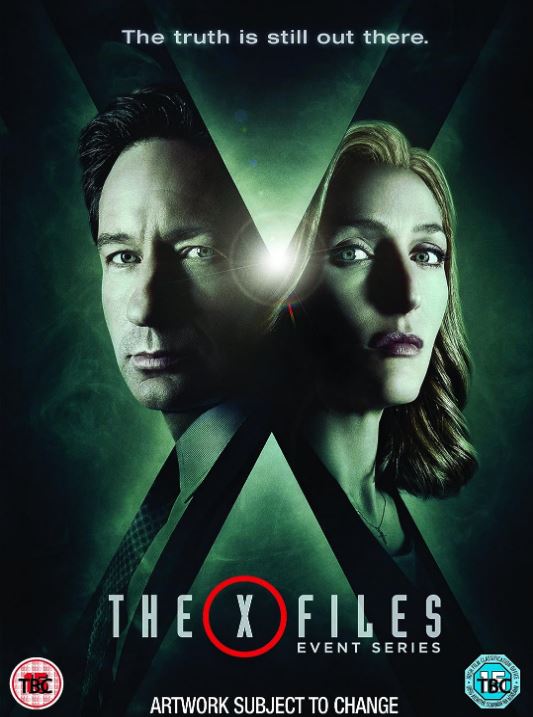
The X-Files is quality award-winning television. Fine attention is paid
to mood, music, plot, and most especially character. The relationship
between the main characters is a very positive reinforcement of the value
of friendship. It also has the virtue that it takes religion seriously.
Despite its popularity it has its faults - many of the episodes are more
gruesome than the story requires, there is an occasional touch of sleaze
and a tendency to concentrate on freaky and twisted characters, but more
seriously it continually has shadowy government agents perpetrating all
sorts of nasty deeds.
Now this could be close enough to the truth, but this kind of paranoia
fiction can lead to a cynicism about government that damages faith in
democracy. Carter is reported as saying that the show is partly about
faith, though not necessarily about any particular faith. Its key slogan
"The Truth is Out There" seems bland compared to "I am the Way, the Truth
and the Life" or "The Truth shall set you free", but it does imply a refreshing
suggestion of objectivity in our relativistic times. With its dogged search
for The Truth it refuses to take a fashionable smart alec approach to
everything. It may be cynical about a particular government as indicated,
but it believes tenaciously in values like Truth, Friendship and Loyalty.
Religious influences can also be seen in the titles of some episodes even
when some of these have no religious themes - Lazarus, Eve, Born Again,
Apopcrypha, Signs and Wonders. While Christian references abound,
they are not the only religious traditions mined for themes and metaphors.
In The Blessing Way, for example, Native American healing rituals
are used to bring the hero back from death's doorway; in Genderbender
there is a sect modelled, at least superficially, on the Amish.
Some episodes, while not overtly focusing on religion, have interesting
scenes and themes. Conduit ends with Mulder apparently praying
in a church, in desperation and frustration at the possible alien abduction
of his sister. In One Breath, where Scully is in a life-threatening
coma, an angel guardian-like figure watches protectively over her. And
there is that beautiful heavenly vision of happy children in the next
life in Closure from the seventh season.
A few episodes are meatier when it comes to religious themes. The last
episode of the third season features a Christ-like figure, Jeremiah Smith,
who can heal people with a touch of his hand, can pass through a crowd
unnoticed and has a calming presence. It seems however that he is an alien,
perhaps the original of a group of clones. He has a brief but interesting
discussion about religion with the villain of the series, The Cigarette
Smoking Man, which has echoes of Christ's discussion with Pilate. This
episode is called Talitha Cumi, Christ's words to the dead girl
he brought back to life in Mark 5:41.
Another Christ figure appears in Miracle Man from the first season.
Here, the son of a Bible Belt preacher has miraculous healing powers,
including, it appears the ability to bring someone back from the dead.
However this is a show meant to scare rather than to uplift, and a deformed
person who would rather have been left for dead starts murdering those
on whom the son lays his hands, plunging him into self-doubt. The son
is murdered but the episode ends with rumours of him having been seen
alive again.
Whether these uses of elements of Christ's story are respectful or not
is a moot point. The shows don't seem anti-religious, and those who bemoan
the godless nature of much of the secular media may be glad to see spiritual
matters get some recognition. Interestingly one of the show's regular
writers Glen Morgan, speaking of the Miracle Man episode, expressed
reservations about that show not showing enough respect for people of
faith. Indeed there is at times an overdose of wacky and weird religious
types that would give religion a bad name - e.g. in Orison a hypnotising
demon fighting, the snake handlers in Signs and Wonders and the
wacky missionaries of Fight Club, all from the uneven seventh season.
And cults figure in several episodes, from the weird vegetarian cult in
Red Museum, to the Satanic cult that is the board of a high school
(!) in Die Hand Die Verletz. One of the most intriguing 'religious'
shows was Revelations from the third season. A serial killer is
wiping out people with stigmata, and in a reversal of the usual roles
Mulder is sceptical while Scully, a lapsed Catholic, feels a call to be
protector of a stigmatic young boy who is under threat. Again the show
goes for gruesome and has a grotesque but saint-like character Owen also
out to protect the boy. This is also the show where St Ignatius is credited
with being in the Bible! It ends in a striking manner with Scully in a
confession box expressing her concern that God may be speaking to us but
with people not listening.
The fourth season has a wealth of well-crafted episodes especially in
relation to character development and the recurring alien theme. The religious
elements are not that strong, but there is an episode about reincarnation,
another that draws on Jewish lore and in the rivetting season finale Gethsemane,
a frosty meeting between Scully and the family priest. This story strand
is continued in the fifth season opener Redux, which must be must
be something of a landmark. It includes in its stunning climactic sequence
emotionally moving shots of female lead Scully saying the Rosary with
the same priest! And there's not a hint of irony or mockery. When did
we last see a young, attractive lead character in a popular TV drama series
saying their prayers, let alone the Rosary? An artificially induced cancer
(a recurring metaphor in the show) has brought Scully to the brink of
death which makes her radically reassess her life. In one of the most
touching scenes in the whole series she breaks down in tears in her mother's
arms. Shortly after Scully is saying her Rosary with the priest she had
gently rebuffed at the family gathering. (Mulder is too preoccupied to
take much interest, but as the priest replaces him at Scully's hospital
bedside he lovingly asks her to say "a few Hail Mulders" for him!).
Unfortunately for those interested in X-Files episodes with a religious
theme, the writers didn't revisit this new-found faith of Scully's until
well into the fifth season, when the stylish but tasteless All Souls
sees her going to Church, back in the Confession box, and mixing with
some very weird angels, again showing the tendency of the show to inspire
and infuriate, sometimes within the same show.
In the eighth season, the opening sequence of one episode was comprised
entirely of that familiar footage of the baby in the womb, film you usually
see only at pro-life meetings. The context was the reflections of Mulder
(recently returned after three months in the grave!) on the beginnings
of life, cloning, the soul and God - sparked by the mysterious pregnancy
of his friend Scully (she who was barren). Later in the show we learned
that Scully's unborn baby was under threat from sinister forces as it
was supposed to be an extra special human being who might be vital to
the human race in its struggle against alien forces. Sound familiar?
The nativity theme was taken up again when the eighth season came to an
end with a particularly intriguing episode. There was the birth of a child
about whom there were great expectations, resulting from a mysterious
conception; the baby was born in rather poor surroundings; evil plotters
were out to kill or steal the baby; for one particular group the baby
was not what they expected and they lost interest; there was a strange
star in the sky which provided direction to the place and finally, when
the baby was born, three of the wisest regular characters brought gifts
for the new-born.
It shows how potent the Jesus story still is, even in popular culture.
It could be homage, but I suppose others might accuse writer Chris Carter
of plagiarism at best or blasphemy at worst. Of course blasphemy is notoriously
hard to pin down (which is not a reason for not trying). Some things are
obviously blasphemous, some obviously respectful, and in between there's
a wide spectrum, especially when it comes to artistic expression. So,
should we err on the side of freedom or respect, or is it even that simple?
X-tra Files!
Faitharts Review of film The X-Files: I Want To Believe
8/8/08
 Finally
got to see The X-Files: I Want to Believe, recently arrived in
Irish cinemas. There are lots of scenes I'd like to look back on, so perhaps
I'll revise my initial opinions when it comes out on DVD. First off, it
was great to see Mulder and Scully back in action - it's been about 6
years since the TV show ended. The film was certainly true to the spirit
of the show, though apart from the principals only one other character
reappeared. As with the TV show there were strong religious elements -
the title "I Want to Believe" says it all.
Finally
got to see The X-Files: I Want to Believe, recently arrived in
Irish cinemas. There are lots of scenes I'd like to look back on, so perhaps
I'll revise my initial opinions when it comes out on DVD. First off, it
was great to see Mulder and Scully back in action - it's been about 6
years since the TV show ended. The film was certainly true to the spirit
of the show, though apart from the principals only one other character
reappeared. As with the TV show there were strong religious elements -
the title "I Want to Believe" says it all.
I'd say religious believers won't be entirely happy with the way religion
is presented - one of the main characters is a paedophile former priest,
still referred to as Father Joe, played with deadly earnestness by comedian
Billy Connolly, a strange but effective casting choice. Scully can't hide
her revulsion when in his presence, but at least he seems repentant. So
though, on one level, the character might be reinforcing lazy stereotypes,
he is humanised and challenges the judgementalism of Scully and the viewer.
But there is negative portrayal of other priests also - in particular
a rather cold fish at the Catholic hospital where Scully is treating a
young boy for an apparently incurable disease. At best this priest is
a fussy administrator, but the young boy says he doesn't like the way
this priest is looking at him.
The plot centres around "Father Joe" helping the police find some missing
women because he says he has been having visions. Is he in league with
the perpetrators or has God answered his prayers of repentance? Mulder
in particular wants to believe he is genuinely psychic, but Scully is
more doubtful, still conflicted about such matters, though Fr Joe describes
her as "a woman of faith". She was often thus in the series, so it seems
her character hasn't progressed much in the intervening years, and for
that matter Mulder seems driven by the same concerns as always, though
the alien theme of the so-called "mythology" episodes doesn't figure this
time. There are many discussions about faith during the film, especially
a dramatic confrontation between Scully and Fr Joe when she reluctantly
goes to seek his help - (in this scene he says of abusers that they hate
themselves and hate each other). Other discussions fall into the trap
of wordiness that was one of the faults of the TV show. These are the
scenes I'd like to see again to form a more rounded judgement.
The plot also features the stem cell research issue, and treats it in
an interesting way - Scully dabbles in it to try and save her young patient,
but the bad guys are also into it for more gruesome purposes, so it advocates
and critics alike may feel somewhat satisfied. The distinction between
adult and embryonic stem cell research doesn't figure.
For most of the X-Files series Mulder and Scully were just good
friends - this close but platonic relationship was one of the show's attractions,
but if I remember correctly there was a hint in the 9th series that the
relationship had become physical, and in this film they seem to be living
together at least some of the time. And in another sign of the times two
of the bad guys are married to each other! Have tried not to give away
too much here, but if you do go to see it be sure to stay until the end
of the credits!
Reviews of revived X-Files series Jan-Feb 2016
29/1/16
It's been around 14 years since the last episode of the TV series The X-Files was broadcast. The final moments included a touching gesture of friendship between Mulder (David Duchovny) and Scully (Gillian Anderson) and a discussion that reflected on the afterlife and the people who have died and gone before us. The series featured many religious themes over its nine year run and I've written about it all here. With great hype and anticipation it returned to RTE 2 last Tuesday and Wednesday night and for the most part I wasn't disappointed. The same creative team is reunited, especially creator Chris Carter and the main actors, and even the opening credit sequence is the same. The main plot line so far focuses on the alien story arc, with lots of messing about with alien DNA. The conspiracy paranoia is stonger than ever, giving Mulder great big wads of turgid dialogue. The style remains so true to the original (better than messing with a winning formula) that they seem to have felt the need to keep reminding us it's 2016, in case we thought these were leftover episodes from the old days! So we get references to Edward Snowden, Obama Care, greater cultural acceptance of gay relationships and Scully makes a knowing comment about finding information in pre-Google days. There isn't much to celebrate on the religious front. Scully, who comes from a Catholic background and still wears her cross, is working in what seems to be a Catholic hospital (Our Lady of Sorrows) but wouldn't you know she discovers there what seems a nasty experimentation programme run by a dodgy doctor renowned for his work to help the unborn. There's a nun who seems a throwback to bygone days ... she supposedly looks after single mothers with problematic pregnancies, has a poor opinion of men and their lies and calls desire 'the devil's pitchfork'! It's all a bit ropey, and some of the violence is more graphic than I remember from the earlier series, but I'm enjoying the nostalgia. There's still a considerable chemistry between Mulder and Scully, and though it was platonic for most of the time, there seems to have been some biology as well as late in the original series it seems they had a son together, and his fate is a central mystery this time around.
24/2/16
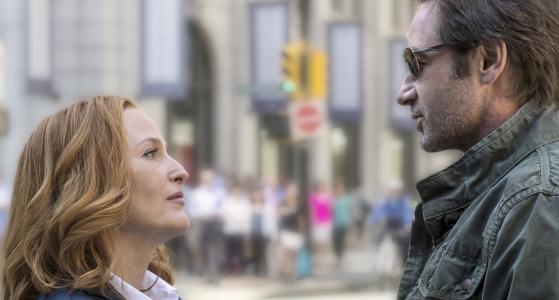 In, Babylon, the recent second last episode of the revived X-Files there was an interesting conversation between Mulder and Scully. They were in a reflective and touching moment after a troubling story of Islamic fundamentalist suicide bombers. Mulder wondered about the ’angry God’ of the Bible (he must have missed the Great Commandment to love) and Scully said something similar about the Koran, but a strand of the plot impressed him. He had seen something ‘that trumps all hatreds’ - the deep and unconditional love of a mother, which had a resonance for Scully as her mother died in the previous episode and some years ago she had given her son for adoption to protect him from nefarious forces. While Mulder had seen love in the episode Scully had seen hate and they wondered how the two could be reconciled. Mulder referenced the Tower of Babel story and Scully reckoned that maybe it was God’s will that we find a ‘common language’ again. Scully thought we needed, like the prophets of old, to ‘open our hearts and truly listen’.
There was certainly openness to belief in God and at the end Mulder, but not Scully, hears a mysterious sound, the sound of trumpets - a phenomenon referenced in an earlier scene – ‘music as if from the heavens themselves ... as if God himself was making music’. I wasn’t too impressed with Mulder taking banned substances to help him communicate with a dying terrorist. It didn’t help that his tripping was treated comically, with a welcome guest appearance by his old and deceased pals The Lone Gunmen. This surreal sequence featured a pieta-like image that was in poor taste, but maybe it was redeemed somewhat by the way it was linked at the end to a mother’s love.